About this place
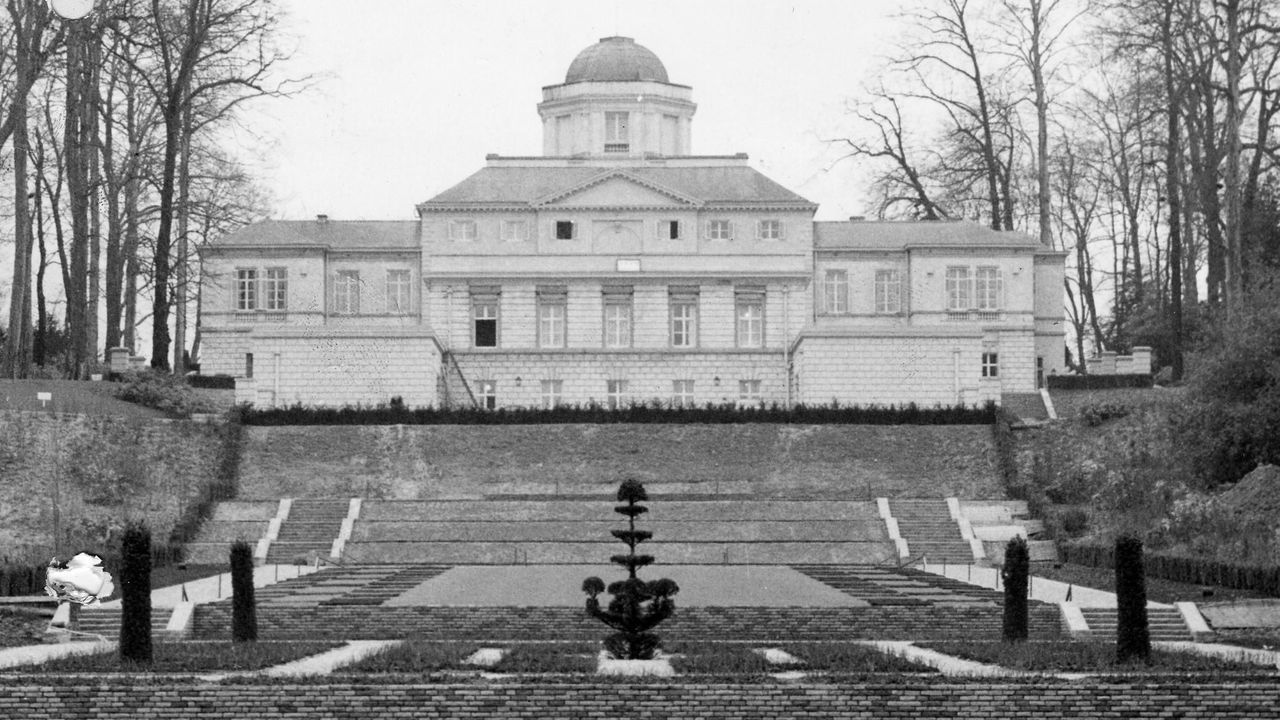
Kasteel van Bever is a 19th-century neoclassical country estate set within a landscaped park, located in the Bever district west of the center of Strombeek-Bever, on the border with the municipalities of Wemmel and Meise, within the municipality of Grimbergen in Flemish Brabant. It's a place where the layered history of a noble estate meets the everyday role of a green retreat just outside Brussels.
Where does the estate come from?
The land on which the current mansion stands was still marked on the 1821 cadastral plan under the name "het Nekkerken" and held an older set of buildings. The property passed into the hands of Count Philip Melchior Emmanuel de Villegas de Clercamp in 1748, and it received several additions throughout the eighteenth century.
The real turning point came in 1846, when Jan Constantijn Villegas de Clercamp had the older buildings demolished. In their place rose the present castle together with a U-shaped coach house. The neoclassical country house was built around 1845–1850 on the site of an earlier 17th-century pleasure house. The formal gardens with ponds that had previously stood to the east gave way to a large pond shaped like an inverted number nine.
How did the estate develop afterward?
The whole property was registered in the cadastre in 1850. Over the following decades it was steadily expanded: around 1885 a walled vegetable garden with an access tower was added, along with an orangery and service buildings, and a dovecote followed the same year. Around 1904 a porter's lodge and a greenhouse were built.
The estate also carries a spiritual dimension. In 1896, a chapel dedicated to Saint Anthony was erected opposite the southern entrance. After the end of the Second World War, in 1945, a second chapel — a thanksgiving chapel dedicated to Our Lady — was added.
What can visitors see at Kasteel van Bever today?
The castle is surrounded by an extensive park that has grown over the decades and is now notable for its dendrological collections and multiple ponds. It's the park itself — with its variety of trees and water features — that stands out today as one of the estate's main draws for visitors.
The castle building, together with the coach house, orangery, former vegetable garden, and the various service structures around it, forms a coherent architectural ensemble that documents the changing needs and tastes of successive owners across nearly two centuries.
Frequently asked questions
Where exactly is Kasteel van Bever located? In the Bever district, west of the center of Strombeek-Bever, on the border with the municipalities of Wemmel and Meise, within Grimbergen in the province of Flemish Brabant.
When was the current building constructed? The present castle was built around 1845–1850, after the earlier structures were demolished in 1846 by Jan Constantijn Villegas de Clercamp.
Are there other structures on the estate besides the castle itself? Yes — a coach house, an orangery, a former vegetable garden with an access tower, a dovecote, a porter's lodge, a greenhouse, and two chapels (one dedicated to Saint Anthony from 1896, and a thanksgiving chapel from 1945).
What is the estate's biggest draw for visitors? The extensive park, with its rich dendrological collection and numerous ponds, including a distinctive pond shaped like an inverted number nine.
Nearby places

Earn badges for the places you visit
Download NextOnTrip, discover new places and check off your trails.