About this place
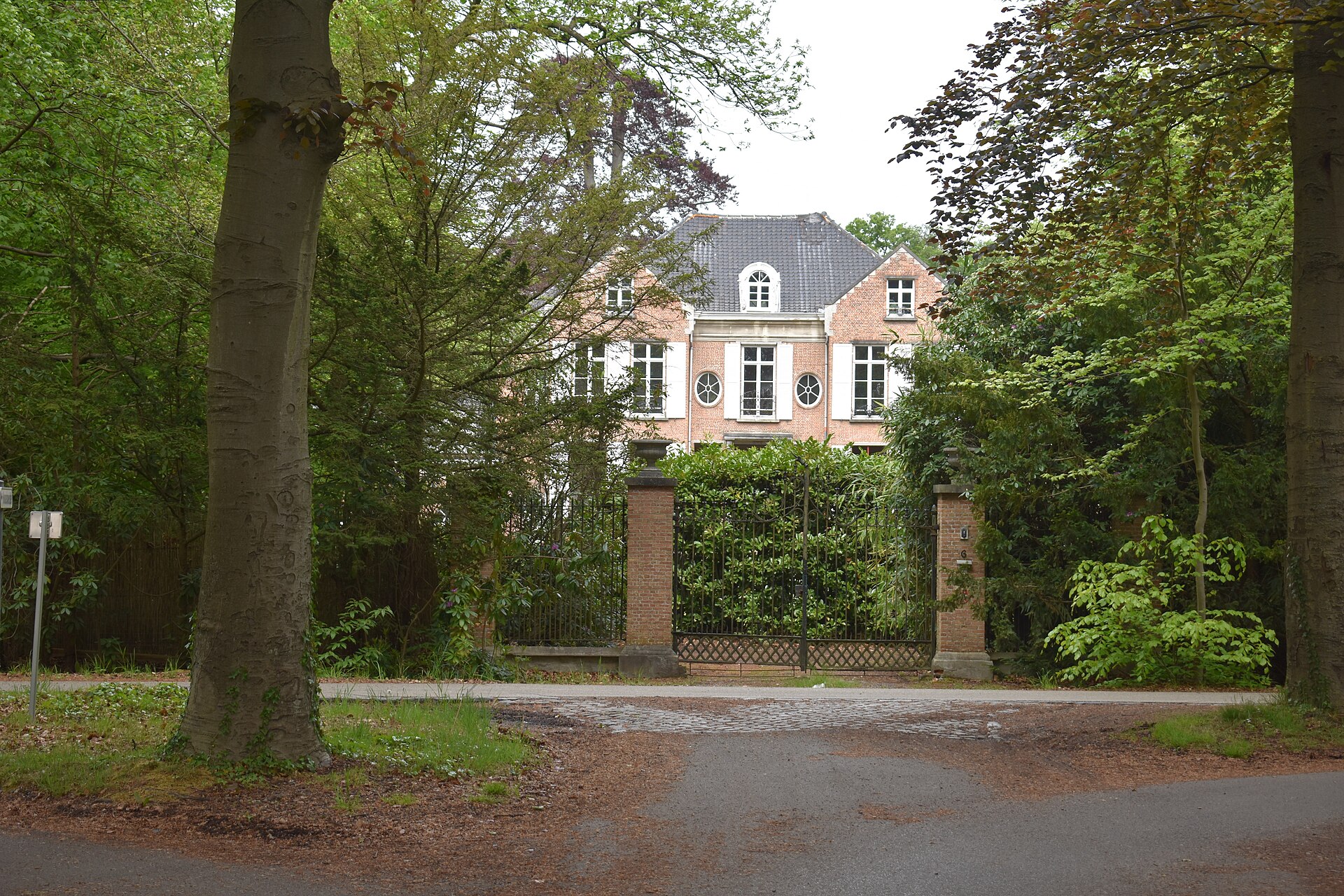
Kasteel Heidebloem is a neoclassical manor house standing on Beatrijslaan in Lier, a town in Antwerp Province, in the Flanders region of Belgium. The building was erected around the turn of the 19th century, shortly after the sale of the former Abbey of Nazareth, to which it was once connected by an access road — this proximity to the former abbey grounds explains both the estate's location and several elements of its decoration.
What does the castle's architecture look like?
The building follows a gently U-shaped plan, a layout typical of country residences built around 1800 in Flanders. The original structure survived largely unchanged until the 1930s, when it fell into significant disrepair. Between 1939 and 1942 it underwent a thorough renovation according to plans by architect F. Flerackers, giving the manor its present appearance and blending the earlier neoclassical composition with interventions introduced in the 20th century.
What surrounds the manor house?
A distinctive feature of the estate is the nearly square moat encircling the grounds — a remnant of the defensive-representative layout typical of Flemish country residences. The building itself is set within a park that still contains 18th-century stone vases mounted on pedestals. These vases originate from the grounds of the former Abbey of Nazareth and were relocated to the Heidebloem park, forming a direct, material link between the two historic properties.
The estate also includes several outbuildings, among them an annex on Kromme Ham and the Heidebloemhoeve farmstead on Beatrijslaan. Both structures, like the manor house itself, are listed on the Flemish heritage register (Inventaris Onroerend Erfgoed), confirming their historical and architectural value for the region.
Where exactly is Kasteel Heidebloem located?
The estate lies within the municipality of Lier, in the administrative district of Mechelen, Antwerp Province. Its approximate coordinates are 51.145°N, 4.588°E. The area around Lier is known for numerous historic sites tied to former abbeys and country estates, and Heidebloem stands as one of the better-preserved examples of this type of building in the Kleine Nete river valley.
Frequently asked questions
Can Kasteel Heidebloem be visited? The property is listed as a protected architectural heritage site, though available sources do not specify detailed visiting arrangements for the interior — the manor functions primarily as a protected historic building set within a heritage park.
Where does the name Heidebloem come from? The name refers to the local landscape — "heidebloem" is Dutch for "heather flower," pointing to the character of the terrain on which the estate was originally built.
Why was the manor renovated between 1939 and 1942? The building fell into disrepair during the interwar period, in the 1930s. To prevent further deterioration, a comprehensive reconstruction was carried out according to plans by architect F. Flerackers, ensuring the building's survival to the present day.
What connects Kasteel Heidebloem to the Abbey of Nazareth? The manor was built shortly after the sale of the former Abbey of Nazareth, to which it was originally linked by an access road. This connection is also visible in the park, where the 18th-century stone vases decorating the garden originate from the former abbey grounds.
Have any outbuildings survived alongside the manor? Yes, the estate includes an annex on Kromme Ham and the Heidebloemhoeve farmstead on Beatrijslaan — both listed on the Flemish heritage register as part of the historic manor complex.
Nearby places

Earn badges for the places you visit
Download NextOnTrip, discover new places and check off your trails.