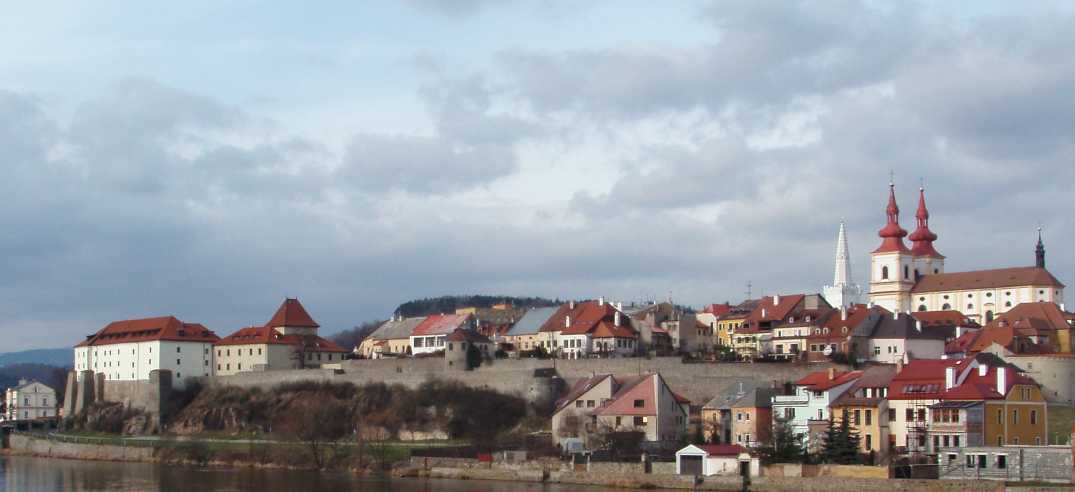
About this place
Kadaň Castle rises above the Ohře River in the historic town of Kadaň in northwestern Czechia, a Gothic-and-Renaissance stronghold that has been woven into the town's fortifications since the 13th century.
How do you get there?
The castle sits right in the heart of Kadaň's old town, so once you're in the historic center it's only a short walk from the main square through narrow medieval streets. Kadaň lies in the Ústí Region, roughly an hour's drive from Karlovy Vary and not far from the German border, making it an easy stop for anyone touring western Bohemia. Regional buses and trains serve the town, and parking near the old town leaves just a brief stretch to cover on foot before reaching the castle gate.
What's the story behind the castle?
The castle's first written mention dates back to around 1260-1261, and its founding is tied directly to King Přemysl Otakar II establishing the town itself. It was built as a four-wing complex with a residential palace projecting over the riverbed, and it served as the seat of the royal burgrave who administered the surrounding Žatec region — a role that faded after 1366, when Charles IV granted Kadaň self-governing town rights. In 1362 a fire tore through the town, the castle, and a nearby Minorite monastery built into the fortifications, but rebuilding began without delay. The Hussites seized the stronghold in 1421, and in 1467, under King George of Poděbrady, the palace, watchtower, ramparts, and moat facing the town were repaired, along with a dedicated passage leading from the castle down to the river.
A defining moment came in 1534, when the castle hosted the signing of the Kadaň Agreement, a settlement between King Ferdinand I, the Saxon princes John Frederick and John George, and the Archbishop-Elector of Mainz, Albrecht. Through the rest of the 16th century the complex underwent extensive late-Gothic and Renaissance rebuilding, with further work carried out in 1547 and again after a fire in 1811. After 1750, with Empress Maria Theresa's approval, the castle was converted into military barracks, a change that erased much of its original medieval defensive character.
What will you see today?
Today's castle is largely a home for local culture rather than a fortress. Its eastern wing houses the municipal library, complete with an internet café and a ceremonial hall, while the Josef Liesler Gallery has occupied part of the building since September 2000, showcasing the work of the painter closely tied to the region. The complex also holds exhibitions of the Municipal Museum and a seniors' residence, though some sections remain private living quarters and are closed to visitors. A typical visit takes you through the castle's cellars and halls, with guides happy to walk you through episodes ranging from the Hussite siege to royal diplomacy and the building's later life as a barracks.
When's the best time to visit?
The visiting season runs from spring through autumn, when the museum, gallery, and library wing keep fuller opening hours and walking the old town walls alongside the castle is at its most pleasant. Pairing the castle with a stroll around Kadaň's main square and the surviving stretches of town fortification, which the castle was historically built into, makes for a well-rounded visit.
Frequently asked questions
Who founded Kadaň Castle? King Přemysl Otakar II founded it together with the town of Kadaň itself, in the mid-to-late 13th century.
What happened at the castle in 1534? It hosted the signing of the Kadaň Agreement, a settlement between King Ferdinand I, the Saxon princes, and the Archbishop-Elector of Mainz.
Can visitors tour the whole castle? No — parts of the building remain private residences, but the cellars, exhibition halls, gallery, and municipal museum are open to the public.
What does the castle house today? A municipal library, the Josef Liesler Gallery, Municipal Museum exhibits, and a seniors' residence.
Nearby places

Earn badges for the places you visit
Download NextOnTrip, discover new places and check off your trails.