About this place
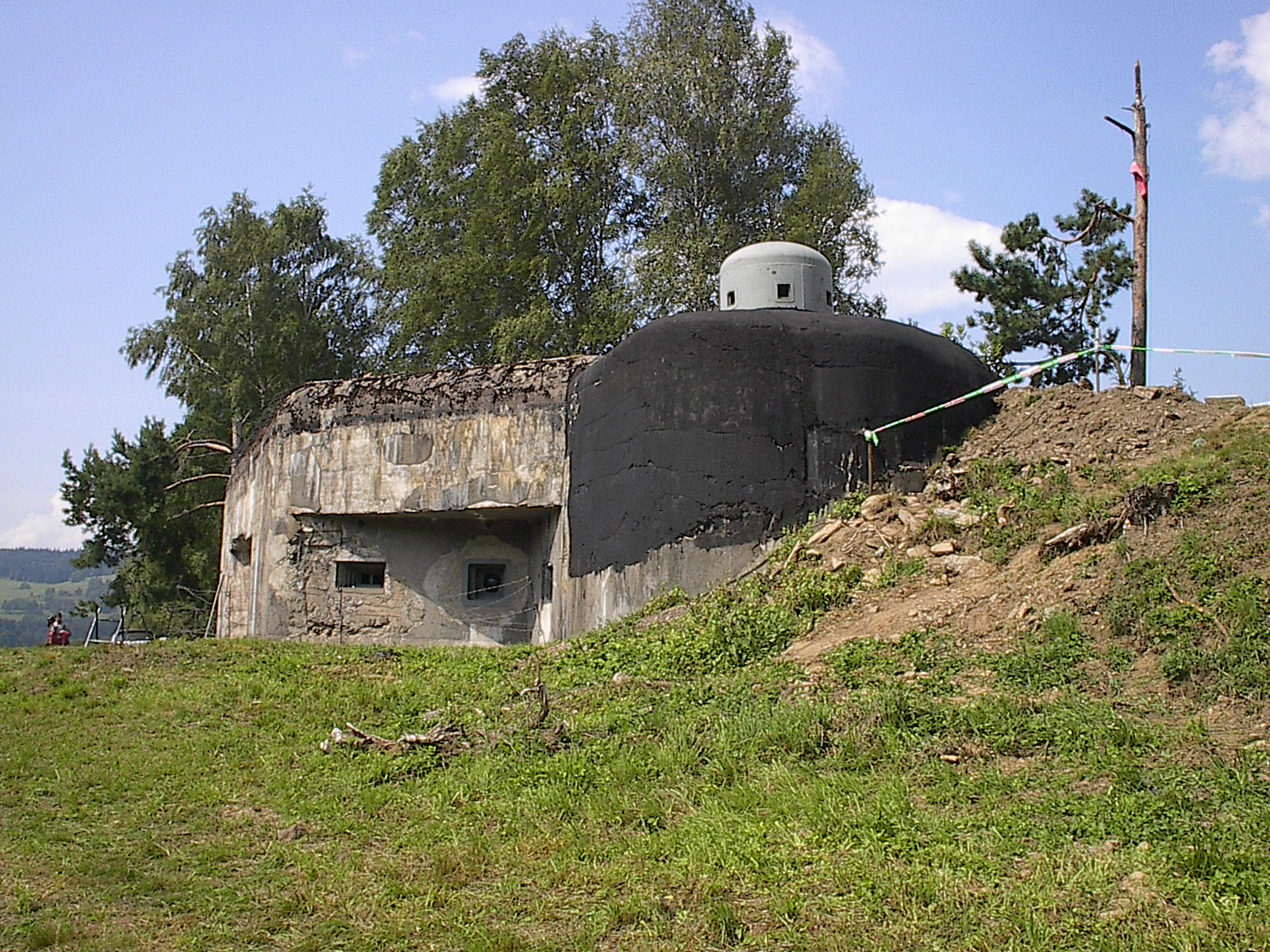
Infantry blockhouse K-S 14 "U cihelny" ("By the Brickworks") is a 1930s concrete fortification standing on the northern edge of Králíky, in the Pardubice Region close to the Polish border. It is one of the best-preserved and most visited sites of the Czechoslovak border fortification system, now converted into a museum that tells the story of the soldiers who defended the country's frontier on the eve of the Second World War.
What exactly is this place?
K-S 14 is a two-sided, two-winged fortification built in the autumn of 1936 as part of the extensive line of border defenses Czechoslovakia raised against the growing threat from Nazi Germany. The concrete was poured between 29 September and 8 October 1936, consuming more than 2,110 cubic meters of material. The blockhouse stands beside the road connecting Králíky with Prostřední Lipka and was designed to cover that route with fire while also protecting the neighboring combat positions K-S 15 and K-S 16, as well as the Hůrka artillery fort.
For its time, the armament was formidable: two anti-tank guns paired with heavy machine guns, two twin heavy-machine-gun installations, one standalone heavy machine gun, a 9 cm mortar, and five light machine guns. Two armored infantry cupolas — steel observation-and-combat domes — were mounted on the roof, giving defenders a wide field of fire and protection from above.
What will you see inside?
The interior now houses a museum devoted to the Czechoslovak fortifications built between 1935 and 1938. The exhibition walks visitors through the history of the border defense program, the story of the Czechoslovak legions, and everyday life of the soldiers stationed inside bunkers like this one. A separate part of the display is dedicated to the memory of Sergeant Arnošt Hrad, who took his own life here in 1938 as an act of protest — an episode that still moves visitors and captures the tension of those months, when Czechoslovakia stood on the brink of war and the Munich capitulation left its border defenders devastated.
Visits are guided and run at set times, so it's worth checking the current schedule before arriving, as group sizes are limited given the nature of the interior spaces.
How do you get there?
The bunker sits on the northern outskirts of Králíky, right beside road III/31224 heading toward Prostřední Lipka. It's a convenient stop for anyone exploring the area around Kralický Sněžník and the Jeseníky mountains, and it pairs naturally with visits to other fortification sites nearby, letting you build a route that follows the old Czechoslovak border defense line.
When should you visit?
The museum operates seasonally and is closed from 1 November to 31 March, so plan a visit for spring, summer, or early autumn. During the open season, tours run at fixed times with a guide, so it's best to arrive with some time to spare, especially on weekends when more groups pass through.
Frequently asked questions
Can you walk through K-S 14 on your own? No — the interior can only be visited as part of a guided tour at scheduled times.
How much concrete went into building it? More than 2,110 cubic meters, which gives a good sense of the scale of Czechoslovakia's 1930s fortification program.
Is the museum open year-round? No, the site is closed from November through the end of March; visits are possible during the rest of the year.
What else can you combine a visit to K-S 14 with? It pairs well with the neighboring fortification positions K-S 15 and K-S 16, as well as the Hůrka artillery fort, letting you create a themed route dedicated to Czechoslovak border fortifications.
Nearby places

Earn badges for the places you visit
Download NextOnTrip, discover new places and check off your trails.