About this place
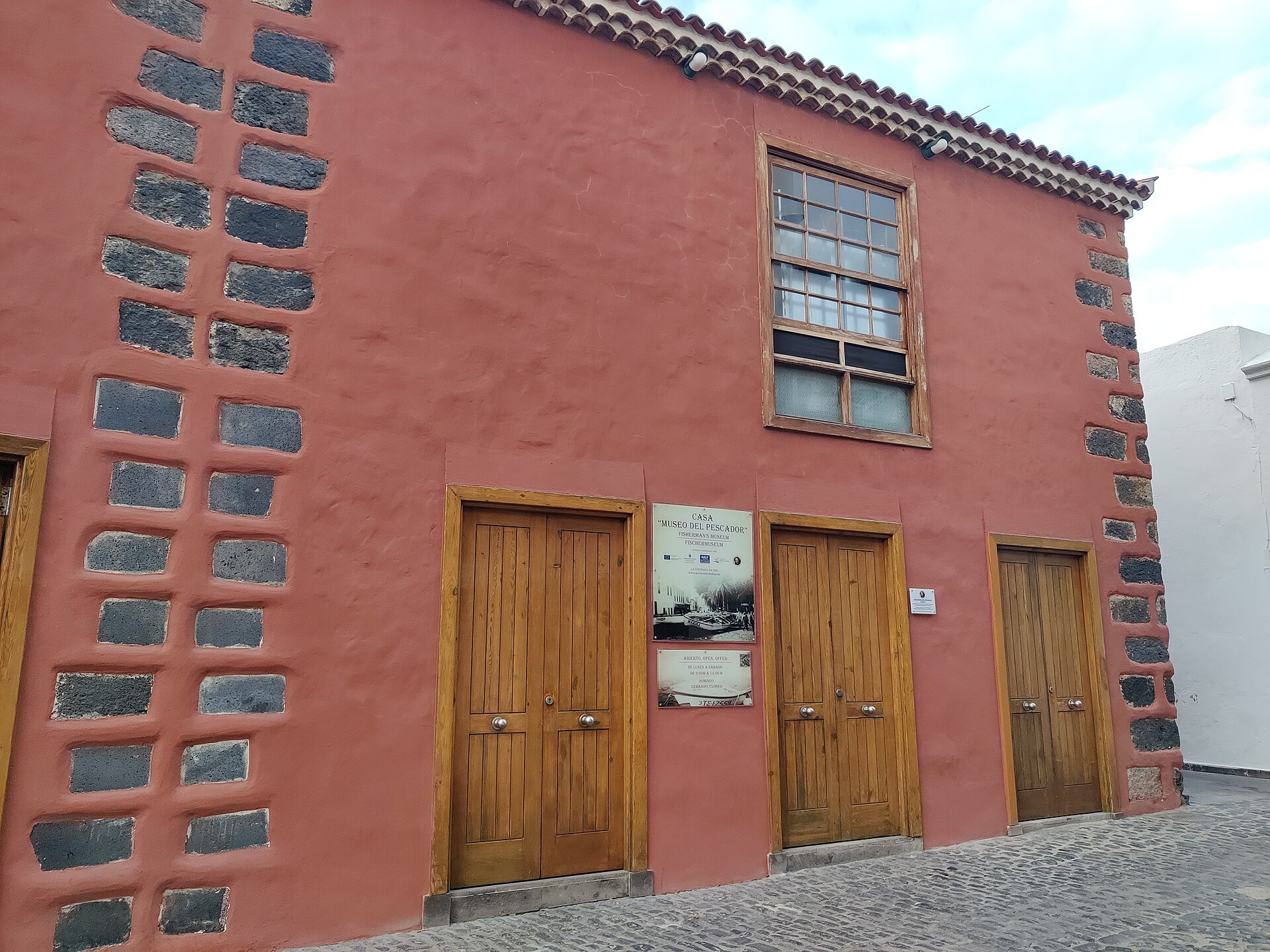
Jimenez Franchi House (Casa Jiménez de Franchy) is a 17th-century Canarian town house on Calle San Francisco in La Orotava, Tenerife, standing right beside the famous House of the Balconies. Though far less visited than its neighbor, it ranks among the most valuable — and most overlooked — examples of historic bourgeois architecture on the Canary Islands.
Who built the house, and when?
The house was raised around 1642 at the commission of Doña Marina Jiménez Fonte del Castillo, a member of one of the wealthy families who settled in La Orotava during the island's colonial-era prosperity. A century later the property was extended with an additional wing, which is why the façade today blends two distinct building phases into a single composition.
What makes the architecture stand out?
It's a three-story town house built almost entirely from Canarian pine ("tea" wood), a hallmark of traditional island carpentry. Notable features include:
- a monumental tea-wood staircase leading to the upper floors,
- coffered wooden ceilings (alfarjes) in the main rooms,
- a large sliding balcony with a carved Canarian wooden balustrade on the top level,
- richly framed windows carrying a rare decorative motif — carved vultures emerging from the frames,
- stone pinnacles decorating the interior courtyard,
- a façade with three windows instead of the usual four, and a doorway set off the central axis, both of which set the house apart from its neighbors.
The lower windows carry moulded lintels bearing animal carvings set into split pediments, a detail that speaks to the skill of local 17th-century craftsmen. Interestingly, the upper floors weren't originally living quarters at all — they served as a grain store.
What is the house used for today?
The building is owned by the municipality of La Orotava and run by an association of carpet-makers. It now works as an interpretation and outreach centre for "ephemeral art" — the local tradition of laying temporary carpets of flowers and coloured earth on the streets during Corpus Christi. Practised without interruption since 1847, this tradition is the house's main draw for visitors, who can learn about its techniques and see the materials used to create the designs.
How do you get there?
The house sits in the heart of La Orotava's historic quarter, a district protected for its historic and artistic value. It's easiest reached on foot, a short walk from the town's main square, directly next to the House of the Balconies, which makes an easy landmark to navigate by. Buses run to La Orotava from Santa Cruz de Tenerife, Puerto de la Cruz, and Tenerife North Airport, with journey times ranging from about 15 to 35 minutes.
When is the best time to visit?
The most memorable time to come is around Corpus Christi (late May or June), when La Orotava's streets are covered in its famous flower-and-sand carpets and the area around the house buzzes with activity. Outside that window, spring and autumn bring mild weather and noticeably fewer crowds than the island's coastal resorts.
Frequently asked questions
Can visitors go inside Jimenez Franchi House? Yes — the building operates as a centre dedicated to the flower-carpet tradition and can be visited while exploring La Orotava's historic centre.
How does it differ from the neighbouring House of the Balconies? The two buildings stand side by side and date from a similar era, but Jimenez Franchi House draws far fewer visitors despite comparable architectural value — its carved vulture window frames are a detail found nowhere else nearby.
Where does the name come from? It comes from the Jiménez (Ximénez) de Franchy family, the original owners who commissioned the house in the 17th century.
How much time should I plan for a visit? The house itself and its small exhibition take about 20–30 minutes to see; afterwards it's worth continuing on foot through La Orotava's surrounding old town.
Nearby places

Earn badges for the places you visit
Download NextOnTrip, discover new places and check off your trails.