Save this place and discover nearby attractions with NextOnTrip
In the app you can add it to your favorites, see what else is worth visiting nearby on the map, and earn a badge for your visit.
The app is available for iPhone and Android.
About this place
The Hôtel de Ville in Neuchâtel is a neoclassical town hall from the late 18th century, standing in the centre of the lakeside city in western Switzerland. It is listed among Swiss cultural property of national significance and still serves civic purposes, so it is both a monument and a working institution.
What is the Hôtel de Ville?
It is the seat of the city authorities. The building also hosts council business and voting, includes rooms used for weddings, and the space around it forms part of everyday downtown life. For visitors it is above all a fine example of Enlightenment-era architecture, a surprise in a town of this size.
Who designed it and when was it built?
The plans came from Pierre-Adrien Pâris, a French architect attached to the court of Louis XVI and responsible for the royal Menus-Plaisirs. He took over from an earlier scheme by Claude-Nicolas Ledoux, which the commissioning body found too grand. Abraham-Henri and Jonas-Louis Reymond directed the construction. The first stone was laid on 3 July 1784, and the building was inaugurated on 13 September 1790.
The project was funded by David de Pury, a Neuchâtel merchant and benefactor who died before it was finished. City records say Pâris lost interest after his vaults and ceilings were altered on site. By May 1785 the building committee had decided that further direction by an architect was unnecessary.
What does it look like?
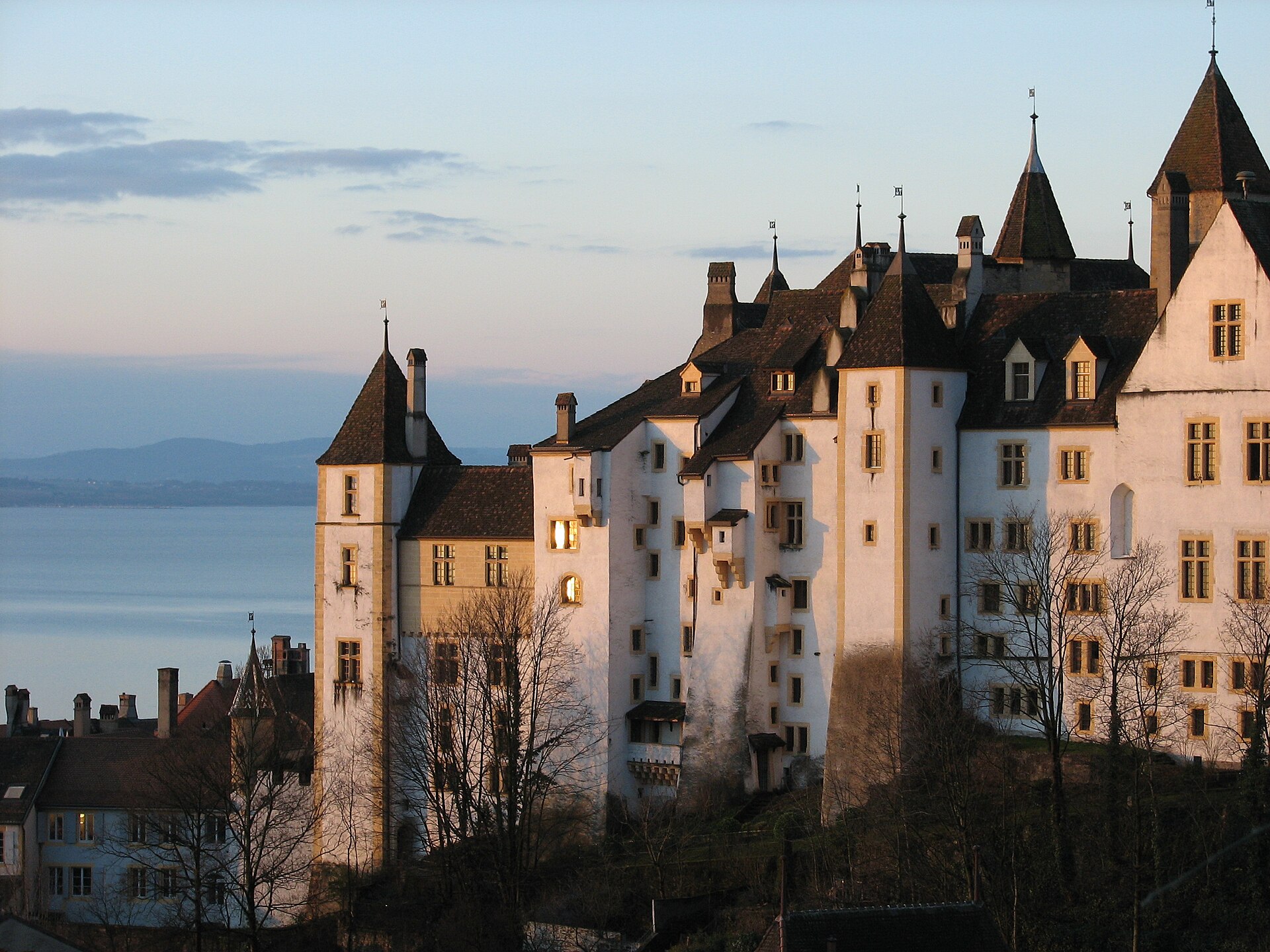
The hall is built of the yellow limestone typical of Neuchâtel, which gives the old town its warm, uniform colour. The style is neoclassical: a symmetrical mass, ordered proportions and restrained detail. The Swiss heritage inventory notes that for the small town of the day the building was out of scale, which only adds to its character today.
How do you visit it?
The best approach is to view it from the outside during a walk through the centre, combined with the nearby lanes and squares of the old town. The interiors are used for administration, so access to rooms depends on events and office hours. The Swiss Society for Art History (SHAS) published a volume on the building in its Guides d'art et d'histoire de la Suisse series, plus an audio guide in 2024, which is worth checking before you go.
How do you get there?
The Hôtel de Ville is in the heart of Neuchâtel, a short walk from the lakefront and the railway station. The centre is largely pedestrian-friendly, so you do not need a car. City buses and a tram serve the area.
What else is nearby?
A stroll through downtown lets you pair the town hall with other sights: the old town with its yellow façades, the castle hill with the collegiate church, and the lake promenade. The city is developing a new vision for public space around Place Numa-Droz and surrounding streets, so traffic arrangements near the hall may change.
Frequently asked questions
Who designed the Neuchâtel town hall? Pierre-Adrien Pâris drew the plans. The Reymond brothers directed construction, and David de Pury funded it.
When was it built? Work began in 1784, and the building was inaugurated on 13 September 1790.
Can you go inside? It is an active seat of government, so access to the interiors depends on events and opening hours. The façade can be admired at any time.
Is the town hall a protected monument? Yes, it is listed among cultural property of national significance in Switzerland.
Nearby places

Earn badges for the places you visit
Download NextOnTrip, discover new places and check off your trails.