About this place
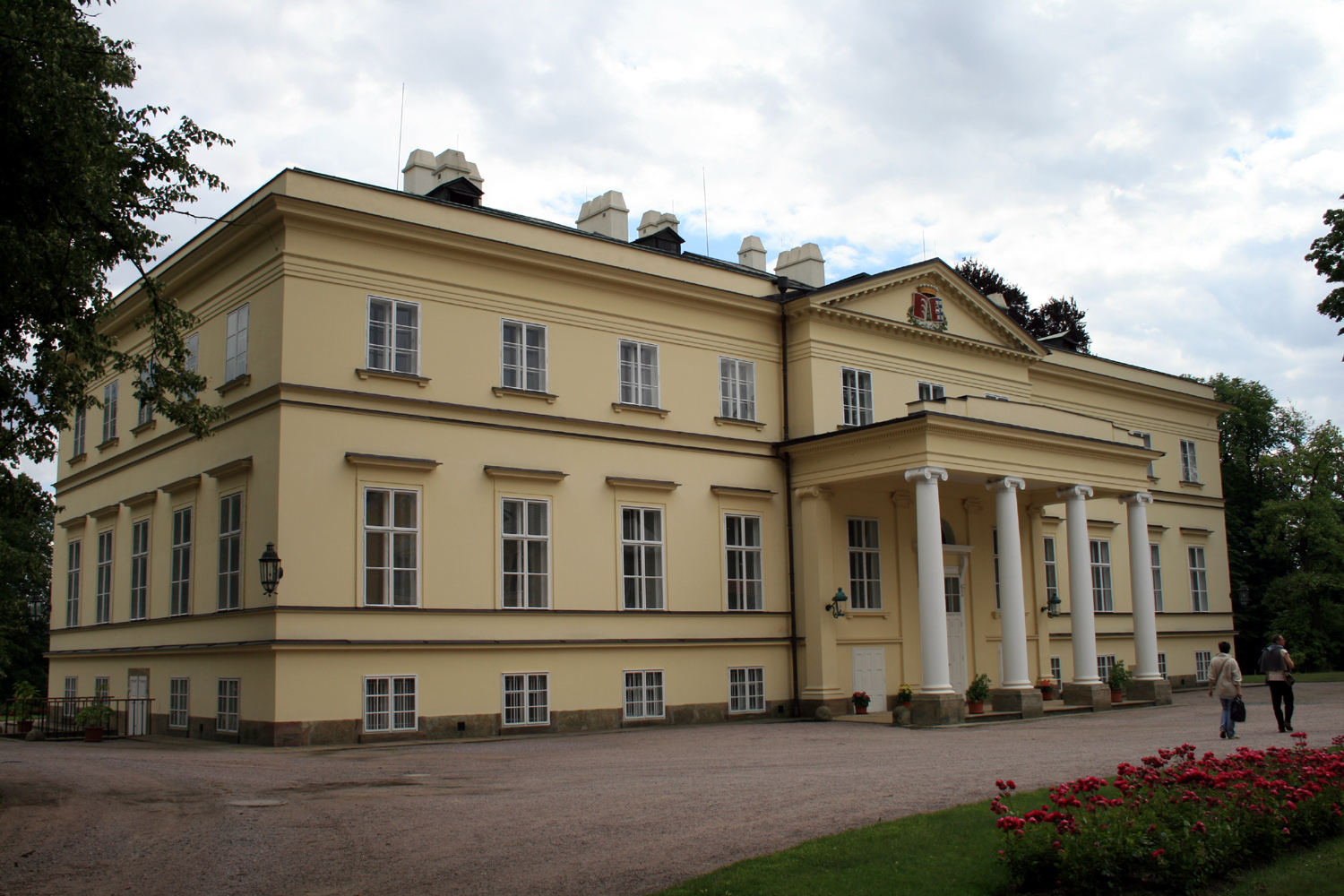
Horní Jelení Castle is a modest 19th-century manor building in Dolní Jelení, on the eastern edge of the Pardubice Region in eastern Czechia.
Where does the building stand and what does it look like today?
The building stands east of the centre of the small town of Horní Jelení, in eastern Bohemia. It is a plain, unpretentious structure without towers, colonnades or the ornate facades typically found on aristocratic residences. Art-historically it does not stand out among Czech castles and chateaux, but the ground it occupies has a longer story than the building itself suggests.
What stood here before the current building?
The oldest fortified structure on the site was a Gothic castle, which fell out of use and was abandoned during the 16th century. It was succeeded by a fortified manor house, a type of defensive residence common on the Czech countryside, which was eventually torn down in 1817. The earliest documented owner of the estate, in the 15th century, was George of Poděbrady; at that time Horní Jelení formed part of the Litice estate, a fact recorded in a 1472 document dividing his property after his death.
How did the Bubna family become connected to the estate?
In 1573 the knight Heřman z Bubna purchased the Jelení estate. Under his ownership a church was built in the town between 1600 and 1602. The Bubna family of Litice remained tied to the estate for centuries afterward, though they never made Horní Jelení their principal seat — that role belonged to their chateau at Doudleby nad Orlicí. It was only in 1864–1866 that the family had the present building erected on the site once occupied by the old fortified manor house.
What was the building actually used for?
The new structure was never intended as a stately noble residence. Instead, it served as the administrative centre for managing the Jelení estate's farms, forests and land holdings. It may also have functioned as a hunting lodge, given the surrounding woodland once used for hunting. This practical, working purpose explains the building's restrained, utilitarian appearance rather than any grand architectural ambition.
Is Horní Jelení worth a stop on a trip through eastern Bohemia?
Horní Jelení is not a headline tourist attraction — there is no museum exhibition or regularly accessible interior to visit. It is nonetheless a worthwhile stop for anyone interested in the history of the lesser Czech nobility and how rural estates evolved over the centuries, from medieval stronghold to fortified manor to a 19th-century administrative building. Since the area sits along many touring routes through the Pardubice Region, the site works well as a landmark on a longer regional itinerary rather than a standalone destination.
Frequently asked questions
Was there an earlier fortification on this site? Yes. The site originally held a Gothic castle, abandoned in the 16th century and replaced by a fortified manor house that was demolished in 1817.
Who owned the Horní Jelení estate over the centuries? In the 15th century the estate belonged to George of Poděbrady as part of the Litice domain. From 1573 it passed to Heřman z Bubna, and later generations of the Bubna family of Litice administered it until building the current structure in 1864–1866.
Did the Bubna family live here? No. Although the family controlled the estate for generations, their principal residence was the chateau at Doudleby nad Orlicí; the building in Horní Jelení served an economic and possibly hunting-related function instead.
Can visitors go inside the building today? The building does not operate as a museum with regular public access. It is a modest structure whose significance is chiefly historical and local rather than a showcase attraction with open interiors.
Nearby places

Earn badges for the places you visit
Download NextOnTrip, discover new places and check off your trails.