About this place
Holý vrch is a forested basalt hill (528 m) right next to the village of Jílové in the Děčín district, northern Czech Republic. Since 2014 the whole summit has been protected as a nature reserve covering 40.6 hectares — one of the more valuable pockets of nature in this corner of the country.
What makes this hill special?
Holý vrch formed through volcanic activity: basaltic magma pushed up through sandstone bedrock, and later frost weathering broke the rock into the scree fields and stone seas that now cover its slopes. Together with the near-natural forest growing on the hill, these rocky habitats are the reason for its protection — the site is recognised as a site of European importance, home to relict and rare invertebrate species adapted to the harsh, stony terrain.
At the southern foot of the hill lies a smaller protected site, the Pod lesem natural monument — a meadow enclave home to rare orchid species along with protected butterflies and other insects. It's a natural add-on stop for anyone combining the summit hike with a slower look at local plant and insect life.
How do you get there?
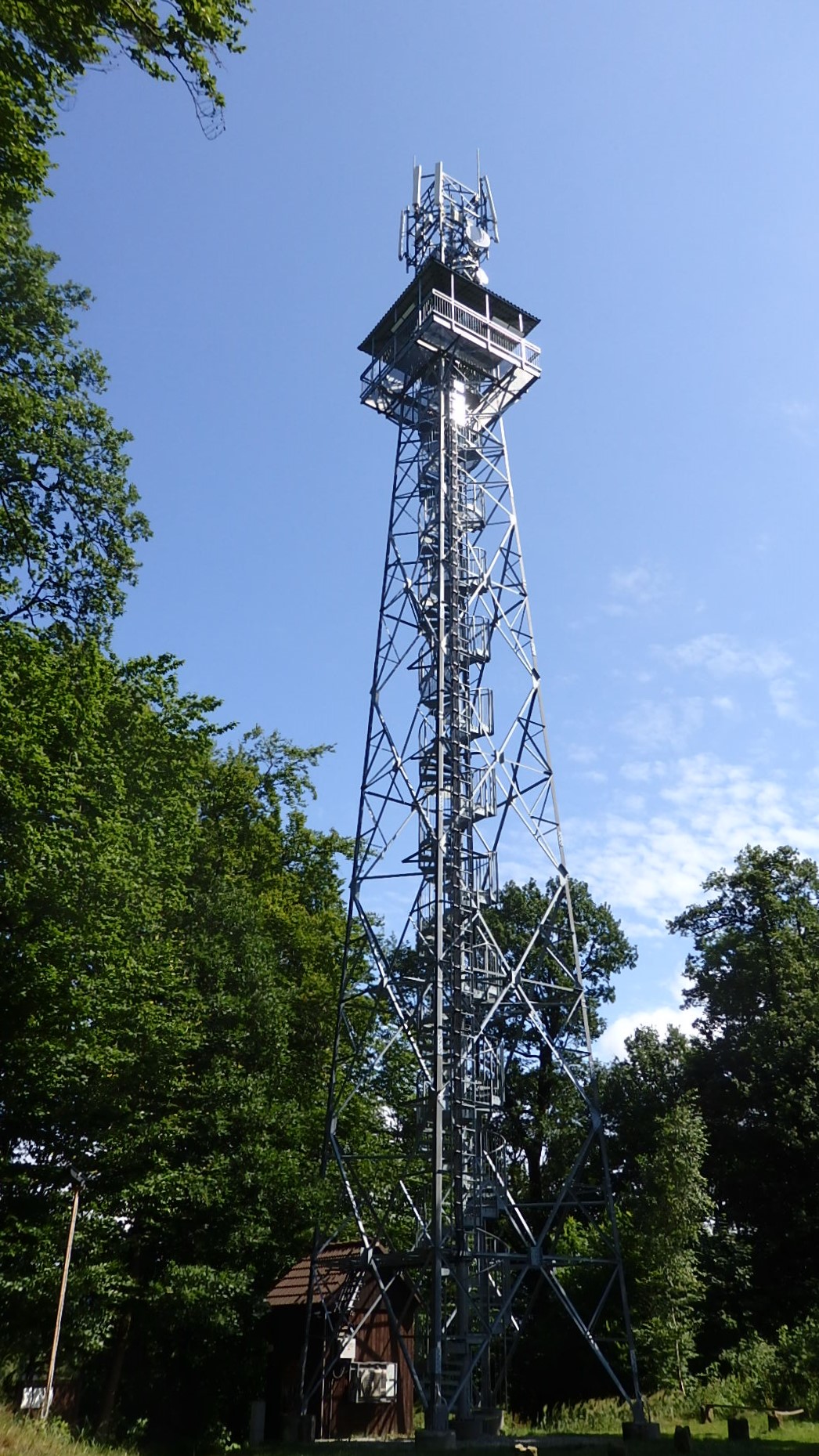
A forest track leads up to the summit and ends at a radio mast, a handy landmark for route planning. From there a narrower path continues to the upper edge of the stone sea. Jílové and the surrounding villages are the natural starting points — the approach isn't long, but the final stretch across loose rock calls for sturdy footwear, since the stones shift underfoot and get slippery after rain.
What will you see at the top?
The payoff is the view: from the upper edge of the scree field, the panorama opens onto Jílové and, across the valley, the hills of the Czech Central Highlands (České středohoří) — Výrovná, Lotarův vrch, Javorský vrch and the Bukové hory massif. It's a view built less on altitude than on contrast, between the bare, rocky slopes of Holý vrch and the gentler, open ridges facing it.
The forest itself is close to a natural state, so it rewards an unhurried pace — this is a hill better suited to watching nature closely than to a quick summit tick.
When should you visit?
Late spring and summer are best, when the orchids at Pod lesem are in bloom and the forest is fully green — also the peak season for the protected butterflies and other invertebrates the reserve was created to protect. Autumn is good for the view alone, since thinner foliage opens up the panorama further; in winter, watch for ice on the stone sea near the summit.
Frequently asked questions
How high is Holý vrch? 528 metres above sea level.
Is Holý vrch a protected area? Yes — since 26 July 2014 the summit has been a nature reserve covering 40.6 hectares, protecting near-natural forest and stone seas that shelter rare invertebrates.
Is the hike to the top difficult? The forest track is an easy walk up to the radio mast, but the final stretch to the scree field's edge is a narrow path over loose rock, so sturdy shoes are recommended.
What else is worth seeing nearby? The Pod lesem natural monument at the southern foot of the hill has rare orchids and protected butterflies — a good complement to the summit walk.
Nearby places

Earn badges for the places you visit
Download NextOnTrip, discover new places and check off your trails.