About this place
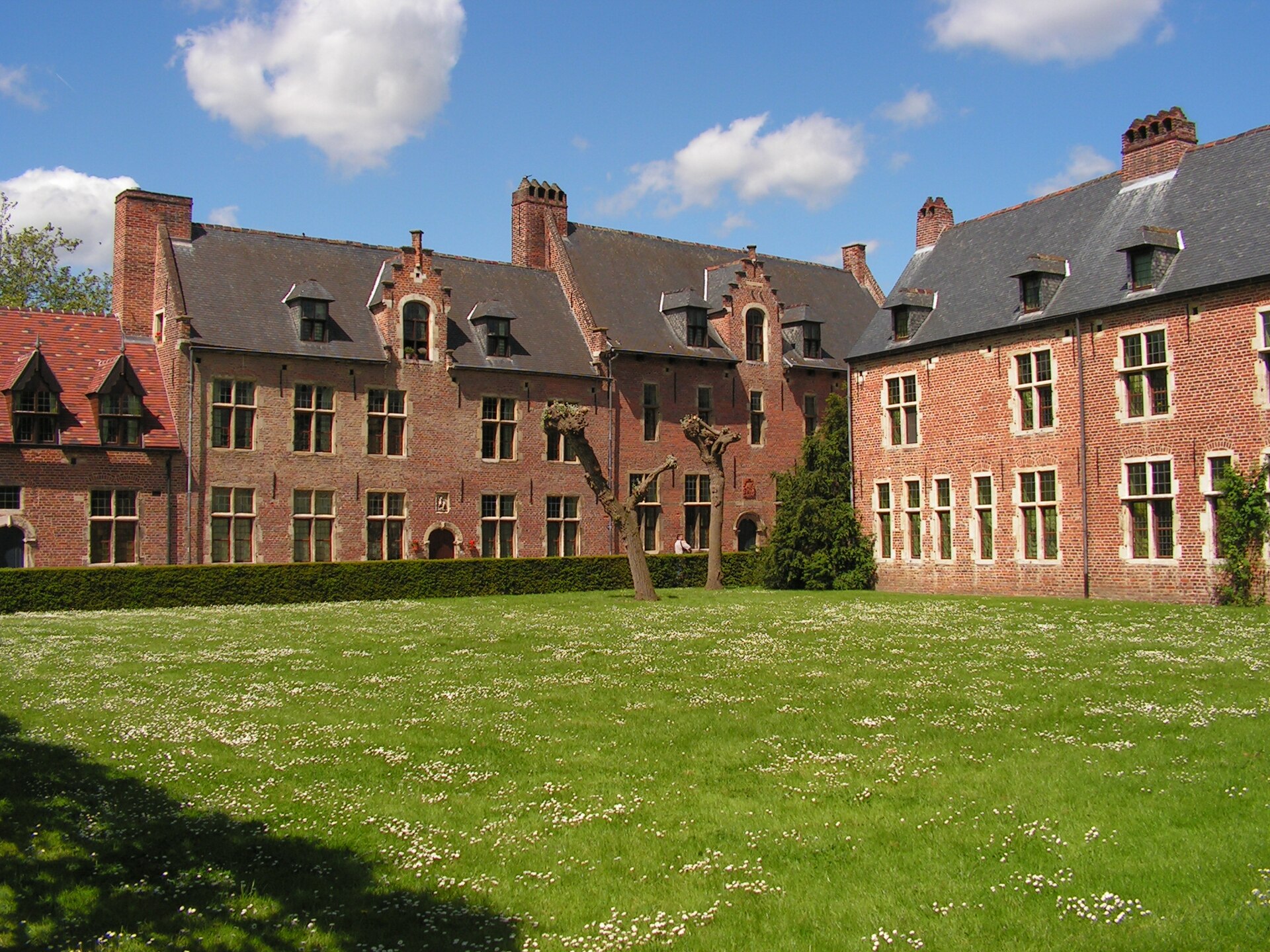
The Great Beguinage of Leuven is one of the best-preserved, fully restored historic quarters in Belgium — a compact cluster of a dozen streets in the southern part of downtown Leuven that still feels like a self-contained village tucked inside the city.
How large is the Great Beguinage?
The whole site covers roughly 3 hectares and contains almost 100 houses with about 300 apartments in total. That scale places the Great Beguinage of Leuven among the largest surviving beguinages anywhere in the Low Countries. Walking through it feels less like visiting a single monument and more like stepping into an entire, self-contained neighbourhood with its own rhythm, separate from the surrounding city center.
Why does a river run through the beguinage?
Water is one of the defining features of this place. The beguinage stretches across both banks of the river Dyle, which splits into two separate canals as it passes through the site. This division effectively creates an island within the beguinage, with the two branches of the river wrapping around it. Three bridges connect the different sections, letting visitors move freely between the parts of the quarter that sit on opposite sides of the water. The result is a quietly picturesque setting where narrow lanes repeatedly open onto canals, small bridges, and reflections of brick facades in the water.
Who owns and uses the beguinage today?
The entire complex belongs to the University of Leuven (KU Leuven) and now functions as a university campus. The houses are used mainly for housing academics, meaning the daily life of researchers and staff unfolds inside a historic residential district rather than a purpose-built campus. This gives the Great Beguinage a distinctive double identity: a protected heritage site that is also a genuinely lived-in, functioning part of a modern university.
What can you notice while walking through it?
The quarter is made up of a dozen streets lined with modest brick houses that share a remarkably consistent historic character. There are no modern insertions breaking up the streetscape — the uniform scale of the buildings and the calm, enclosed layout are exactly what make this beguinage read as a complete surviving fragment of an older city rather than an isolated relic. Look out for the subtle differences between individual streets, the small footbridges spanning the canals, and the quiet courtyards tucked between the houses.
Frequently asked questions
Can visitors walk through the beguinage? The beguinage now functions as a university campus with housing for academics, but its streets and public spaces remain open for visitors to walk through and take in the historic brick architecture and canals.
How many houses and apartments does the Great Beguinage of Leuven have? The complex includes almost 100 houses containing about 300 apartments in total, spread across roughly 3 hectares.
What sets this beguinage apart from others in the region? Its sheer size — it ranks among the largest surviving beguinages in the historic Low Countries — combined with its unusual water layout, where the river Dyle splits into two canals that form an island connected by three bridges.
Where exactly is the beguinage located? It sits in the southern part of downtown Leuven, Belgium, forming a compact, self-contained quarter of about a dozen streets.
Nearby places

Earn badges for the places you visit
Download NextOnTrip, discover new places and check off your trails.