Save this place and discover nearby attractions with NextOnTrip
In the app you can add it to your favorites, see what else is worth visiting nearby on the map, and earn a badge for your visit.
The app is available for iPhone and Android.
About this place
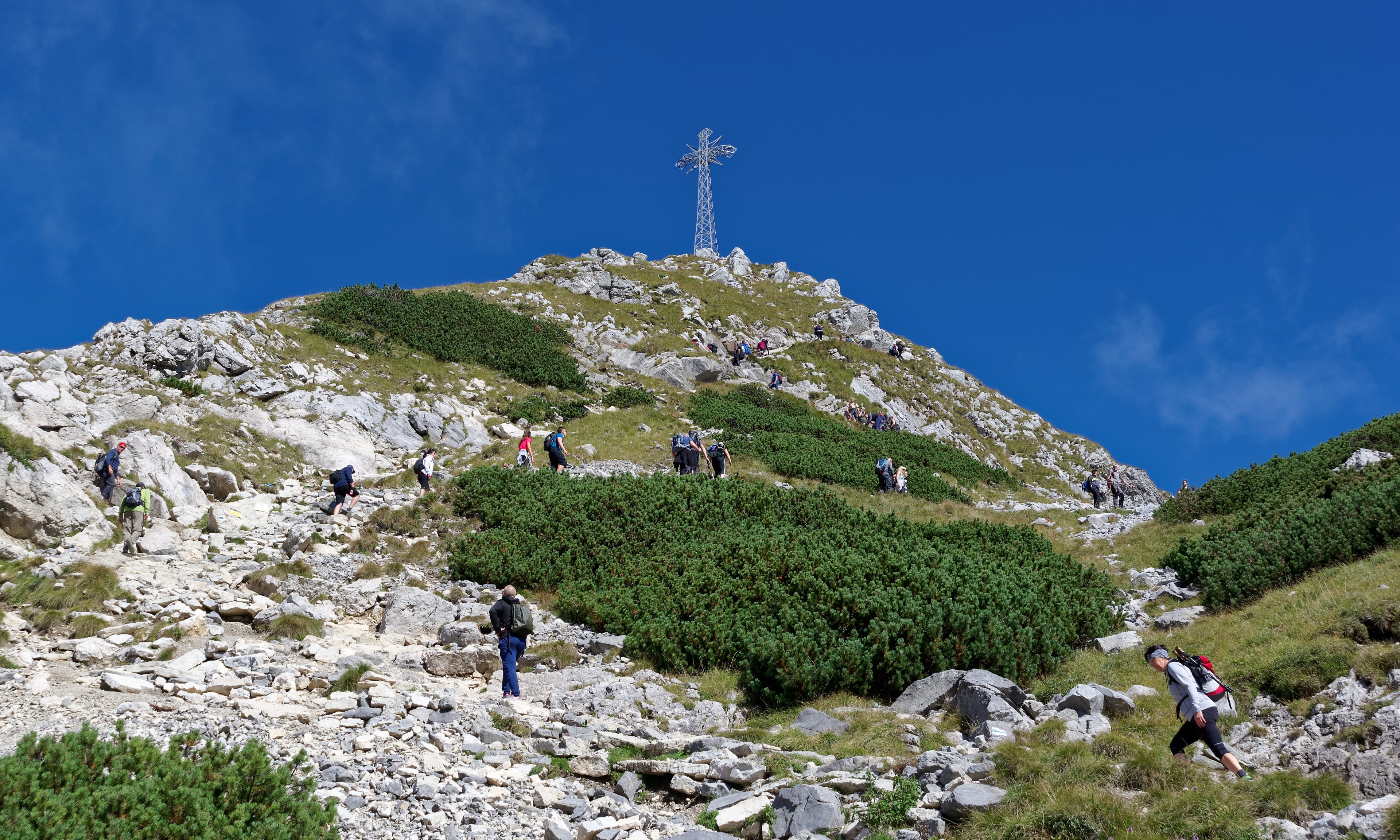
Giewont is a mountain massif in the Western Tatras that rises above Zakopane and is regarded as the symbol of the town, the Polish Tatras and the Podhale region. Its main summit, Great Giewont, stands at roughly 1,894 m (6,214 ft) above sea level; some sources give 1,895 m. It is visible from almost every street in Zakopane, which makes it the first Tatra goal for many visitors.
Where is Giewont and how big is it?
The massif is about 2.7 km long and lies entirely within Poland. Great Giewont is usually listed as the highest peak of the Western Tatras located wholly on the Polish side of the border. Technically Twarda Kopa in the Czerwone Wierchy group is higher, but it is usually left out of that ranking because of its low prominence. The summit sits at about 49.25° N, 19.93° E.
Why is it called the Sleeping Knight?
Seen from Zakopane, the ridge looks like a reclining figure, hence the nickname Sleeping Knight. One of the best-known Podhale legends goes with it: a knight (in other versions, a whole host of knights of Bolesław the Bold) sleeps beneath the mountain and will wake when Poland is in danger. Over the centuries the mountain has inspired legends, poems and works of art.
What is the cross on the summit?
A metal cross, around 15 m tall, stands on the top. It was erected in 1901, paid for by the people of Zakopane to mark the 1,900th anniversary of the birth of Christ. It is a recognisable feature of the Tatra skyline and one of the most photographed spots in the area.
How do you hike up Giewont?
The most popular approach starts in Kuźnice and follows the blue trail. One route description gives about 11.7 km and an estimated 5 hours 45 minutes, so plan for a full day. The final stretch climbs steep rock secured with chains. They give the ascent its real mountain character, but they also mean queues in high season.
What to watch out for
- The last section needs steady footing and concentration, especially on wet rock.
- Chains are no substitute for judgement: do not climb in bad weather or with a storm approaching.
- Start early to avoid crowds on the chained section.
- Bring warm clothing, water and proper hiking footwear.
Frequently asked questions
Is Giewont the highest peak in the Tatras? No. It is among the highest peaks of the Western Tatras lying entirely in Poland, but the range has much higher summits.
How long does the hike from Kuźnice take? The blue trail takes about 5 hours 45 minutes in total, depending on fitness and conditions.
Why is it called the Sleeping Knight? Because of the ridge's outline, which resembles a lying man from below, and the legend of knights waiting to defend the country.
Is Giewont a symbol of Zakopane? Yes, it is regarded as the symbol of Zakopane, the Polish Tatras and Podhale.
When was the summit cross built? In 1901, funded by the residents of Zakopane.
Giewont combines easy access with a genuine high-mountain feel. If you are planning your first serious Tatra outing it is a good choice, provided you check the forecast and plan the day carefully.
Nearby places

Earn badges for the places you visit
Download NextOnTrip, discover new places and check off your trails.