About this place
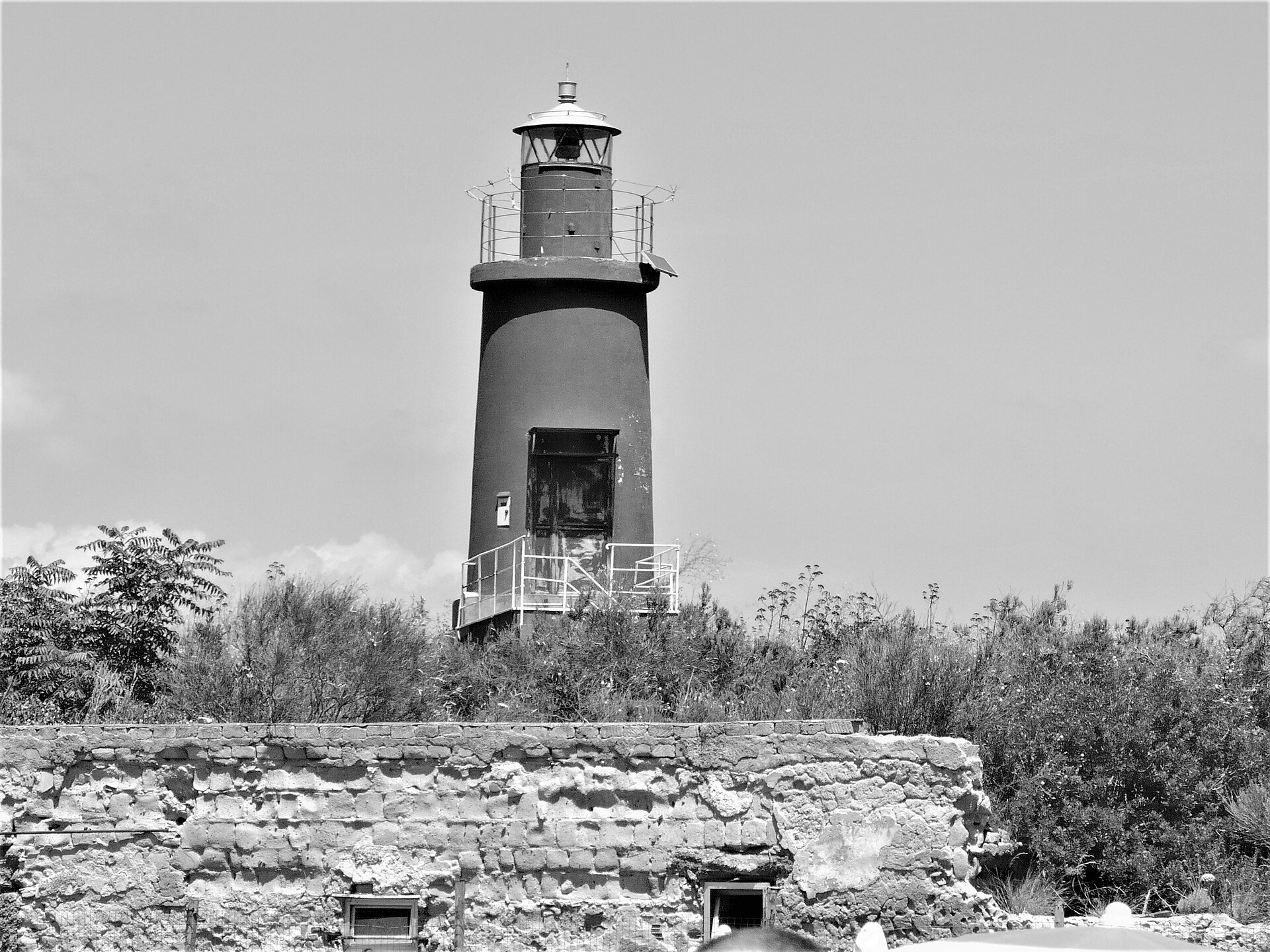
Fortino Tenaglia Lighthouse stands on a small fort built on a promontory on the western side of the Gulf of Pozzuoli, in the municipality of Bacoli, Campania, on the Tyrrhenian coast. The site sits at the tip of Punta Pennata, one of the rocky headlands typical of the Campi Flegrei (Phlegraean Fields), a coastal region shaped by volcanic activity and dotted with remains of the ancient Roman war fleet's harbor infrastructure.
Where exactly is it?
The lighthouse occupies a promontory that juts into the sea, marking the boundary between the Gulf of Pozzuoli and the rest of Bacoli's coastline. Its coordinates place it at roughly 40.812°N, 14.082°E, right at Punta Pennata — a vantage point with views across the gulf and out toward the open Tyrrhenian Sea. The surrounding terrain is characteristic of the Bacoli coast: rocky cliffs, small coves, and, on a clear day, sightlines stretching toward Procida and Ischia.
What kind of structure is it?
Fortino Tenaglia is a small coastal fortification with a working lighthouse mounted on it. The name "tenaglia" (pincers) refers to the distinctive shape of the fortification, a design typical of older coastal defenses built to guard the entrance to a bay. The lighthouse is still active today, its light guiding vessels toward the entrance of the Gulf of Pozzuoli and warning them away from the rocky edge of the promontory. It is a functional navigational installation maintained as part of the coastline's maritime signaling network, not a tourist site with visitor facilities.
How do you get there?
Fortino Tenaglia sits within the town of Bacoli, on the Phlegraean Peninsula a short distance west of Naples. The fort and lighthouse occupy the promontory itself, reached via local coastal roads; the best views of the structure come from the shoreline or from the water. Given the nature of the site — an active lighthouse built into a fortification — visitors should not expect open access to the interior; it is a restricted-access installation typical of navigational aids managed by maritime authorities.
What else is worth seeing nearby?
Bacoli and the wider Campi Flegrei area are among the most historically dense corners of Campania. In antiquity, this stretch of coast was home to Portus Julius, the base of the Roman war fleet, and nearby Misenum served as Rome's main naval harbor on the Tyrrhenian Sea. The coastline around Punta Pennata itself is a popular spot for scenic walks along the cliffs. It's worth pairing a visit here with a look at the region's volcanic crater lakes and other ancient remains scattered throughout the area.
When to visit?
Spring and autumn offer the most comfortable conditions for taking in the promontory and the lighthouse, with milder temperatures and fewer crowds than the height of summer. Sunset seen from the Punta Pennata cliffs looking toward the gulf can be particularly striking, though the rocky terrain calls for caution when moving around uneven ground near the edge.
Frequently Asked Questions
Can you go inside Fortino Tenaglia Lighthouse? No — it's an active lighthouse built into a coastal fortification, a functional navigational site rather than a tourist attraction open to visitors.
Where is Fortino Tenaglia located? On the Punta Pennata promontory, on the western side of the Gulf of Pozzuoli, in the municipality of Bacoli, Campania.
Is the lighthouse still operational? Yes, it remains an active lighthouse used to mark the entrance to the gulf for passing vessels.
What else can you see around Bacoli? The area is known for the remains of the ancient Roman naval harbor and the volcanic crater lakes typical of the Campi Flegrei, making it a good base for exploring the wider region.
Nearby places

Earn badges for the places you visit
Download NextOnTrip, discover new places and check off your trails.