About this place
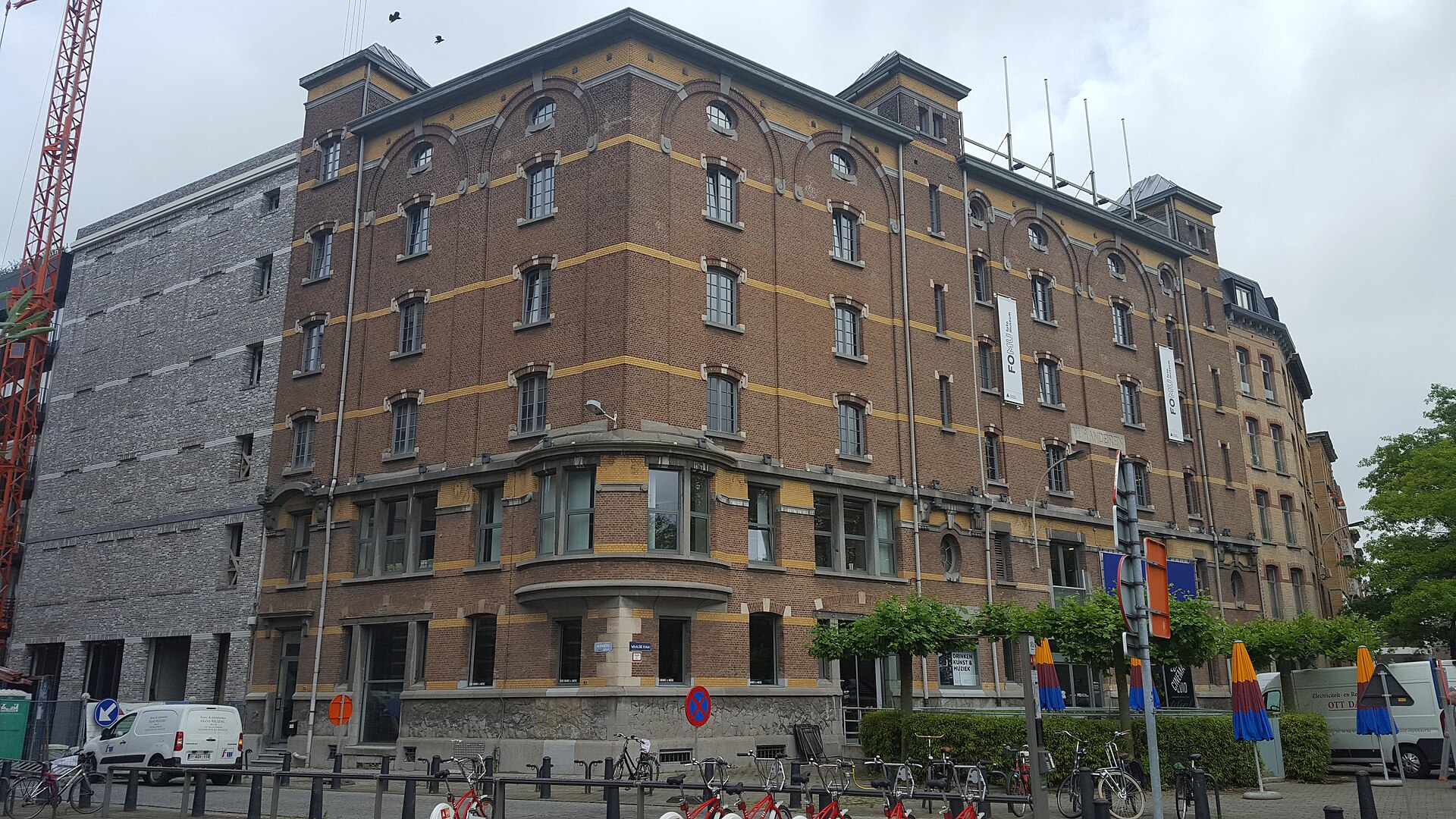
FOMU (Fotomuseum Antwerp) is a photography museum in Antwerp and one of the leading institutions of its kind in Belgium and Europe. It occupies a restored former Flanders warehouse on Waalsekaai, right in the middle of the Zuid district, an area known for its contemporary art galleries and fashion houses. The building combines the industrial shell of the old warehouse with a new wing designed by architect Georges Baines, which substantially expanded the exhibition space in the 1980s.
Where does the collection come from?
The museum's story goes back to the mid-1960s. In 1965, Karel Sano and Piet Baudouin organized the exhibition "125 Years of Photography" at the Provincial Museum of Applied Arts Sterckshof in Deurne, supported by Agfa-Gevaert, a company formed shortly before through a merger. The exhibition's success led to loans from Agfa-Gevaert, along with the archive of its former publication department, being transferred to the province of Antwerp. That transfer became the founding core of a permanent department dedicated to the history of photography.
At the end of 1980, the department moved into an office building on Karel Oomsstraat in Antwerp, where it was renamed "Museum voor Fotografie." Only in 1986 did the museum and its collections find a permanent home in the renovated warehouse on Waalsekaai, the site it still occupies today.
What can visitors see at FOMU?
The museum's holdings number more than 4 million objects, with the image collection alone comprising over 900,000 photographs spanning both historical and contemporary work. The collection reflects nearly the full history of photographic techniques, including daguerreotypes, glass plates, autochromes, negatives, slide positives, contact prints and photographic publications. Over the decades, the museum has added significant acquisitions, among them part of Fritz L. Gruber's private collection, the Agfa-Gevaert Historical Archives, and the archives of numerous Belgian photographers.
FOMU also runs an active research program, supporting projects on the conservation and digitization of historical material, such as studies analyzing old Gevaert photographic papers. Its permanent and temporary exhibitions present both classic documentary and artistic photography alongside work by contemporary artists, often placed within the broader context of the history of visual media.
Who should visit FOMU?
FOMU is a must for anyone interested in photography, the history of visual media, or industrial architecture — the building itself, blending an old warehouse with a modern extension, is worth seeing regardless of the current exhibition program. Its location in the Zuid district makes it easy to combine a visit with nearby contemporary art galleries and cafés.
Frequently asked questions
Where exactly is FOMU located? The museum is on Waalsekaai in the Zuid district of Antwerp, inside a restored former Flanders warehouse.
Where did the museum's collection originate? Its core came from Agfa-Gevaert material transferred after the 1965 exhibition "125 Years of Photography," later expanded with acquisitions such as part of Fritz L. Gruber's collection and archives of Belgian photographers.
How large is FOMU's collection? More than 4 million objects in total, including over 900,000 images covering photographic techniques from early daguerreotypes to contemporary work.
Does FOMU only show historical photography? No — alongside historical material, the museum presents contemporary photography and runs research projects and themed exhibitions.
Nearby places

Earn badges for the places you visit
Download NextOnTrip, discover new places and check off your trails.