About this place
The Roman city wall of Vienne (Enceinte romaine de Vienne) is what remains of the fortification that once encircled ancient Vienna, on the site of today's Vienne in the Isère department of France. It stands as one of the best-documented examples of Gallo-Roman city defenses and a marker of how important the town once was within Roman Gaul.
What exactly is this site?
Construction of the wall was authorized by Emperor Augustus, though most of the building work took place under Tiberius. The fortification was less about repelling a real military threat than about signaling the city's power and status — Vienna was one of the more significant settlements in Roman Gaul at the time. The wall ran along five hills on the left bank of the Rhône — Mont Salomon, Mont Arnaud, Mont Sainte-Blandine and Mont Saint-Just — stretching roughly 6 to 7 kilometers.
How large was the fortification?
The Roman enclosure ranked among the longest city walls in all of Gaul, surrounding an area of roughly 250 hectares. The wall itself measured between 2.5 and 4 meters thick and stood at least 8 meters high. Six gates once pierced its circuit, none of which survive today, along with numerous towers — some circular, either flush with the wall line or slightly recessed. Notably, the enclosed area held mostly gardens and sanctuaries, and roughly half of the ancient city's actual urban fabric lay outside the walls altogether.
What can you actually see there today?
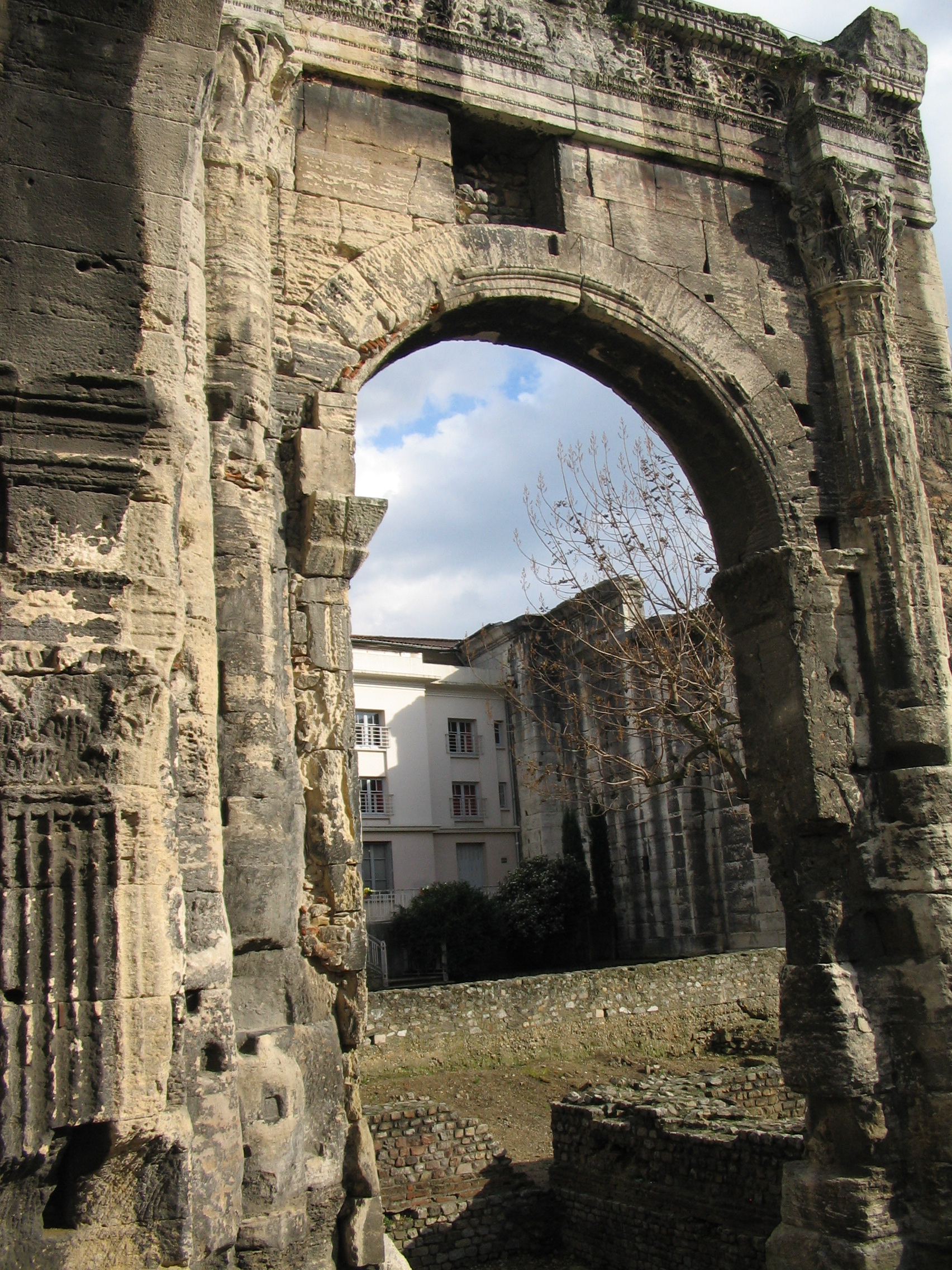
The most accessible surviving stretch sits along cours Brillier (numbers 5 to 19), where an exposed section lets visitors examine the Roman stonework up close. This portion was partially listed as a historic monument (monument historique) by a decree dated March 1, 1994. The land the wall stands on is privately owned, so viewing is limited to the exterior.
What happened to the wall afterward?
The fortification outlived the Roman era by a long stretch. Parts of it were reused during the Middle Ages, with sections still serving a defensive purpose as late as the end of the 17th century. In the 8th century, as the region faced Saracen raids, the still largely intact wall was reinforced with five forts built on the hills surrounding the town.
How do you get there?
Vienne sits in the Isère department, roughly 30 kilometers south of Lyon, on the banks of the Rhône. The town has its own train station with regular connections to Lyon, making a car-free visit straightforward. The surviving stretches of the Roman wall are scattered across town, so they're best explored as part of a broader walk through Vienne's Gallo-Roman remains, which also include a Roman theater and the Temple of Augustus and Livia.
When should you visit?
Spring and autumn offer the most comfortable conditions for walking between the exposed wall sections, with mild temperatures throughout the day. Summers in Vienne can get quite hot, which makes extended outdoor sightseeing less pleasant.
Frequently asked questions
Can visitors go inside the wall enclosure? No — the plot where the surviving section on cours Brillier stands is private property. The wall can only be viewed from outside.
How long was the full city wall? The fortification stretched roughly 6 to 7 kilometers, making it one of the longest in Roman Gaul.
How many gates and towers did the wall have? The circuit included six gates, none of which have survived, plus numerous towers reinforcing the defensive line.
Is it worth combining this with other sights in Vienne? Yes — Vienne has an unusually rich set of Gallo-Roman remains, including an ancient theater and the Temple of Augustus and Livia, making it easy to build a full day of sightseeing around the Roman wall.
Nearby places

Earn badges for the places you visit
Download NextOnTrip, discover new places and check off your trails.