Save this place and discover nearby attractions with NextOnTrip
In the app you can add it to your favorites, see what else is worth visiting nearby on the map, and earn a badge for your visit.
The app is available for iPhone and Android.
About this place
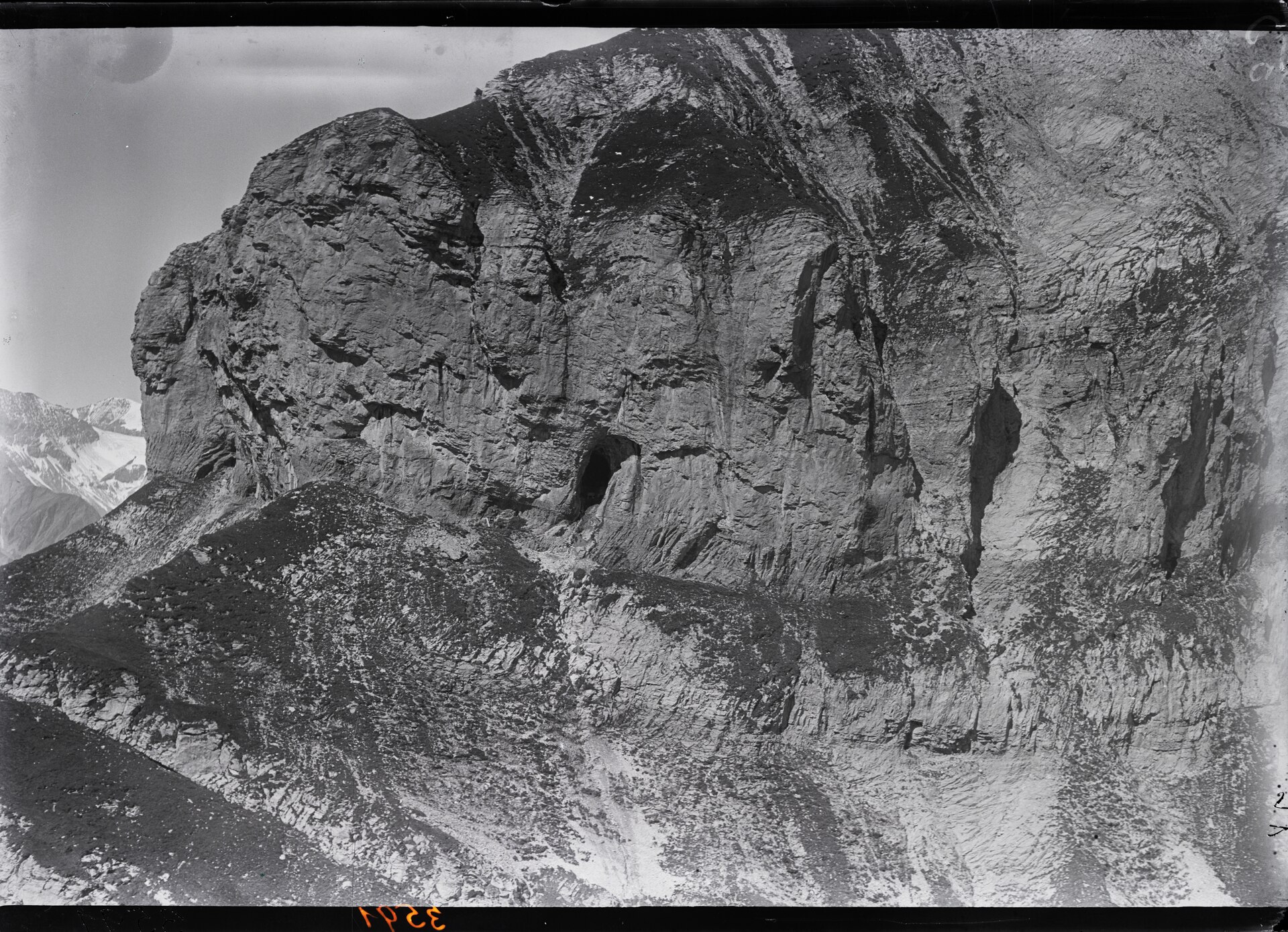
Drachenloch ("Dragon's Hole") is a high-alpine Palaeolithic cave above the village of Vättis, in the municipality of Pfäfers, canton of St. Gallen, Switzerland. It sits on the Drachenberg at roughly 2,427 m above sea level, making it one of the highest Ice Age cave sites in the Alps.
What is the Drachenloch?
The cave formed by karst dissolution in Seewerkalk limestone. It has six chambers stretching about 70 m, with an east-facing entrance. The name recalls old folk beliefs in dragons, which people blamed for the huge bones found in caves like this one. Entry is free and unrestricted, but the interior is completely dark, so bring a torch.
Why does it matter to archaeology?
In 1917 Theophil Nigg, the village teacher of Vättis, discovered cave bear bones inside. Between 1917 and 1923 he excavated the site together with the palaeontologist Emil Bächler. They uncovered a thick layer of Ursus spelaeus remains and an older hearth between the second and third chambers. Radiocarbon dating put it at more than 49,000 to 53,000 years old. A younger hearth nearer the entrance gave a date of about 5,370 years, which is probably the result of later contamination of the sample. Elisabeth Schmid re-examined the finds in 1954.
Did people really hunt bears here?
Bächler read the Drachenloch as evidence of a bear cult and Neanderthal hunting, and for decades the cave was presented as one of the oldest such sites in Europe. Today the verdict is more cautious. The Historical Lexicon of Switzerland notes that no unambiguous artefacts or butchery marks have been found. More recent research does indicate that humans visited the cave during a warmer interstadial of the last glaciation. How extensive that presence was remains debated.
How do you get to the Drachenloch?
Leave the A13 motorway (Zürich–Chur) at Bad Ragaz Nord and follow the signs to Vättis. The cave itself is reached on a mountain trail, so you need sturdy hiking footwear, reasonable fitness and good weather. At this altitude snow can linger on the path late into the season, so check current conditions before setting out.
What else is there to see in Vättis?
The village has the Drachenlochmuseum, which displays finds from the cave. Its collection also includes Roman coins and wooden sculptures from the chapel of St. Martin. The museum opens by prior arrangement, so plan your visit ahead.
Frequently asked questions
Is there an entrance fee for the Drachenloch?
No. The cave is freely accessible, with no gates or tickets. You need your own light.
How high is the cave?
About 2,427 m above sea level, on the Drachenberg above Vättis.
Did Neanderthals live in the Drachenloch?
Cave bears hibernated here, and recent research shows people visited the cave. However, no unambiguous tools have been found, and the older theories of bear hunting and a bear cult are now disputed.
Where can I see the finds from the cave?
At the Drachenlochmuseum in Vättis. Arrange your visit in advance.
Nearby places

Earn badges for the places you visit
Download NextOnTrip, discover new places and check off your trails.