About this place
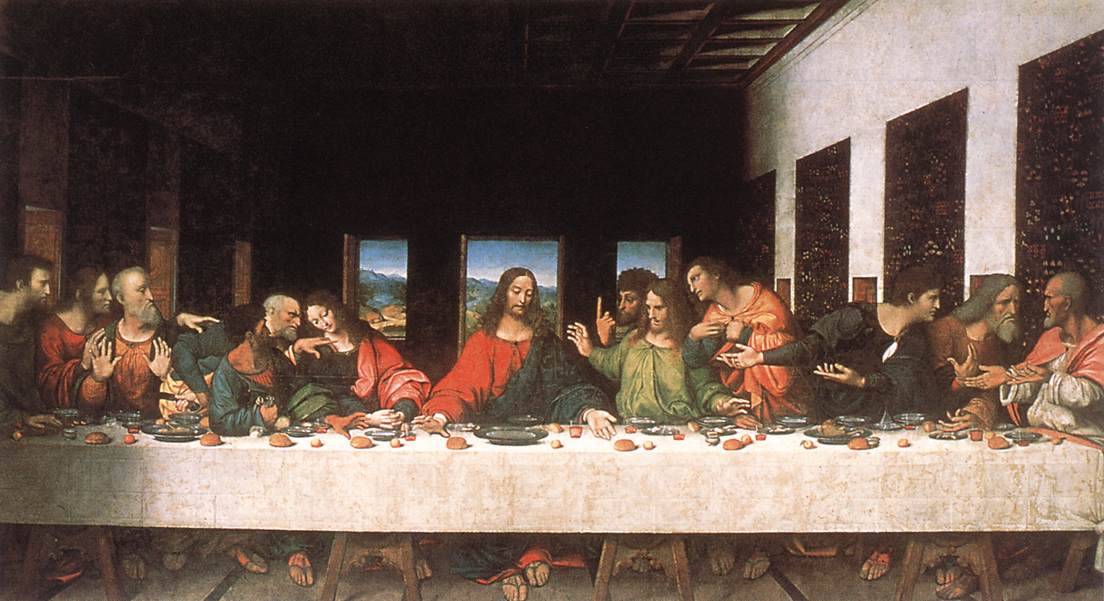
Da Vinci Museum was the name of a former exhibition venue at the Norbertine abbey of Tongerlo, a village that belongs to the municipality of Westerlo in Antwerp province, Belgium. The site owes its fame to a single object: a large-format canvas copy of Leonardo da Vinci's "The Last Supper", painted in the master's own Milan workshop around 1507–1508, while Leonardo himself was still alive.
How did a da Vinci painting end up at the abbey?
The canvas, measuring over eight by four metres, arrived in Tongerlo in 1545, when abbot Streyters purchased it and had it installed in the abbey's church of the time, giving the composition a prominent position among the abbey's possessions. Over the following centuries the painting remained part of the abbey's holdings before eventually being displayed in a dedicated museum space open to visitors.
What was the Da Vinci Museum?
The museum operated as a standalone attraction attached to the monastery, letting visitors view the copy of the famous work up close, typically alongside material explaining the canvas's history, its origin in Leonardo's workshop, and the journey it made from Milan to the Kempen region. For years the venue drew travellers exploring the Antwerp Kempen area, pairing Old Master art with the abbey's religious setting.
What changed?
The museum closed permanently on 1 November 2021. The closure coincided with the start of an extensive conservation project on the painting, carried out by restorer Katrien Van Den Bosch and her team. The restoration aimed to clean and stabilise the centuries-old canvas, which after decades on public display needed professional treatment.
Where can the painting be seen today?
The conservation work was completed in the summer of 2025, and "The Last Supper" returned to Tongerlo — this time placed inside the abbey church rather than the former museum building. In practice, the museum as a separate visitor attraction no longer exists, while the artwork that made it famous is once again on view within the abbey complex.
Why this story matters
The history of the Tongerlo canvas illustrates how works produced in Leonardo da Vinci's circle reached distant corners of Europe through commissions from powerful church patrons. Although not painted by Leonardo's own hand, the Milan workshop copy is regarded as one of the oldest and most faithful surviving versions of the composition, which explains the centuries of effort put into preserving and displaying it.
Frequently asked questions
Is the Da Vinci Museum in Tongerlo still open? No, it closed permanently in November 2021 for the painting's conservation.
Can the da Vinci painting still be seen in Tongerlo? Yes, since summer 2025 the restored "Last Supper" has been on display in the abbey church of Tongerlo.
Is it an original Leonardo da Vinci work? No, it is a 16th-century canvas copy made in Leonardo's Milan workshop, bought by the abbey in 1545.
Where exactly is Tongerlo abbey located? In the village of Tongerlo, part of the municipality of Westerlo in Antwerp province, Belgium.
Nearby places

Earn badges for the places you visit
Download NextOnTrip, discover new places and check off your trails.