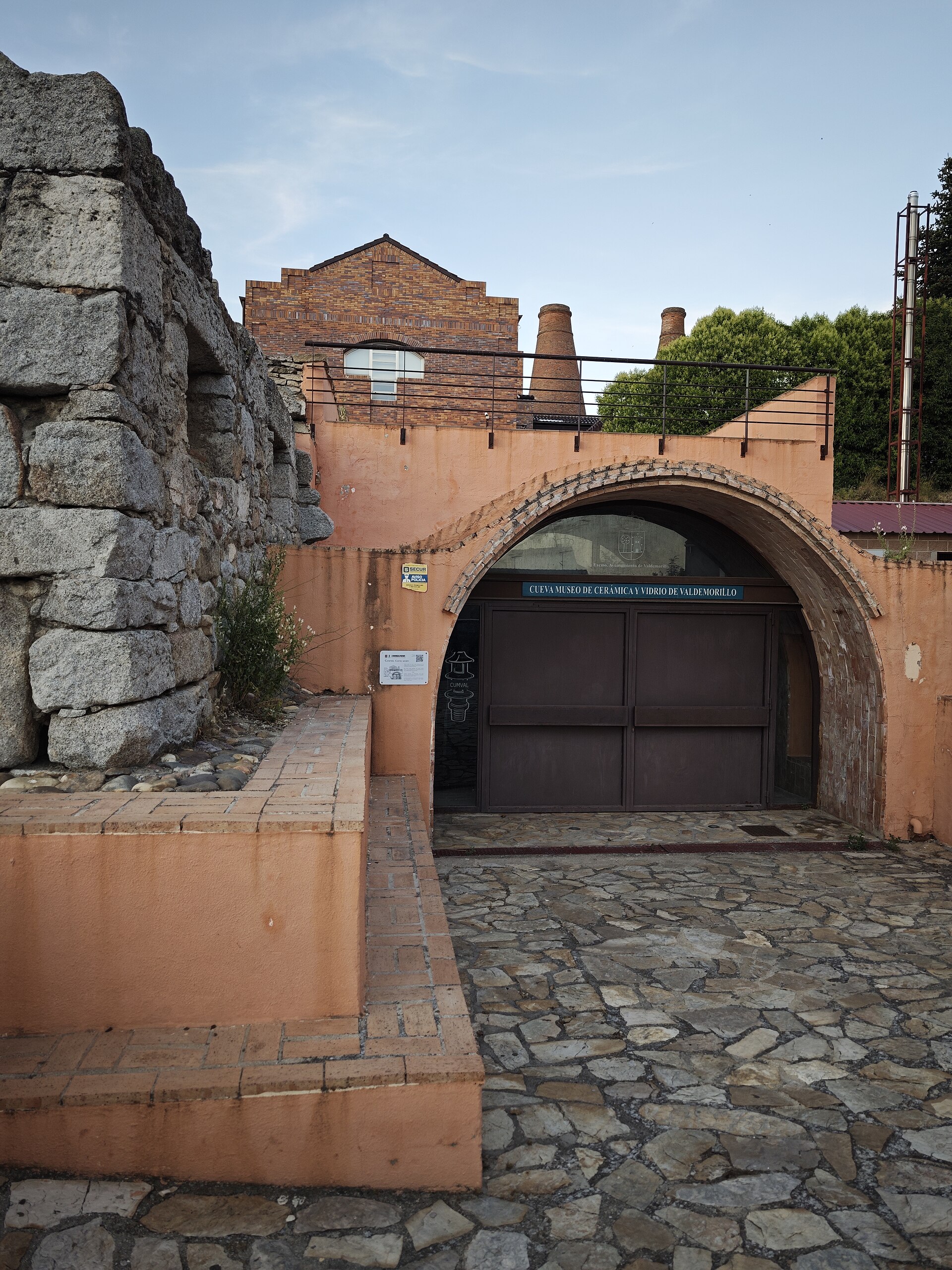
About this place
Cueva Museo de Cerámica y Vidrio is a small but striking museum tucked inside an artificial cave on Avenida de Segovia in Valdemorillo, a town west of Madrid. It brings together geology and industrial history — the cave itself dates back centuries, while the objects inside tell the story of a period when Valdemorillo was a notable center of ceramics and glass production in Spain.
What is this cave, and why is there a museum inside it?
The cave now housing the exhibition originally served as a natural ice store: locals packed it with snow and ice collected in winter, which was then used to keep food cold throughout the rest of the year. Later, as the town's ceramics factory grew, the cave was repurposed as a soaking pit for kaolin, the raw clay mineral needed to make porcelain. It wasn't until 2007 that the space reopened in its current form, as a museum dedicated to the town's industrial heritage.
What will you see inside?
Inside the cave sit more than a hundred pieces connected to Valdemorillo's historic ceramics and glass factory, active through the 19th and 20th centuries and known as the Juan Falcó factory, or Sociedad del Aulencia, founded in 1845. The collection includes Roman pottery fragments found in the area, electrical insulators produced for period infrastructure, laboratory porcelain, and — perhaps the standout piece — the first heat-resistant glass ever manufactured in Spain, made right here in Valdemorillo. A separate group of pieces consists of tableware commissioned for the Spanish royal household, used by Alfonso XII and Alfonso XIII. The Falcó factory won awards at national and international fairs and was among the first in the region to use decal decoration on its wares.
How do you get to the museum?
Valdemorillo sits in the Sierra Oeste area of the Madrid region, and the easiest way to reach it is by car — the drive from central Madrid typically takes around 40 to 50 minutes. The museum is located on Avenida de Segovia, in an easily accessible part of town. It's worth pairing a visit with a wider walk around Valdemorillo, since the town has a rich history tied to stonework and traditional crafts that many visitors enjoy exploring alongside the museum.
When should you visit, and how do you book?
Visits to the Cueva Museo de Cerámica y Vidrio only happen by prior appointment — there's no walk-in access. Admission is free, and you arrange a visiting slot by contacting the local town hall, either by email (cultura@aytovaldemorillo.com) or by phone (+34 91 897 76 15). Because the interior is compact, group sizes tend to be limited, so it's worth reaching out ahead of time, particularly if you're planning a weekend visit or coming during the busier tourist months.
Who is this museum for?
This is a destination for visitors interested in local industrial history, ceramics, and craftsmanship, as well as anyone looking for a quieter, less obvious stop near Madrid. Given its small size and cave setting, it works best as part of a longer day exploring Valdemorillo rather than as a standalone full-day destination.
Frequently Asked Questions
Is admission to the museum free? Yes, entry is free, but you need to book a visiting slot in advance by phone or email.
Do I need to book ahead? Yes — the museum operates strictly by appointment, arranged directly with the town hall, rather than allowing walk-in visits.
What's the most interesting piece on display? Many visitors are drawn to the first heat-resistant glass ever made in Spain, along with the tableware produced for the Spanish royal family.
How long does a visit take? Given the cave's small size, a typical visit lasts around 30 to 45 minutes.
Nearby places

Earn badges for the places you visit
Download NextOnTrip, discover new places and check off your trails.