About this place
Cueva de los Murciélagos is a karst cave located about 4 km southeast of the town of Zuheros, in the province of Córdoba, Andalusia. It sits within the Sierras Subbéticas Natural Park, cut into a limestone massif that rises above a landscape of olive groves. The name translates as "cave of the bats," a direct reference to one of the largest bat colonies in Andalusia, which still roosts deep inside the system today.
How do you get there?
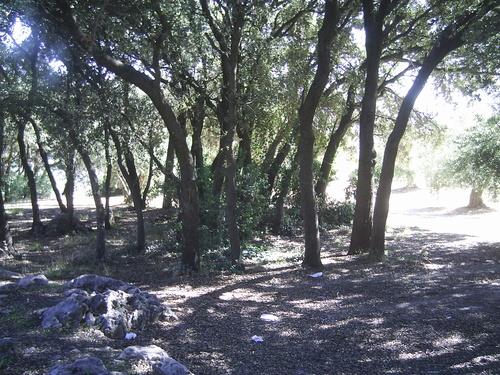
The starting point is Zuheros itself, a whitewashed village regularly ranked among Spain's most beautiful, with a hilltop castle overlooking the rooftops. A signposted footpath climbs from the village center through rocky, Mediterranean scrubland terrain for a few kilometers before reaching the cave entrance. The path is steep, so sturdy walking shoes and water are worth carrying, especially in summer. Cars can be left at a car park at the base of the hill, leaving only the final stretch on foot. Entry to the interior is only possible as part of a guided group tour, so booking a slot in advance at the Zuheros tourist office is recommended.
What will you see inside?
The cave was discovered in 1868, though systematic scientific study did not begin until 1938. Inside, a sequence of chambers and passages has been carved through limestone by water over thousands of years, featuring stalactite and stalagmite formations that guides illuminate along the route for a striking visual effect. Deep, humid corridors of this kind are exactly what the resident bat colony relies on, making the cave one of the region's more significant roosts; their presence is also why access to certain sections can be restricted during breeding periods, to avoid disturbing the animals. Guides typically cover both the cave's geology and its ecological importance as a habitat for protected bat species during the visit.
When is the best time to visit?
Spring and autumn are the most comfortable seasons for the hike up, while the cave's interior stays cool and stable year-round regardless of the weather outside — a light jacket is worth bringing along. Córdoba summers can be intensely hot, so tackling the approach trail early in the morning is the better strategy. In winter the path can turn slippery after rain, though the cave itself remains open. It's worth combining the visit with a walk through Zuheros itself — its castle, old town, and viewpoints over the valley — to make a full day of this corner of the Sierras Subbéticas.
Frequently asked questions
Can you visit the cave on your own? No — visits only run as guided group tours, both for safety reasons and to protect the bat colony and the cave's rock formations.
How long does the walk from Zuheros take? The uphill approach typically takes between thirty minutes and an hour, depending on fitness and pace, along a steep, rocky trail.
Is the cave suitable for children? The approach trail demands a reasonable level of fitness because of the incline, but older children generally manage it without trouble when accompanied by adults.
Why is it called the "cave of the bats"? The name comes from the large bat colony that roosts inside — one of the biggest in Andalusia — making the site an important shelter for these animals.
Nearby places

Earn badges for the places you visit
Download NextOnTrip, discover new places and check off your trails.