About this place
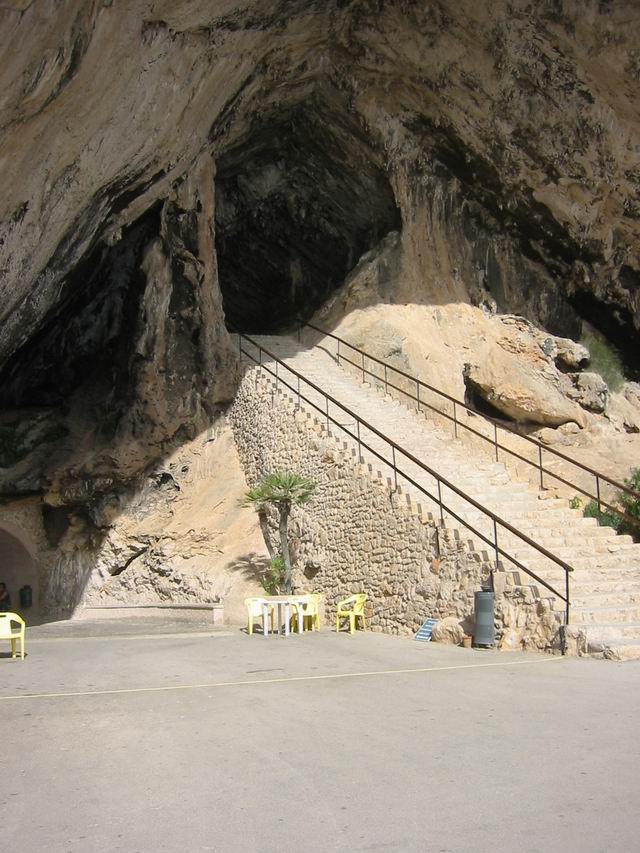
Cova des Pirata is an underground cave system in the municipality of Manacor, Mallorca, cut into Upper Miocene limestone near the island's eastern coastline.
Where exactly is Cova des Pirata?
The cave sits on the Son Forteza estate, roughly 12 kilometers from central Manacor, along the stretch of coast between Porto Cristo and Porto Colom. Its entrance lies southeast of the Ma-4014 road and north of Cala Falcó, a short distance from the shoreline. This part of Mallorca's east coast is defined by jagged cliffs, small coves, and a dense network of underground passages carved by water through soft limestone over thousands of years.
What's actually down there?
Cova des Pirata isn't a single cavern but an entire complex — a group of up to eight underground cavities, only two of which have been thoroughly explored and documented so far. The rest remain largely unmapped, which makes the site a point of interest for speleologists studying Mallorca's karst cave systems. Its entrance sits close to the neighboring Cova des Pont, and the two are actually joined below ground by a submerged passage — discovered and named separately, but part of one connected system underwater. Locally, the whole complex goes by several names, including del Pirata, del Puente, de los Corderos, de la Herrada, del Moro, and Cova de Cala Falcó, a reflection of how layered the naming history of this stretch of coast really is.
Where does the name come from?
The name traces back to an 18th-century legend tied to the history of the Son Forteza estate. The story blends two threads: the kidnapping of the estate's owner by pirates, and the tale of a wounded pirate who is said to have hidden in this very cave to recover from his injuries. Over time the legend fused permanently with the site's name, giving it the air of mystery that runs through many of Mallorca's coastal caves, where pirate and smuggler folklore is woven into local identity.
How do you get there?
The reference point is the Ma-4014 road, which connects the area around Porto Cristo with Porto Colom — the cave lies southeast of it, toward the coast and Cala Falcó. Given how close it sits to the sea and the rugged terrain, the best approach is a short walk in from the nearest accessible point along the road, ideally as part of a wider day out along Mallorca's east coast that takes in Manacor, Porto Cristo, and Porto Colom.
When's the best time to visit?
Cave interiors hold a fairly constant temperature year-round, so the usual seasonal restrictions don't apply as strongly here. It's still worth skipping the peak summer months, when the walk in from the coast can be uncomfortably hot, in favor of spring or early autumn — outside temperatures are milder then, and the nearby coves are quieter.
Frequently asked questions
Can you actually visit Cova des Pirata? It isn't set up for tourism the way Mallorca's major show caves are — this is a site for people interested in karst landscapes and local history, sitting on private estate land.
How many caves make up the complex? The system counts up to eight underground cavities in total, though only two have been properly surveyed and described.
Are Cova des Pirata and Cova des Pont the same cave? They're two separately named caves, but their entrances sit close together and a submerged passage links them underground.
Where does the pirate legend come from? The name recalls an 18th-century tale of a wounded pirate who took refuge inside the cave, tied to the story of the Son Forteza estate owner's kidnapping by pirates.
Nearby places

Earn badges for the places you visit
Download NextOnTrip, discover new places and check off your trails.