About this place
Cova de la Taverna is a cave in the municipality of Margalef, in the Priorat region of Tarragona province, Catalonia. It sits right next to the reservoir that shares its name and runs parallel to the Barranc de la Taverna stream, effectively forming that stream's underground channel.
Where is it located?
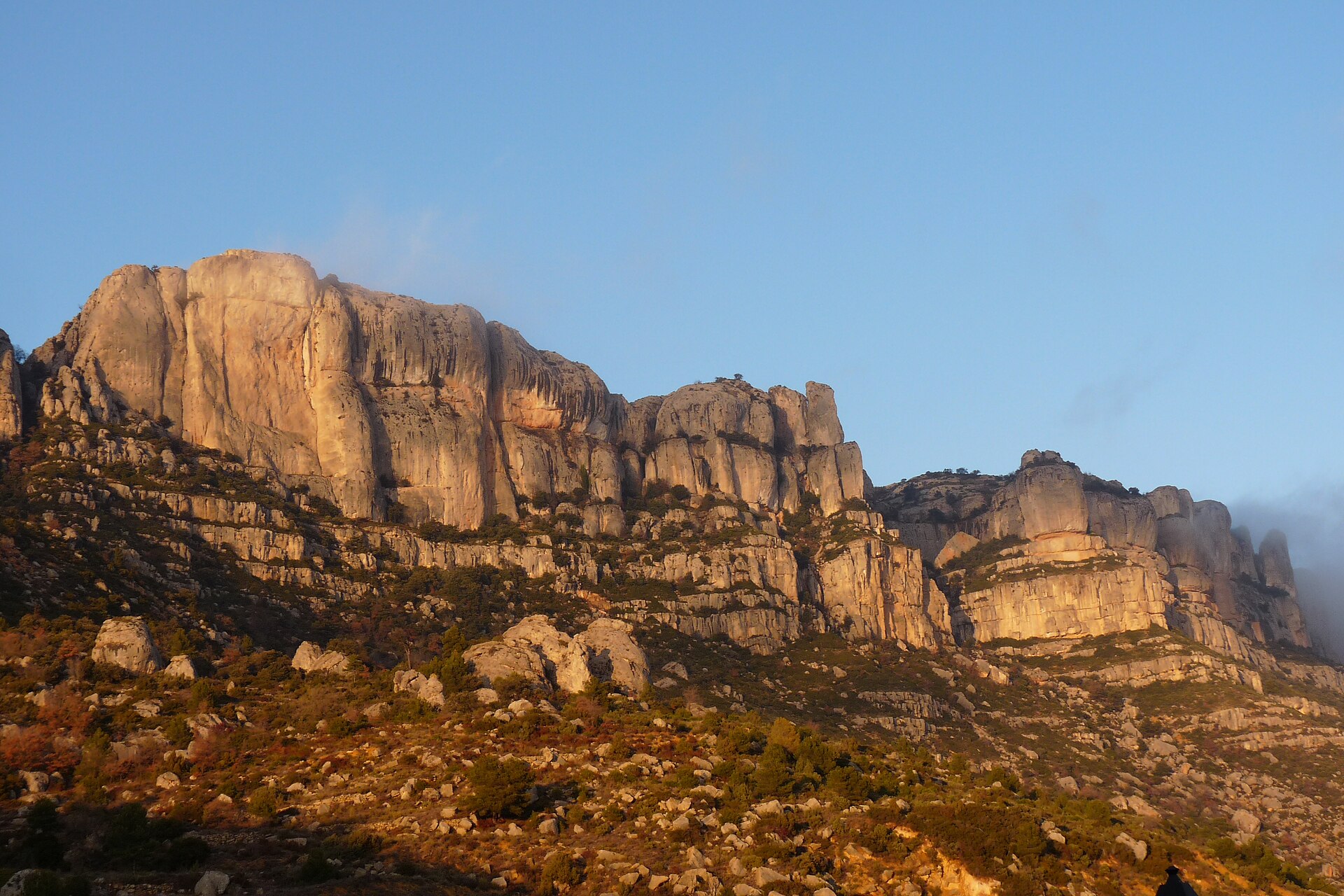
The cave lies within the Montsant massif, close to the village of Margalef — a spot well known among hikers and climbers visiting Priorat. Its entrance neighbors the dam and reservoir, making it an easy landmark to find for anyone walking the trails along the stream valley.
What will you see inside?
Cova de la Taverna is a conglomerate cave, carved into the pebble-and-gravel rock typical of the Montsant area, naturally cemented together over time. Its passages stretch roughly 472 meters and drop 53 meters in elevation. A small stream runs through the interior — the underground stretch of the Barranc de la Taverna — and its flow increases noticeably after heavy rain.
The cave's most remarkable feature is one of the oldest rock paintings found in Catalonia: an image believed to depict the head of a goat or similar caprine animal. This find gives the cave significance well beyond its geology, making it a point of interest for anyone curious about the region's archaeology and history. The cave was first mentioned in 1918, in Joan Ferraté's work on the speleology of the Tarragona area, and its first complete survey of the passages was produced in 1967 during a caving camp held in Margalef.
How do you get there, and what should you bring?
The route to the cave follows the trail along the Margalef reservoir and the Taverna stream valley — a popular walk that combines scenery with underground exploration. The cave itself is considered suitable for beginners: at its trickier points, via-ferrata-style metal steps and knotted ropes have been installed, so getting through the harder sections doesn't require specialized climbing gear.
Even so, bring a helmet with a headlamp, a backup light source, and clothing and footwear suited to wet, sometimes slippery conditions — the stream running through the passages means water is a constant presence. Because of that same stream, entering the cave during or right after heavy rain is dangerous and not recommended, since water levels can rise quickly.
When is the best time to visit?
The dry season is the best time to explore, when water flow through the passages is low and the approach along the stream valley stays safe. Check rainfall forecasts before planning a visit and avoid entering after rainy days.
Frequently asked questions
Is Cova de la Taverna suitable for beginners? Yes. Thanks to the via-ferrata-style steps and knotted ropes installed at the harder sections, the cave is accessible even to people with no prior caving experience, as long as basic precautions are followed.
What gear do you need? A helmet with a headlamp is essential, along with a backup light and clothing and footwear that can handle mud and moisture — there's a stream running through the cave.
Is it safe to visit after rain? No. The stream running through the passages rises significantly after heavy rain, making entry dangerous — plan your visit for the dry season instead.
What makes this cave special? Beyond its conglomerate rock formation and stream, the cave holds one of the oldest rock paintings in Catalonia, believed to show the head of a caprine animal, known to speleologists and archaeologists since the early 20th century.
Nearby places

Earn badges for the places you visit
Download NextOnTrip, discover new places and check off your trails.