Save this place and discover nearby attractions with NextOnTrip
In the app you can add it to your favorites, see what else is worth visiting nearby on the map, and earn a badge for your visit.
The app is available for iPhone and Android.
About this place
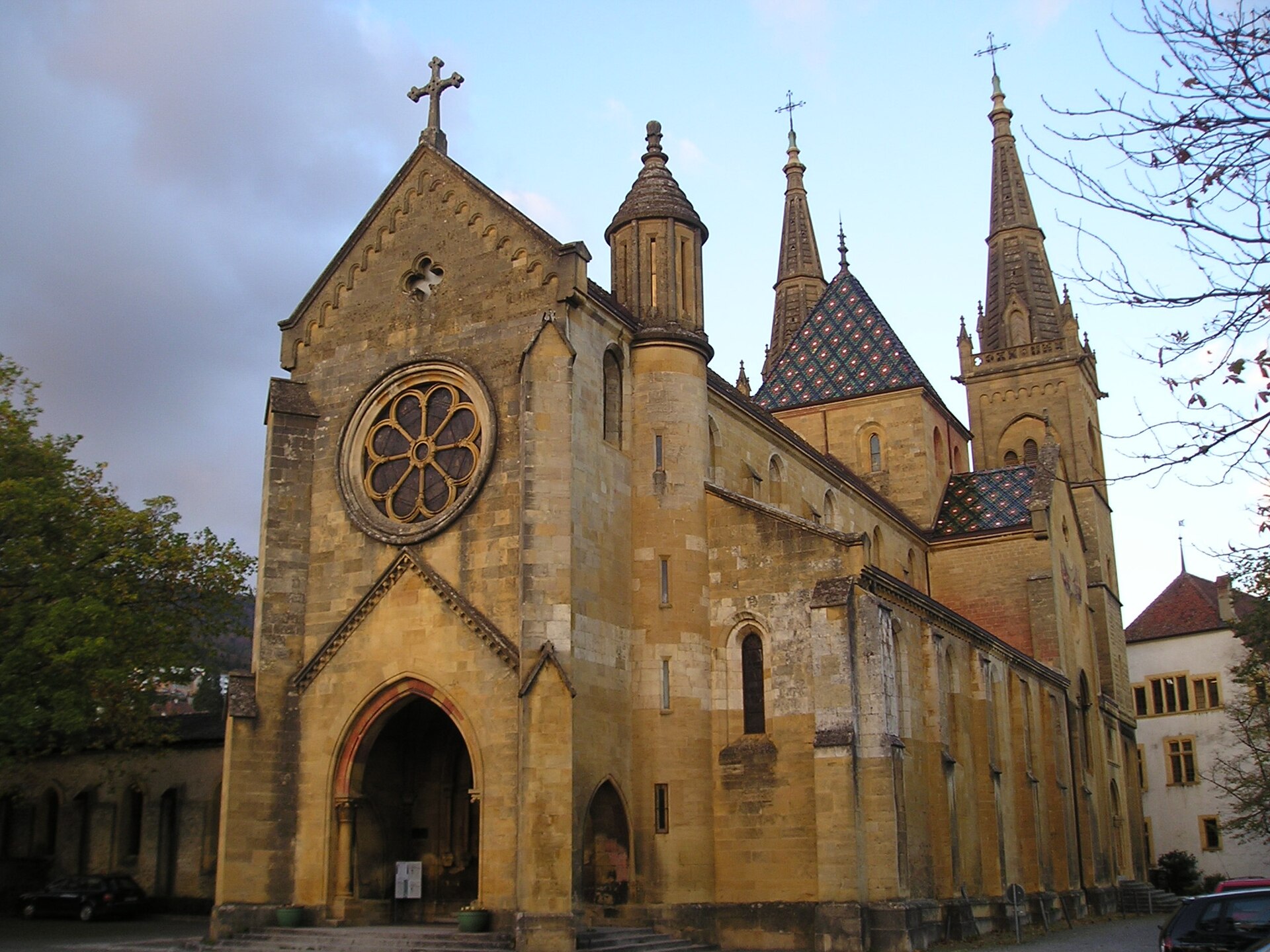
Église Saint-Maurice in Le Landeron is the Catholic parish church of a medieval walled town in the canton of Neuchâtel, close to Lake Biel. It belongs to the Diocese of Lausanne, Geneva and Fribourg, and makes a natural starting point for a walk through one of western Switzerland's best-preserved small towns.
Where is the church, and what is Le Landeron?
The town sits on a moraine mound in the marshy Thielle plain, near the western end of Lake Biel. Count Rollin of Neuchâtel bought the meadow in 1325 and built the fortified town in 1328–1329. An earlier settlement called Nugerol had been destroyed after 1309. The old centre is listed in the Swiss federal inventory of heritage sites (ISOS) as a small town of national importance.
What is the history of the parish?
The dedication points to the abbey of Saint-Maurice d'Agaune in the Valais. The Historical Dictionary of Switzerland says that abbey founded the first parish church. Early in the 11th century it was acquired by the advocate Rodolphe, and the right to appoint the priest then changed hands several times: the counts of Neuchâtel, the abbey of Cerlier (Erlach) in 1231, Bern after the Reformation, and the state of Neuchâtel from 1827.
In the Middle Ages two churches stood at Nugerol, and Saint-Maurice was one of them. The old building was pulled down in 1828, and only one chapel off its nave, the Chapelle du Scapulaire, survived. The present church dates from the 19th century and underwent a full restoration around 1986–1992, documented in the Swiss federal archives.
What else is there to see nearby?
- Chapelle du Scapulaire. A confraternity of Our Lady of Mount Carmel was founded here in 1671. A vault keystone carries the town's arms and the date 1674. Recent work uncovered a polychrome decoration of 1683 beneath modern plaster, in Counter-Reformation Baroque style. After 1828 the chapel went to the Capuchins and served as a funeral chapel until 1922. Its Baroque altarpiece, with twisted columns and an Assumption of the Virgin, is now in the town hall museum.
- Saint-Maurice fountain. One of the town's fountains, with origins going back to 1574.
- Chapel of the Ten Thousand Martyrs. Consecrated in 1455, it stands within the old town.
- Musée de l'Hôtel de Ville. The town hall museum, which holds the altarpiece mentioned above.
When should you visit?
Go during the day, when the church is open to worshippers, and keep quiet during services. Le Landeron hosts one of Switzerland's largest antiques fairs (the brocante), held since 1973. The streets get crowded then, so choose another date for a calm visit.
Frequently asked questions
Is Saint-Maurice a Catholic church? Yes. It is the parish church, part of the Diocese of Lausanne, Geneva and Fribourg.
Does the medieval church still exist? No. It was demolished in 1828. Only the Chapelle du Scapulaire, a former side chapel, remains.
Why is it named after Saint Maurice? The Historical Dictionary of Switzerland says the abbey of Saint-Maurice d'Agaune founded the parish.
How long does a visit take? A quarter of an hour covers the church and chapel. Allow about two hours with the fountains, the Chapel of the Ten Thousand Martyrs and a walk around the old town.
Nearby places

Earn badges for the places you visit
Download NextOnTrip, discover new places and check off your trails.