About this place
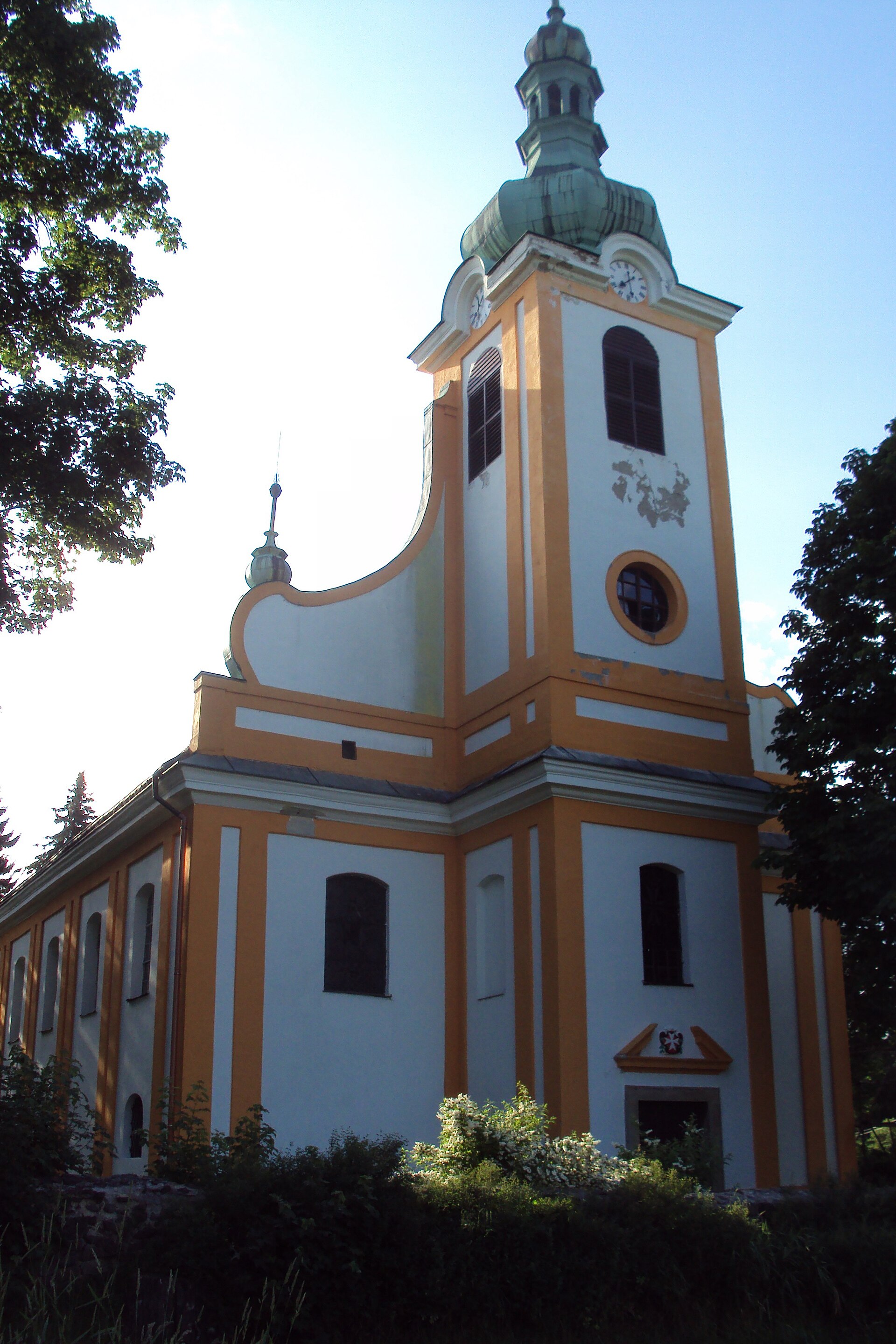
The Church of Saint James the Greater is a late Gothic dean's church standing right in the historic center of Česká Kamenice, a small town in the Ústí nad Labem region of the Czech Republic, just off Jakubské náměstí square. It is one of the town's oldest and most recognizable landmarks, with its tall tower visible from most of the surrounding streets.
How do you get there?
The church sits in the compact core of Česká Kamenice, a short walk from the main square (náměstí Míru), surrounded by well-preserved historic townhouses. The town itself lies in Bohemian Switzerland, roughly 15 km from Děčín, so the easiest way in is by car or by local train/bus from Děčín or Rumburk, followed by a short walk — the center is small enough that no local transport is needed once you arrive.
What will you see at the church?
The current three-nave structure blends its late Gothic foundations with Classicist and Rococo interior decoration, the result of several rebuilding campaigns over the centuries. One distinctive feature is a covered corridor that once connected the church directly to a nearby castle, allowing the estate's owners to walk to services without stepping out onto the street. The building is topped by a roughly 46-meter tower dating from the 16th century, which originally formed part of the town's fortifications and served a watchman's function — a resident tower keeper monitored the surrounding area and warned townspeople of danger such as fire or approaching troops. Nearby stand an Evangelical church and the Chapel of St. Mary, together forming a small but dense cluster of religious buildings right in the town center.
What is the history behind the church?
The foundations of the present building date back to the 12th century, though the first written record of the church only appears in 1352. During the 14th century it was raised to the status of a parish church, and in 1622 it became a dean's church, reflecting its growing importance for the wider region. The original single-nave structure did not survive unchanged: in 1444 it was burned and largely destroyed during an attack by forces of the Lusatian Six Cities, an alliance of towns then contesting influence in the region. Reconstruction followed in 1562, and a more thorough rebuilding took place between 1604 and 1605 under master builder Peter Patzenhauer — it was this campaign that gave the church much of the form it retains today. The building is now listed as a protected cultural monument in the Czech Republic, ensuring its ongoing legal protection and conservation.
When is the best time to visit?
Česká Kamenice lies at the heart of Bohemian Switzerland, so spring and summer are the most rewarding seasons, with long days and full access to the surrounding hiking trails. Autumn offers a quieter way to explore the town center, away from the crowds heading to the region's natural attractions. It's worth combining a visit to the church with a walk around the main square and the neighboring lanes, where the historic townhouse architecture has been well preserved.
Frequently asked questions
Can you go inside the church? The building functions as an active dean's church, so access to the interior depends on service times and any parish events — it's worth checking current opening information locally or with the parish before visiting.
What makes the church's architecture distinctive? The combination of a late Gothic, three-nave structure with Classicist and Rococo interior decoration, a result of successive rebuildings following the destruction of 1444.
Why was the church connected to a castle? A covered corridor linking the church to the nearby castle allowed the estate's former owners to reach services directly from their residence without crossing the town square.
What was the church tower used for? The 16th-century, roughly 46-meter tower originally formed part of the town's fortifications — a resident tower keeper watched over the surroundings and warned residents of dangers such as fire.
Nearby places

Earn badges for the places you visit
Download NextOnTrip, discover new places and check off your trails.