About this place
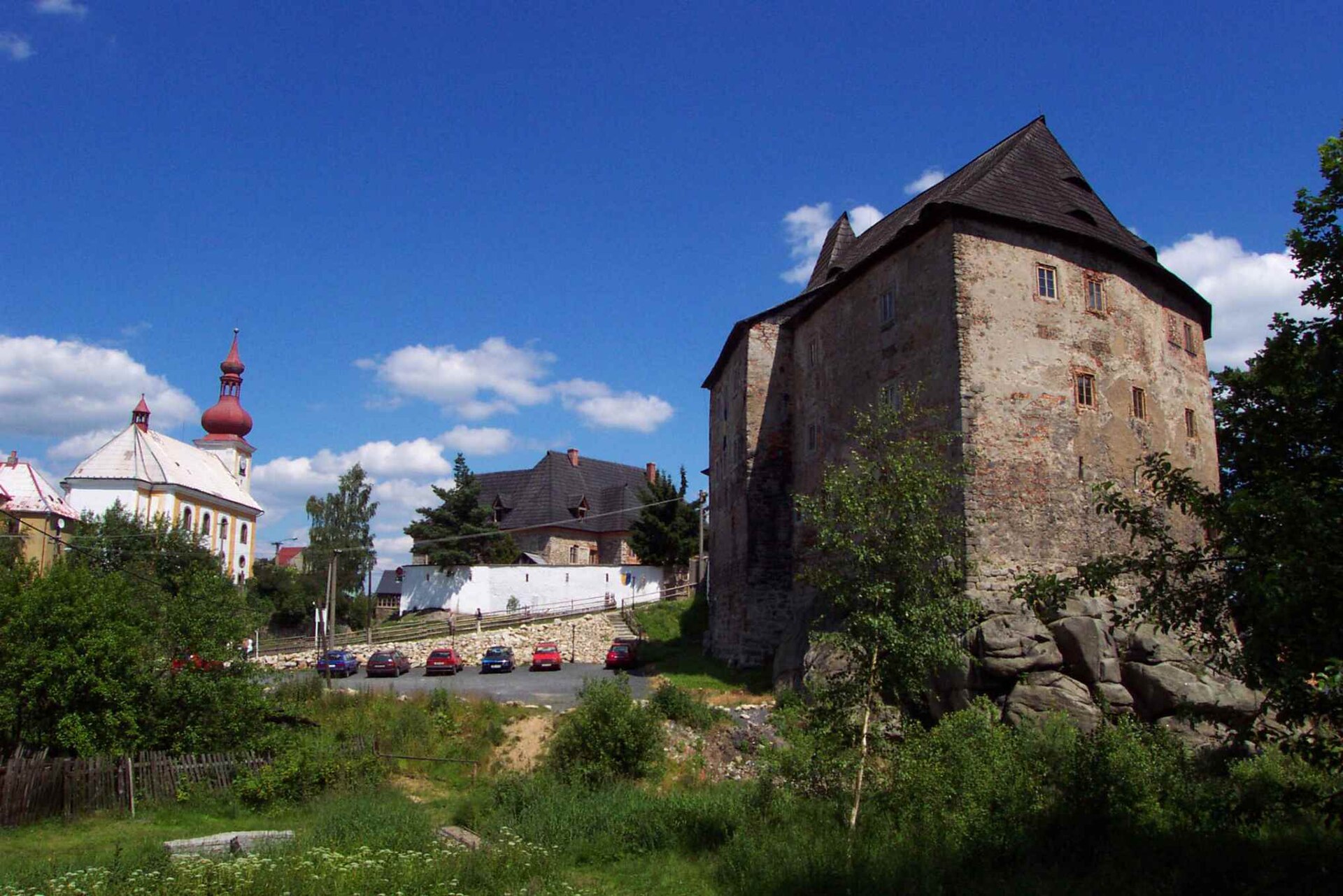
Cheb Castle is a medieval fortress in Cheb, in the westernmost corner of the Czech Republic close to the German border, standing on a rocky outcrop above the Ohře river.
How old is the site, and who built it?
People had already fortified this hilltop by the ninth century, when a Slavic stronghold stood guard over the river crossing. The stone castle itself dates to the first half of the twelfth century, raised on the orders of Děpolt II of Vohburg, the local ruler of this border region. Even then the spot mattered strategically, controlling both the river ford and the trade route linking Bavaria with Bohemia.
Why is it called the only one of its kind in Bohemia?
The castle's real transformation came in the second half of the twelfth century, once the region passed under the rule of Holy Roman Emperor Frederick Barbarossa. He turned the modest border fort into a grand imperial palatinate, a residence where the emperor could stay and govern while travelling through his realm. This Kaiserpfalz in Cheb is the only surviving example of this particular type of imperial palace architecture on Czech soil. Barbarossa returned here repeatedly, held imperial assemblies within its walls, and it was from Cheb that he eventually set out in 1189 on his final journey, the Third Crusade, during which he drowned crossing the Saleph river in Asia Minor.
What has survived from Barbarossa's time?
Two structures from that era still draw the eye today. The first is the massive Black Tower, built from brick and stone, once the castle's principal defensive stronghold and now a viewpoint over the town and the Ohře valley. The second is the Chapel of St Erhard and St Ursula, founded in 1179, a rare two-storey Romanesque building where the plainer lower level served the household staff while the richly decorated upper floor was reserved for the emperor himself. Beside them stand the ruins of the old palace wing, the last physical trace of the palatinate's former grandeur.
What is the castle's connection to Wallenstein's death?
Cheb Castle also has a grim place in the history of the Thirty Years' War. On the night of 24 to 25 February 1634, the town became the setting for a violent purge: the closest officers of Albrecht von Wallenstein, commander-in-chief of the Habsburg imperial army, were killed on the orders of Emperor Ferdinand II after being accused of treason. Wallenstein himself was killed that same night in the town, not far from the castle walls. The episode remains one of the most dramatic turning points of Central European history in the seventeenth century, and it still draws visitors curious about this period.
After the war ended, the castle lost its military importance, and parts of its older fortifications were later dismantled or reworked for the defensive needs of a new age. Today the former stronghold operates as a museum site, where visitors can climb the tower, step inside the chapel, and walk among the palace ruins while learning about the turbulent history of this Czech-German border town.
Frequently asked questions
What are the main things to see at Cheb Castle? The highlights are the Black Tower with its lookout point, the two-storey Romanesque Chapel of St Erhard and St Ursula, and the ruins of the former imperial palace.
What makes this castle unique among Czech castles? It is the only surviving imperial palatinate, or Kaiserpfalz, on Czech territory, built up during the reign of Emperor Frederick Barbarossa.
How is the castle connected to Albrecht von Wallenstein? In February 1634, Wallenstein's closest officers were murdered in Cheb near the castle, and Wallenstein himself was killed that same night in the town, marking a decisive moment of the Thirty Years' War.
Where exactly is the castle located? It stands on a rocky rise above the Ohře river, in the historic centre of Cheb in the far west of the Czech Republic, close to the German border.
Nearby places

Earn badges for the places you visit
Download NextOnTrip, discover new places and check off your trails.