About this place
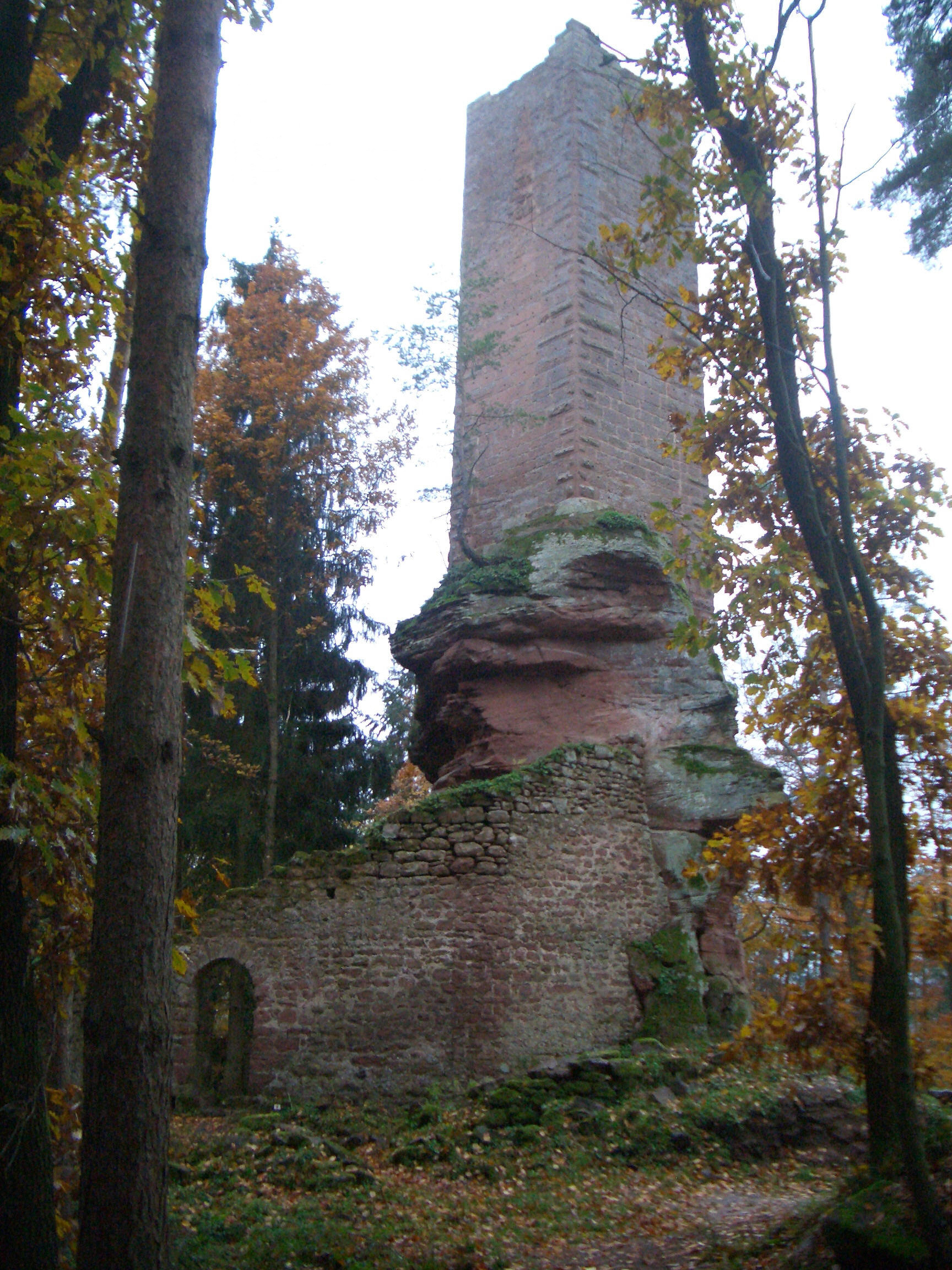
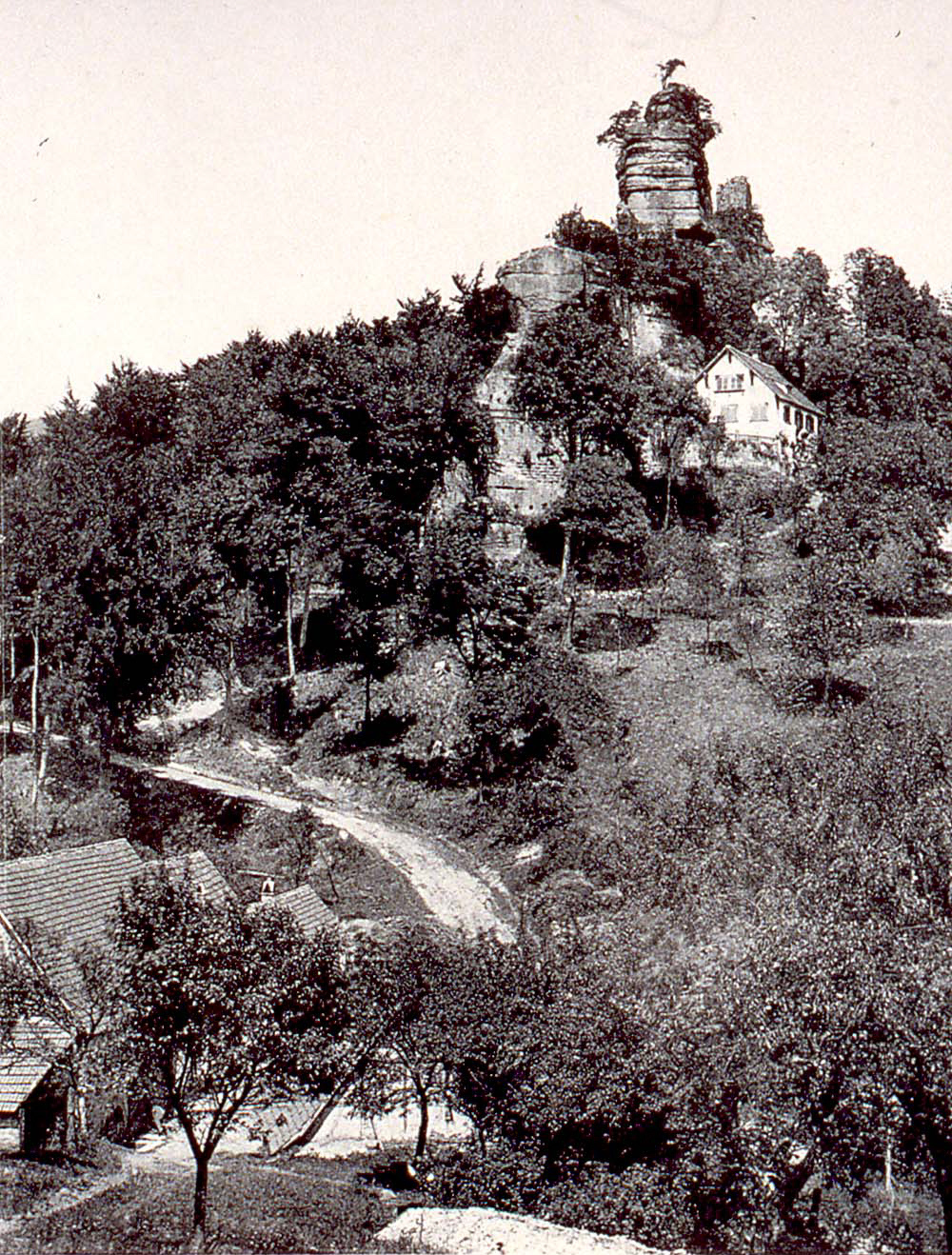
Château du Petit-Arnsberg is a ruined rock castle in the commune of Obersteinbach, in the Bas-Rhin département of Alsace, right on the Franco-German border. The stronghold dates back to the 14th century and belongs to a large family of fortresses built on sandstone outcrops across the Northern Vosges — a region famed for its dense cluster of medieval castles that once guarded trade routes and local borders.
Where exactly is the castle located?
The ruins sit within the commune of Obersteinbach, a small village surrounded by the forests of the Regional Nature Park of the Northern Vosges. This is classic Alsace-Palatinate border country: rocky sandstone ridges covered in woodland, narrow valleys, and medieval fortress remains scattered across the high ground. The site's coordinates are roughly 49.04° N, 7.69° E, placing it right next to the French-German frontier.
What does "rock castle" actually mean?
Petit-Arnsberg is classified as a rock castle, a construction style typical of this part of Alsace. Builders incorporated the natural sandstone bedrock directly into the structure — carving foundations, walls, and even entire rooms out of the stone itself rather than relying solely on masonry. Centuries later, what usually survives are wall fragments, the outlines of former chambers, and the bare rock that once formed the skeleton of the fortress.
How do you get there?
Obersteinbach is the natural starting point, a small village in Bas-Rhin connected by local roads to Alsace's larger towns. The Northern Vosges are a well-marked hiking region, with trails threading between the many castle ruins scattered through the forest, making the area popular with walkers who want to combine history with time outdoors. The usual approach is to drive to Obersteinbach and continue on foot — the standard way of reaching most of the dispersed ruins in this part of Alsace.
What can you expect to see on site?
Visitors will find a quiet, low-key ruin — without the crowds or visitor infrastructure of the region's better-known castles. It suits travelers who enjoy exploring Alsace's medieval past away from the main tourist routes, surrounded by forest silence and the rocky landscape of the Northern Vosges.
When is the best time to visit?
Given the wooded, rocky setting, spring through early autumn is the best window, when paths are dry and easier to walk and forest visibility is better for photographing the ruins. Winter visits can be trickier due to dampness and slippery rock surfaces.
Frequently asked questions
Where is Château du Petit-Arnsberg located? In the commune of Obersteinbach, in the Bas-Rhin département of Alsace, northern France, close to the German border.
How old is the castle? It dates from the 14th century.
What is a "rock castle"? A fortress type typical of the Northern Vosges, where walls and rooms were partly carved directly into natural sandstone outcrops.
Can you reach the ruins on foot? Yes, the area has hiking trails linking nearby castle ruins, and Obersteinbach makes a convenient starting point for exploring the surroundings.
Nearby places

Earn badges for the places you visit
Download NextOnTrip, discover new places and check off your trails.