About this place
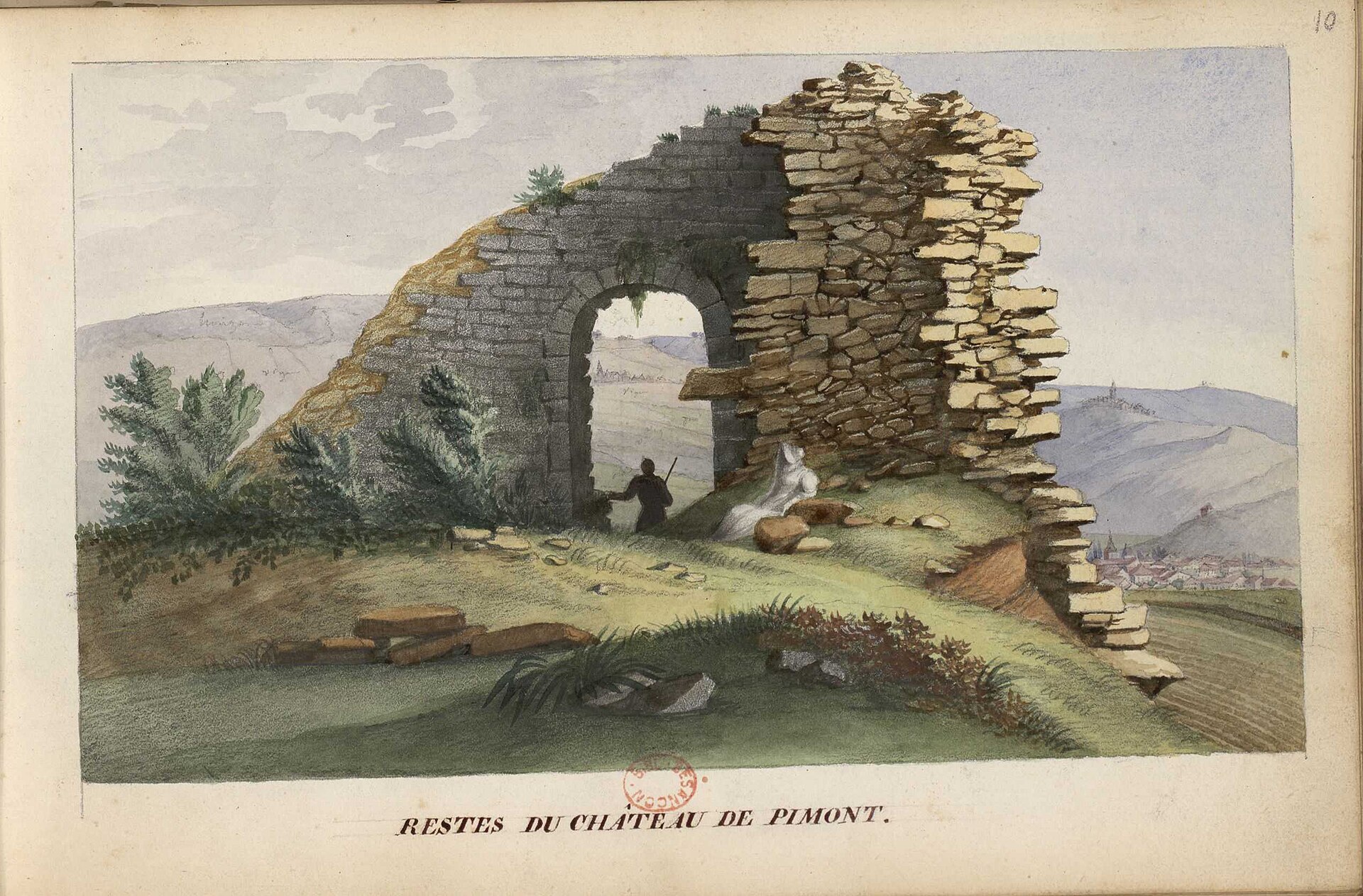
Château de Pymont is a medieval castle ruin in the village of Villeneuve-sous-Pymont, just 2–3 km north of Lons-le-Saunier in the Jura department. Only scattered wall fragments survive today, but the site still draws visitors curious about its 13th-century origins and the sweeping view from the hill it once dominated.
How do you get there?
Villeneuve-sous-Pymont sits right next to Lons-le-Saunier, so the site is an easy short drive or bike ride away. The ruins themselves crown a hill above the village and aren't formally open for visits, so this is best approached as a scenic walk rather than a guided tour. Paths leading up the slope let you get close enough to appreciate why this spot was chosen for a stronghold in the first place.
What's the history behind it?
The castle was built in the mid-13th century by the Vienne family, with the earliest record dating to 1237 — though some sources point to 1256 instead. It stood on a knoll in front of the first plateau of the Jura mountains, covering roughly 5,000 m², of which 2,800 m² were enclosed by defensive ramparts. Pymont was one of three castles, alongside Montmorot and Montaigu, guarding the Lons-le-Saunier basin, towering over it from around a hundred meters up.
Its history was far from peaceful. The Black Death reached the castle in 1349, and in 1361, during the passage of the so-called Great Companies through Franche-Comté, troops under Jacques Huet captured it — only to lose it again shortly afterward. The Vienne family held Pymont until November 1369, when Marguerite de Vienne, lady of Pymont, Montmorot, and part of Lons, handed it over to her brother-in-law, Hugues II de Chalon-Arlay.
Daily life within the walls also had a practical side: craftsmen here practiced metalworking and tabletterie, the fine carving of small objects from bone and horn. West of the keep stood a workshop where iron, copper, and lead were all worked.
What will you actually see?
What remains today is a scattering of low, weathered wall fragments, largely reclaimed by vegetation and terrain — a genuine ruin rather than a restored monument. There are no rebuilt towers or accessible interiors here; the real draw is the hilltop itself, with views over the valley and surrounding rises, plus the sense of standing on ground that once anchored a key defensive position for the region. Since December 28, 1994, the ruins have been listed as a French historic monument, a formal recognition of their value despite their modest state of preservation.
When should you visit?
Spring and early autumn are the best times, when vegetation is less overgrown and temperatures make the walk up more comfortable. In summer, bring water and sturdy shoes for the climb; in winter, the ground can turn muddy and slippery.
Frequently Asked Questions
Can you go inside the castle ruins? No — Château de Pymont isn't formally open to visitors. You can, however, walk up the hill and view the wall remnants from the outside.
How far is it from Lons-le-Saunier? Only 2–3 km, meaning a short drive or bike ride gets you there in minutes.
What made Pymont different from other castles in the area? Together with the castles of Montmorot and Montaigu, it formed a trio of strongholds protecting the Lons-le-Saunier basin, standing about a hundred meters above it.
Is the castle a protected heritage site? Yes, the ruins have been listed as a monument historique since December 28, 1994.
Nearby places

Earn badges for the places you visit
Download NextOnTrip, discover new places and check off your trails.