About this place
Château de La Petite-Pierre stands on a rocky outcrop above the village of La Petite-Pierre in the Bas-Rhin department, deep in the Alsace region of France. The fortress crowns a small walled town that grew up around it over the centuries and still keeps its compact, defensive layout intact.
Where does the castle's name come from?
The French name La Petite-Pierre translates as "the little stone," a rendering of the much older Old Franconian form Lítzelstäin. That same root survives in the German name of the castle, Burg Lützelstein, which was used alongside the French version for centuries as the region passed between different rulers. The name is no coincidence: it points directly to the rocky spur the fortress was built on, and the layered naming — Franconian, German, French — traces the borderland history that has always defined this corner of Alsace.
What is there to see at the site?
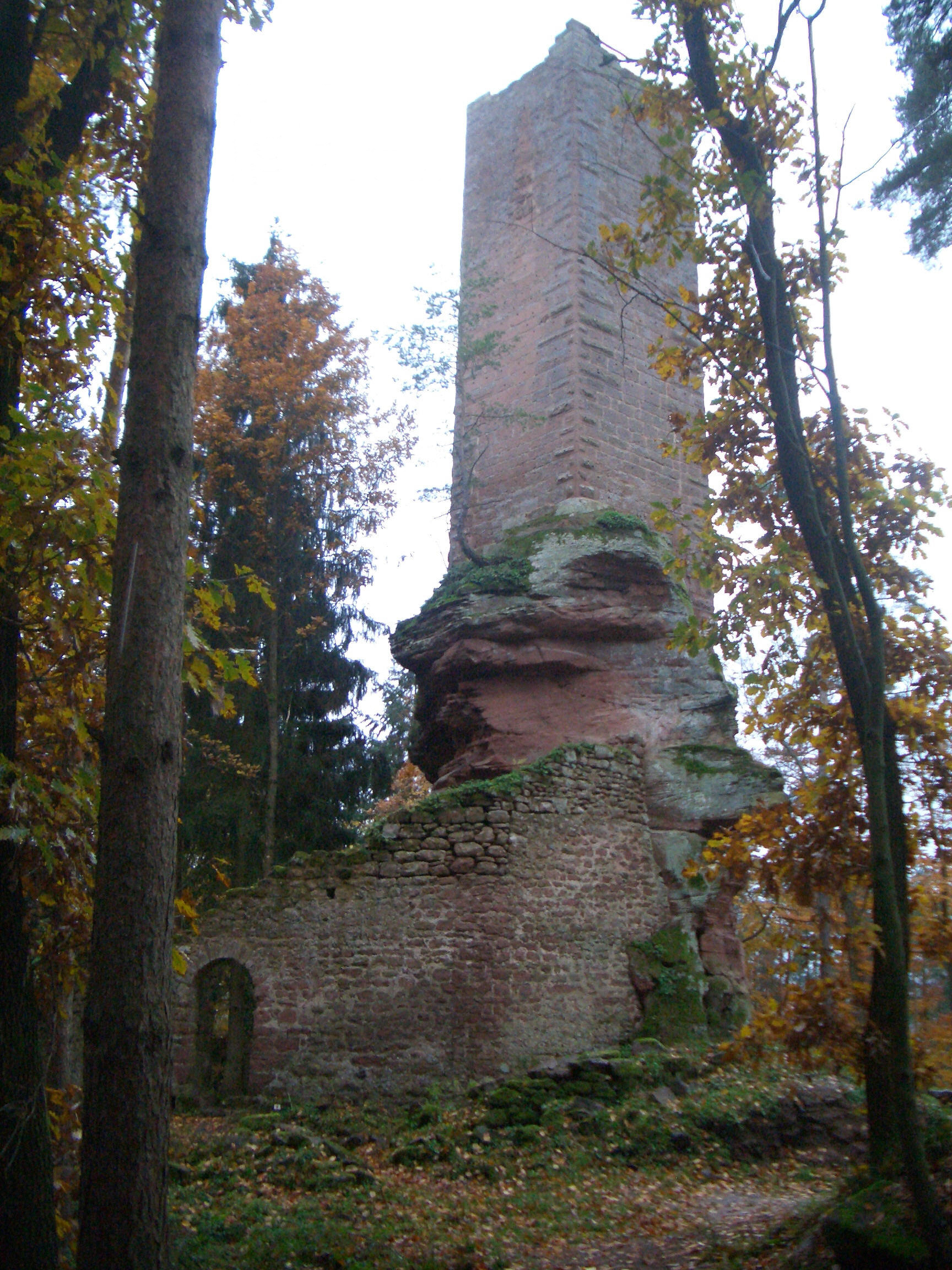
The castle keeps the layout typical of fortresses in this part of Alsace: thick defensive walls anchored into the rock, an inner courtyard framed by the surrounding buildings, and viewpoints that open onto the forested hills of the Northern Vosges. That wooded, valley-cut terrain frames the fortress and makes the view of the castle from below one of the most recognizable sights in the area. Walking along the ramparts takes in both the rooftops of the town itself and the ring of hills beyond it. La Petite-Pierre is itself one of the few fully preserved fortified towns in Alsace — narrow streets, a town gate, and tightly packed houses form a single coherent whole with the castle towering above them.
How do you get there?
La Petite-Pierre sits within the Northern Vosges, in a quiet, rural stretch of Bas-Rhin away from the region's main routes. Arriving by car is the most practical option: local roads wind through the forested landscape of the park, and the castle itself is visible from a distance, which makes finding the way in straightforward. Travelers without a car can use nearby Saverne as a starting point, continuing on by local transport or as part of an organized tour of the area. It's worth building a visit around a longer route through the Northern Vosges, pairing it with the other fortified towns scattered across the region.
When is the best time to visit?
Spring and summer are well suited to walking the ramparts and the surrounding trails, when the forests around the castle are at their greenest and the views from the lookout points reach farthest. Autumn adds color to the landscape, which photographers in particular tend to appreciate. Winter brings quieter, less crowded conditions, which suits visitors who prefer a calmer pace without the crowds.
Frequently asked questions
What is Château de La Petite-Pierre? It is a castle in the village of La Petite-Pierre, Bas-Rhin department, built on a rocky rise above the town in the Alsace region of France.
Where does the castle's name come from? The name comes from the Old Franconian term Lítzelstäin, meaning "little stone" — the same root carries through into the German name Burg Lützelstein and the French La Petite-Pierre.
Where exactly is the castle located? The castle sits at the heart of the Northern Vosges, in the small fortified town of La Petite-Pierre, in the Bas-Rhin department of France.
Is it worth combining the visit with other sights in the area? Yes — the surrounding area has plenty of other Northern Vosges towns and castles, making it easy to plan a longer regional route rather than a single stop.
Nearby places

Earn badges for the places you visit
Download NextOnTrip, discover new places and check off your trails.