About this place
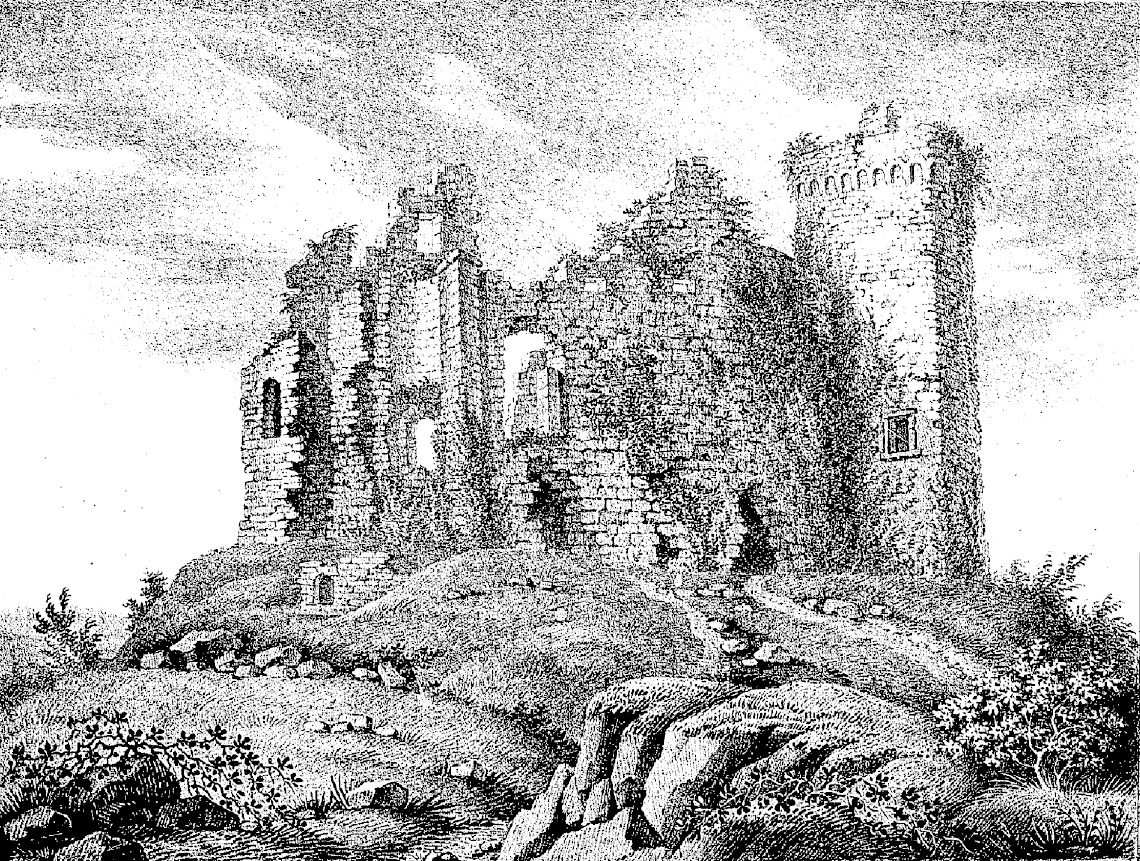
The Château de la Haye-du-Puits stands above the town of La Haye-du-Puits in Normandy's Manche department. What survives today is largely a ruin, but a single striking gatehouse tower still hints at the fortress's former importance.
What is the history behind the castle?
The stronghold was raised in the 11th and 12th centuries on an artificial earthen mound, a motte, the classic foundation for the earliest Norman fortifications. A fortified settlement and castle on this site are already mentioned before the mid-11th century, and by 1082 the site appears in charters tied to Robert of Mortain, William the Conqueror's half-brother, who granted the revenues from the local toll collected here.
The castle served as the seat of one of the oldest and most significant baronies in the Duchy of Normandy, ranked alongside power centers such as Saint-Sauveur-le-Vicomte and Bricquebec. Tradition traces the origin of these baronies back to the division of land among the companions of Rollo, the Viking leader from whom the Norman dynasty descended.
Ownership changed hands repeatedly over the centuries. The La Haye family was succeeded by the du Hommet and Mortemer lines, and the estate was sold in the mid-14th century. It later passed through the Campion, Colombières, Cerisay, and Magneville families, remaining in private hands until the feudal system collapsed with the French Revolution.
What can you actually see on site?
Most of the defensive walls had already collapsed by around 1850, and what remained suffered further damage during the fighting at La Haye-du-Puits in 1944, when the town sat on the front line during the Battle of Normandy. As a result, one element dominates what's left: a square gatehouse tower rising three stories.
The tower isn't a pure medieval survival — it was remodeled in the 15th and 16th centuries, when new window openings were cut and a crenellated top resting on stone corbels was added. It's this later, Gothic-to-Renaissance phase of the tower that visitors mainly encounter today. The motte itself, the mound the castle once crowned, still rises roughly 6 to 7 meters and is shaped into small terraces — worth walking around to get a sense of how large the original structure must have been.
The ruins are listed as a historic monument, confirming their recognized architectural and historical value for the region.
When should you visit, and how?
The site is entirely outdoors, so spring or summer, with longer daylight hours, makes for the most comfortable visit. La Haye-du-Puits sits close to sites connected with the 1944 Allied landings in Normandy and to the Cotentin marshlands, so it's easy to combine a stop here with both medieval history and D-Day-related touring on the same trip.
Given its state — a genuine ruin without extensive visitor infrastructure — the castle works best as a short addition to a walk through La Haye itself rather than as a full day's destination on its own.
Frequently asked questions
When was the Château de la Haye-du-Puits built? The original fortress dates to the 11th and 12th centuries, built on an artificial earthen motte typical of the earliest Norman strongholds.
What has actually survived to today? Mainly a square, three-story gatehouse tower, remodeled in the 15th and 16th centuries, along with the outline of the original motte.
Why is the castle in ruins? Most of its walls had already collapsed by the mid-19th century, and further damage came during the fighting of the Battle of La Haye-du-Puits in 1944.
Is it worth combining with other regional sights? Yes — the area lies close to the 1944 Normandy landing sites and the Cotentin marshes, making it easy to build into a longer regional itinerary.
Nearby places

Earn badges for the places you visit
Download NextOnTrip, discover new places and check off your trails.