About this place
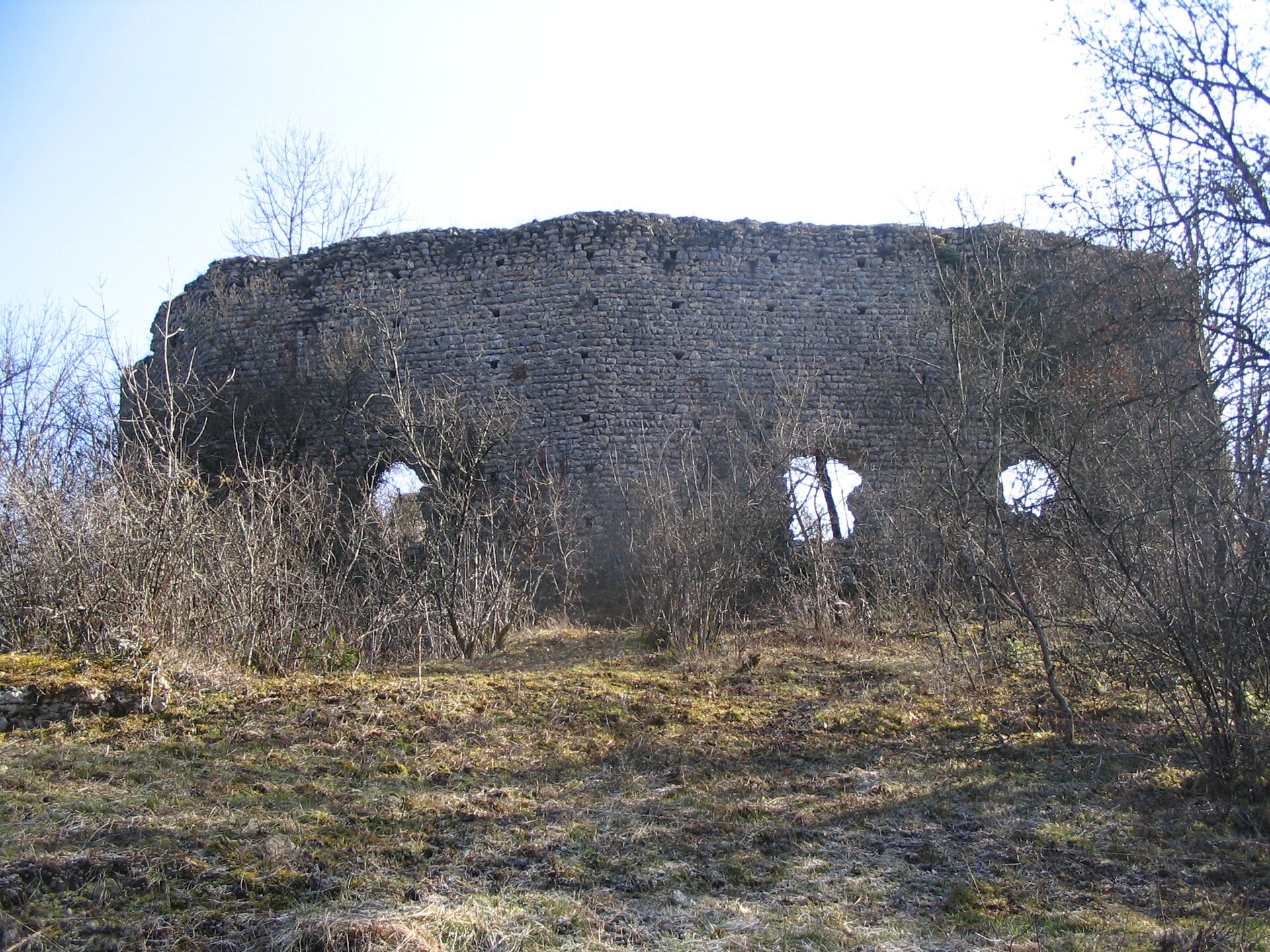
Chartreuse de Pierre-Châtel is a former Carthusian monastery turned fortress, perched on a rocky spur above the Rhône gorge in the commune of Virignin, in the Ain department of France. Few sites in the region combine six centuries of military and monastic history so tightly, and its setting - a near-vertical limestone bluff overlooking the river at the meeting point of the old territories of Savoy, Dauphiné and Bugey - makes it one of the most striking landmarks along this stretch of the Rhône.
How did Pierre-Châtel come to be built?
Long before any monks arrived, the rock above the Rhône already had a defensive history: a Gallic oppidum stood here, followed by a Roman stronghold. The strategic value of the position - overlooking the river crossing and the route running alongside it - led the House of Savoy to build a fortified castle on the site. In 1383, following the testamentary wishes of Count Amadeus VI of Savoy, a monastery was founded within the old stronghold for roughly fifteen Carthusian monks. From that point on, the site served simultaneously as an abbey and as a fortification, a combination that endured for centuries.
A monastery and a fortress at once
The fusion of contemplative life and military function was so complete that in 1676 the head of the Carthusian order, Dom Innocent le Masson, summed it up in a phrase still quoted today: the charterhouse is the fort, and the fort is the charterhouse, and the two cannot be separated. Monks lived alongside a military garrison answering to the prior, sharing the site until the French Revolution. The 1601 Treaty of Lyon, which ended a long conflict between France and Savoy, transferred the right bank of the Rhône - and Pierre-Châtel with it - to the victorious Kingdom of France, placing the fortress firmly on French soil from that date.
What happened to the monastery after the Revolution?
When the monks left in 1792, the monastery buildings became barracks and the church was used to store hay. Unlike many other religious houses, Pierre-Châtel was not sold off as national property; instead it was converted into a holding site for prisoners sentenced to deportation, and from 1807 it operated as a state prison. This military and penal chapter in the site's history lasted long after monastic life had ended.
Can visitors go inside Pierre-Châtel today?
The former charterhouse is now privately owned, and public access to the interior is not permitted. Visitors can still view the complex from the outside - the moats, defensive walls and the silhouette of the buildings above the Rhône valley - including from hiking trails leading toward Fort-les-Bancs and the Montagne de Parves. The entire Carthusian complex - monastic buildings, defensive and retaining walls, towers, entrance gates, courtyards, former gardens and terraces - was listed as a historic monument (monument historique) by decree on 1 February 1996.
Frequently asked questions
Where is the Chartreuse de Pierre-Châtel located? In the commune of Virignin, in the Ain department, on a rocky spur above the Rhône gorge, close to the town of Belley.
When was the monastery founded? In 1383, under the terms of Count Amadeus VI of Savoy's will, for about fifteen Carthusian monks.
Is the site open to visitors? No. The property is privately owned and entry is forbidden. It can only be viewed from outside, from the surrounding paths.
Why is the site described as both a monastery and a fortress? Because from its foundation it combined a religious and a military role - Carthusian monks lived alongside an army garrison here until the French Revolution.
What happened to the building after the French Revolution? It served as barracks, then as a detention site for prisoners condemned to deportation, and from 1807 onward as a state prison.
Nearby places

Earn badges for the places you visit
Download NextOnTrip, discover new places and check off your trails.