About this place
Cerro del Hierro is a natural monument in the municipality of San Nicolás del Puerto, within the Sierra Norte de Sevilla Natural Park. This 689-metre hill sits about 5 km south of the town, right on the border with Constantina, and combines an unusual geological story with more than two thousand years of iron mining.
What makes this landscape so distinctive?
The rock that forms Cerro del Hierro began as a coral reef, submerged under the sea that once covered this part of Andalusia millions of years ago. When the waters retreated, the coral gradually turned into limestone, and wind and rain carved that limestone into an extensive karst system over the following ages. The result is a maze of narrow passages, crevices, sinkholes and tall rock walls — one of the best-known paleokarst landscapes in this part of the Sierra Morena. Because of its geological, eco-cultural and biological value, the regional government of Andalusia declared the site a Natural Monument on 1 October 2003.
How far back does the mining go?
Iron ore was already known here in Roman times, and small-scale extraction continued on and off for centuries. The real turning point came in the 19th century, when British companies moved into the area — the Scottish firm William Baird Mining & Co. began large-scale operations and built a mining settlement nearby to house its workers. Extraction continued, with interruptions, until 1985, when the mine finally closed for good.
Where did the iron from this hill end up?
Ore from Cerro del Hierro left its mark on Seville itself. Local iron was worked into the decorative grilles on the facades of the Real Fábrica de Tabacos, the building that now houses the university, and into structural elements of the Isabel II bridge, known locally as the Puente de Triana, which spans the Guadalquivir river. That link between a rural mine and two of the city's landmarks gives the site an unexpected place in the industrial history of the region.
What survives in nature around a former mining site?
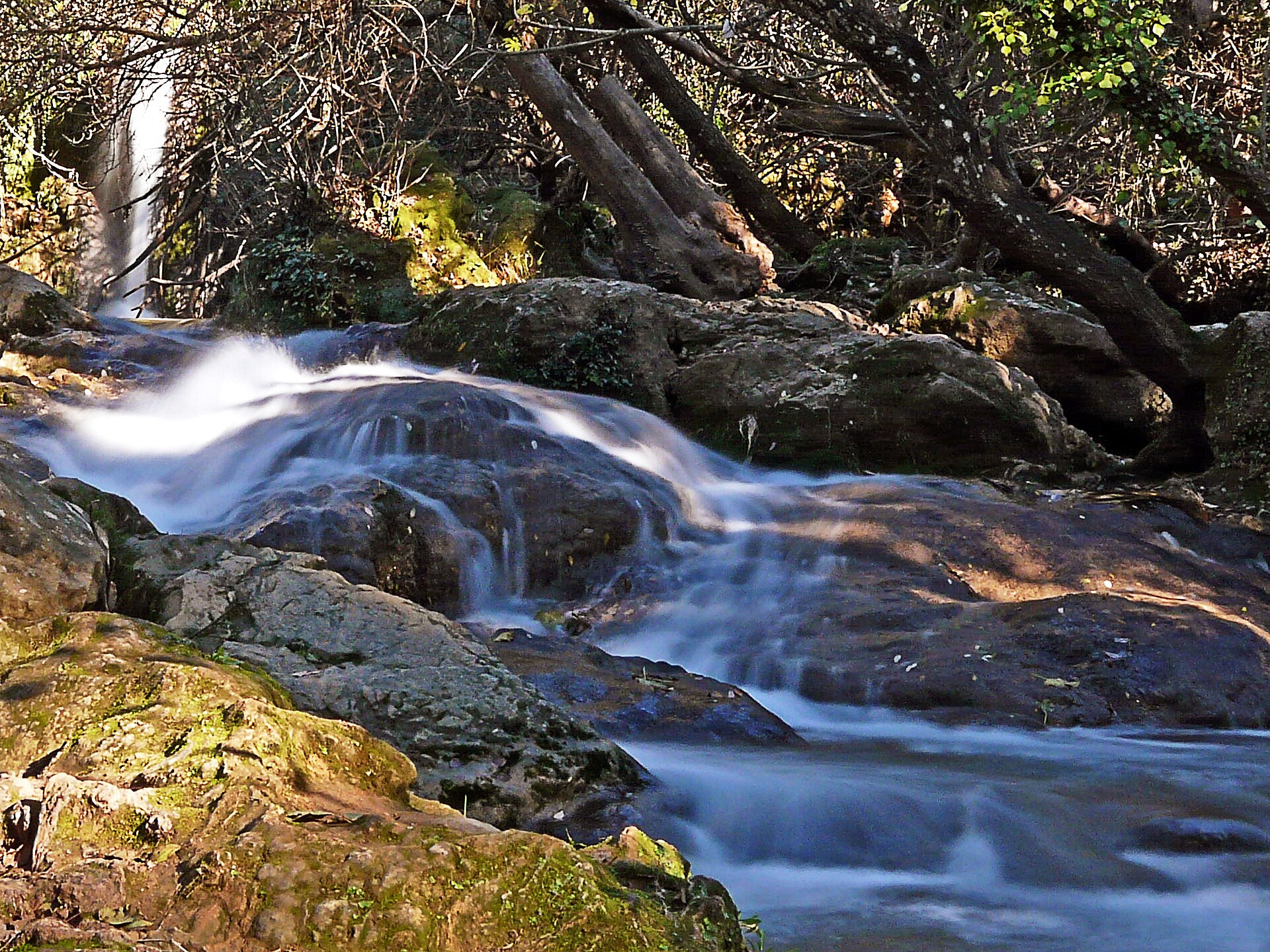
Despite its industrial past, the surroundings remain rich in wildlife. Cork oak woodland mixes with Portuguese oak and Pyrenean oak, and the rock crevices and abandoned workings have become shelter for birds of prey and other species adapted to a stony habitat. The contrast between raw rock formations and green vegetation is one of the reasons the area draws photographers and nature enthusiasts alike.
What can visitors actually do here?
Cerro del Hierro is a popular starting point for moderately challenging hiking routes that wind through the maze of rocks and old excavation pits. The terrain is also used for climbing, caving in natural caves and grottoes, and mountain biking, and guided botanical, geological and birdwatching tours are organised in the area. San Nicolás del Puerto itself has a visitor information point where current trail conditions and access details can be checked before setting out.
Frequently Asked Questions
Where exactly is Cerro del Hierro located? On the border between the municipalities of San Nicolás del Puerto and Constantina, within the Sierra Norte de Sevilla Natural Park, about 5 km south of San Nicolás del Puerto.
Can visitors still see traces of the old mine? Yes, the site retains old open-pit workings and mining infrastructure woven into the rocky landscape, even though extraction ended in 1985.
What natural features stand out for visitors? The distinctive paleokarst of narrow passages and rock crevices, cork oak woodland, and habitats used by birds of prey are the main draws.
Is Cerro del Hierro connected to Seville itself? Yes, iron extracted here was used, among other things, for the grilles of the Real Fábrica de Tabacos and structural elements of the Isabel II bridge over the Guadalquivir.
Nearby places
Earn badges for the places you visit
Download NextOnTrip, discover new places and check off your trails.