About this place
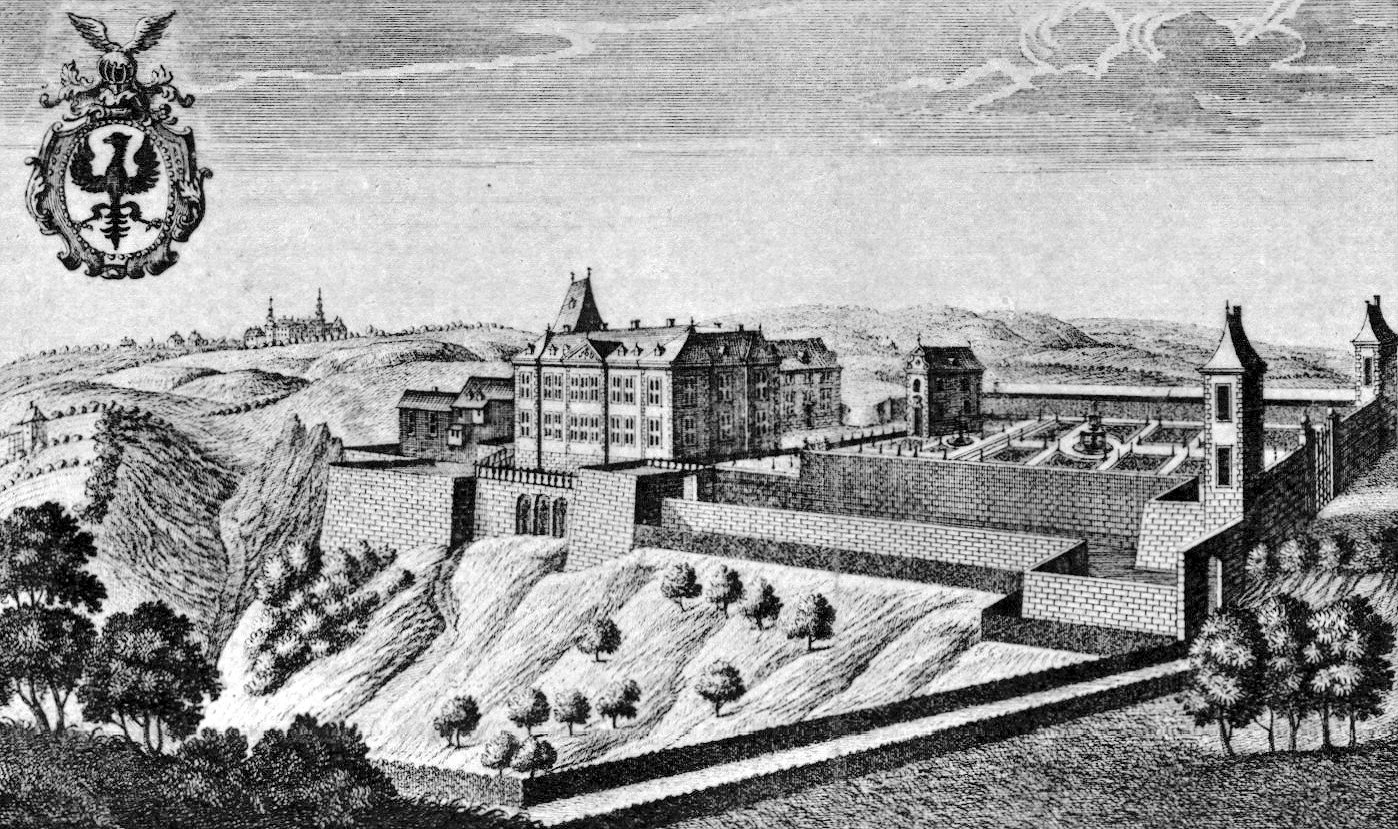
Cense de Solières is a former seigneurial residence perched on the heights of Ben-Ahin, between the towns of Andenne and Huy in Belgian Wallonia. While the current building dates to the first half of the 17th century, the story of this site reaches much further back — the location already appears in documents from the 14th century, and its keep is dated to 1362. This long continuity makes Cense de Solières one of the more compelling witnesses to the region's feudal past.
What exactly is Cense de Solières?
The word "cense" in regional French refers to a farmstead combined with the owner's residence — and that is precisely the character of this building. Historical records refer to it under several different names: farmhouse manor, manoir de Solières, maison du Bailli (the bailiff's house), and château-ferme (castle-farm). This multiplicity of names reflects the shifting role the building played over the centuries, from an administrative seat to a working farm belonging to local nobility.
Architecturally, the building consists of a substantial volume flanked by two towers, one to the east and one to the west. This layout, typical of Walloon fortified-agricultural residences of the early modern period, combined a representative function with the practical demands of managing a landed estate. The roofs and facades of the building are officially listed as protected heritage, confirming its historical and architectural value to the region.
What is the historical background of this place?
Ben-Ahin, where Cense de Solières stands, was originally the feudal seigneury of the House of Beaufort. It encompassed the hamlets and villages of Ben, Gives, La Sarte-à-Ben, and Solières itself. In 1642, the neighboring vassal seigneury of Ahin, composed of Ahin and Saint-Léonard, was incorporated into it, significantly expanding the territory and influence of this local center of power. Such an administrative structure, made up of smaller seigneuries subordinated to a larger one, was typical of medieval and early modern Wallonia.
The name Solières itself is tied to this small area between the Meuse river and the hills surrounding Huy — a region with a long agricultural and settlement tradition, where manorial farms served both an economic and a symbolic purpose, affirming the status and authority of local families.
Who manages the site today?
The building has remained in the hands of the Surlemont family for three generations, making it an example of a private historical estate passed down through the generations and preserved in an almost unchanged architectural form. Such continuity of ownership is rare among sites of this type in the region and further underscores the historical value of Cense de Solières as a testament to local family tradition.
Frequently asked questions
Where exactly is Cense de Solières located? The site sits on high ground in Ben-Ahin, between Andenne and Huy, in the province of Liège in Wallonia.
From what period does the building date? The current structure was built in the first half of the 17th century, though the site and earlier constructions — including the keep — are documented as far back as the 14th century, with the tower specifically dated to 1362.
Can Cense de Solières be visited? The building remains privately owned by the Surlemont family, so public access may be limited — it's worth checking locally before planning a visit.
Why does the site carry so many different historical names? The variety of names (farmhouse manor, manoir de Solières, maison du Bailli, château-ferme) reflects the building's changing functions over the centuries, from an administrative seat for a bailiff to a working farm estate.
Nearby places

Earn badges for the places you visit
Download NextOnTrip, discover new places and check off your trails.