About this place
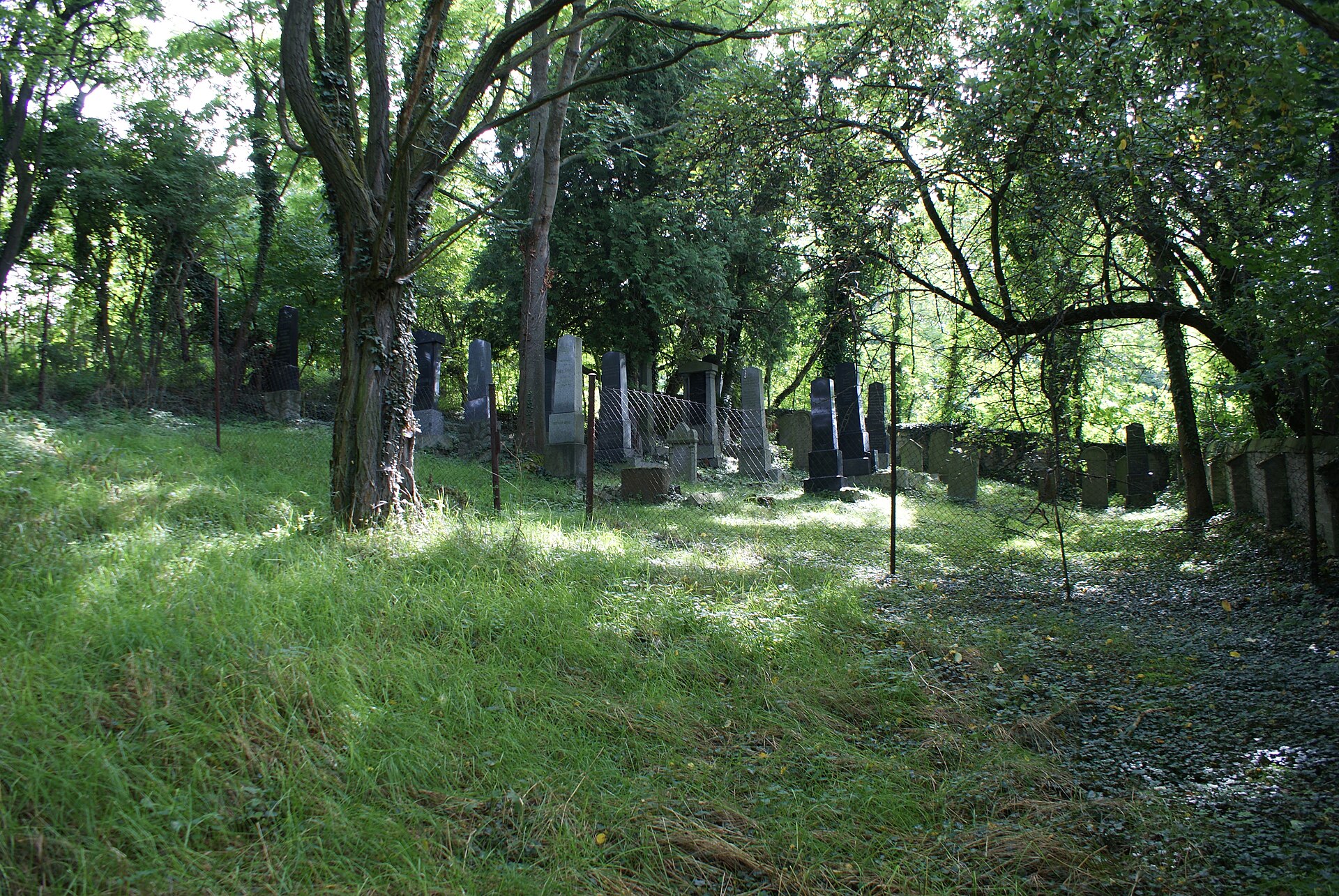
The Old Jewish Cemetery in Švihov is one of the few surviving traces of a Jewish community that lived in this small town in the Klatovy district of Bohemia, Czech Republic, for centuries. The cemetery was founded in 1644 and last expanded in 1828. It covers just under 1,400 m² and holds around 140 tombstones, forming a valuable collection of Renaissance, Baroque, and Classicist gravestones.
Where did Švihov's Jewish community come from?
The earliest records of a Jewish community in Švihov date back to before 1570. Over the following centuries, this cemetery served as the main burial ground for the local community, and over time it was also used by Jewish residents of nearby villages — Malinec, Vlčí, and probably Lužany — which had no cemeteries of their own.
When was the last burial here?
The last known burial at the old cemetery took place in 1913. By then, Švihov's Jewish community had already shrunk considerably: after 1848, when restrictions on Jewish settlement were lifted, many residents moved to larger towns in search of better trade and professional opportunities. The Jewish community of Švihov was formally dissolved under legislation from 1890, though a small number of Jewish residents still lived in the town between the wars — in 1930, the census recorded 21 people of Jewish faith.
How does it differ from the new Jewish cemetery?
As the population grew and space at the old cemetery ran out, a new Jewish cemetery was established in Švihov in the 1870s (sources give either 1872 or 1878). It occupies a slightly larger plot of about 1,475 m², and more than thirty tombstones have survived there. The oldest legible tombstone dates to 1893, and the newest to the 1930s — evidence that the cemetery remained in use right up to the eve of the Second World War, even as the community itself continued to dwindle.
What is there to see on site?
The main draw of the old cemetery is the tombstones themselves — their number and stylistic variety make it one of the more notable sepulchral monuments in the region. The Renaissance and Baroque stones belong to the older layer of burials, while the Classicist tombstones date from the cemetery's final expansion in 1828. Small as it is, the site allows visitors to trace changing burial customs and gravestone fashions across nearly three centuries.
Frequently asked questions
Is the cemetery open to visitors? The site is a historic and memorial ground — visitors should treat it with the respect due to a cemetery.
Are there two Jewish cemeteries in Švihov? Yes. Alongside the 17th-century old cemetery, there is also a newer Jewish cemetery founded in the second half of the 19th century once the old one ran out of space.
How many tombstones have survived? Around 140 at the old cemetery, and more than thirty at the new one.
Why did the Jewish community leave Švihov? After settlement restrictions were lifted in 1848, residents gradually moved to larger towns, leading to the formal dissolution of the community in 1890.
Nearby places

Earn badges for the places you visit
Download NextOnTrip, discover new places and check off your trails.