About this place
Čečovice is a small village in the Domažlice district of the Plzeň Region, known among heritage enthusiasts mainly for the modest castle standing at its edge. The building itself is unassuming today, but its story stretches back to the Middle Ages and traces a path familiar from many minor Bohemian noble seats: a Gothic fortress, a Renaissance-to-Baroque transformation, decades of neglect under communism, and a present-day struggle to keep it standing.
When was the castle in Čečovice first built?
The original fortress at Čečovice dates to the first half of the 14th century. It was most likely built by Jaroslav of Čečovice, a descendant of Jaroslav of Bukovce, who owned the neighboring village of Bukovce. The fortress functioned as the seat of minor local nobility administering the surrounding estate — a common type of small fortified residence in this part of Bohemia.
How did the estate pass to the Rosenberg family?
In 1409, Čečovice came into the hands of Henry of Rosenberg, one of the most powerful Bohemian noblemen of his time. The Rosenbergs were among the wealthiest aristocratic families in the Bohemian Crown, and they ran Čečovice through appointed castellans rather than residing there themselves — a typical arrangement for great families managing many scattered holdings at once.
When did the fortress become a castle?
At some point before 1623, still under the ownership of the Popel of Lobkowicz family, the old Gothic fortress was rebuilt in the Mannerist style, taking on more of a residential character than its earlier defensive form. In 1623 the wider Horšovský Týn estate, which included Čečovice, was confiscated from the Popel family and purchased by Count Maximilian of Trauttmansdorff — one of many ownership changes that swept through non-Catholic noble estates in Bohemia after the defeat at White Mountain.
What survives from the original fortress today?
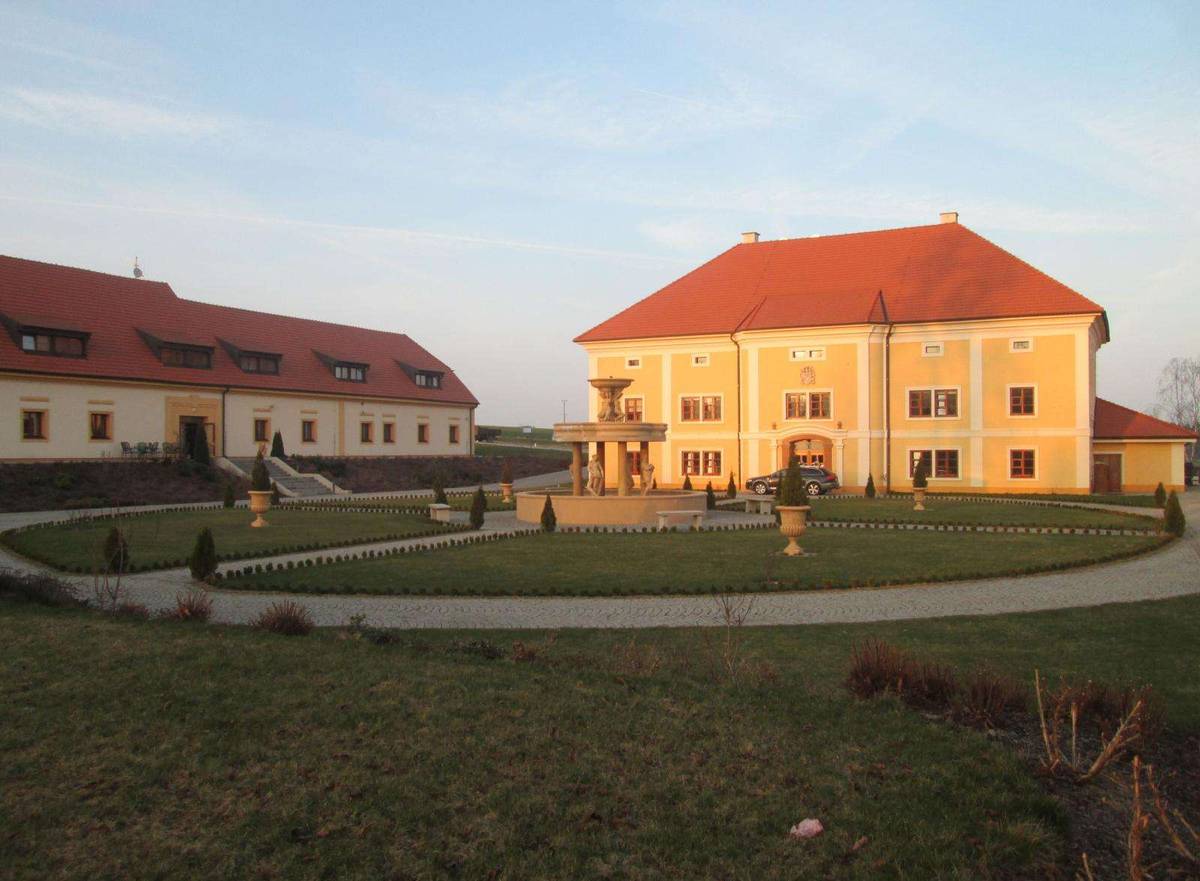
The present-day building is a three-wing structure. Its façade still shows walled-up Gothic windows, a visible trace of the medieval fortress that once stood on the same spot. These architectural details let historians read the building's successive construction phases, even though the castle has not survived as a fully furnished palatial residence.
What happened to the castle in the 20th century?
After 1948 the estate was confiscated and the building was taken over by a local collective farm (JZD). Once the state farm lost interest in maintaining it, the castle fell into disrepair — a fate shared by many small noble residences across socialist Czechoslovakia, where a lack of practical use often meant years of neglect.
Who looks after the castle now?
In 1998 the building was taken over by the Český svaz ochránců památek (Czech Union of Monument Protectors), which has since worked to halt its decline. The castle has been listed as a protected cultural monument since 1964. To raise funds for restoration and draw attention to this little-known site, a folk-country festival is organized at the castle — a grassroots approach increasingly used to help save small, provincial historic buildings in the Czech Republic.
Can visitors go inside?
The castle is not a regular tourist attraction with fixed opening hours. Access to the interior is tied mainly to events organized by the Czech Union of Monument Protectors, including the festival mentioned above. Anyone planning to visit should check the union's current event calendar beforehand.
Frequently asked questions
Where is the castle in Čečovice located? In the village of Čečovice, Domažlice district, Plzeň Region, in western Bohemia.
When was it built? The original fortress dates from the first half of the 14th century; the rebuilding into a Mannerist-style castle took place before 1623.
Who owned Čečovice over the centuries? Owners included Jaroslav of Čečovice, Henry of Rosenberg (from 1409), the Popel of Lobkowicz family, and Count Maximilian of Trauttmansdorff (from 1623).
Is the castle a protected monument? Yes, it has been listed as a Czech cultural monument since 1964.
Can the interior be visited? Access is largely limited to events run by the Czech Union of Monument Protectors, which now cares for the site, including a folk-country festival held to support its restoration.
Nearby places

Earn badges for the places you visit
Download NextOnTrip, discover new places and check off your trails.