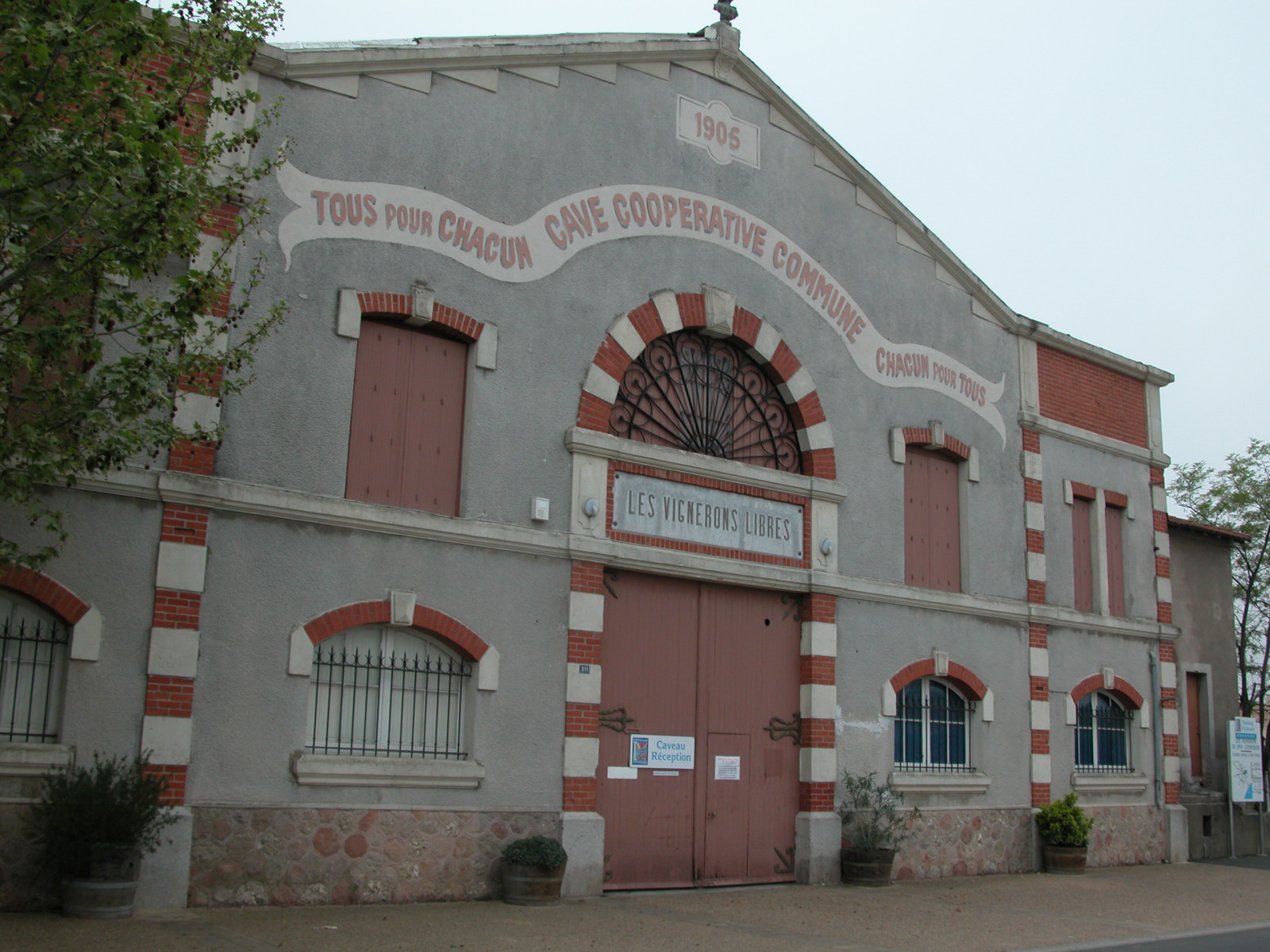
Cave cooperative de Maraussan
About this place
Cave coopérative de Maraussan is a historic wine cooperative building in Maraussan, in the Hérault department of southern France, recognized as the very first institution of its kind in the country. Listed as a historic monument, the building still carries its founders' motto on the façade — a lasting reminder of the birth of the cooperative wine movement at the turn of the 20th century.
How did the cooperative come about?
The story starts in December 1901, when a group of winegrowing landowners in Maraussan decided to join forces against the merchants' monopoly on wine trading. Instead of selling their harvests individually at unfavorable prices, they created a shared sales structure — the first cooperative of its kind in France. The idea was simple but powerful: pool resources to cut production costs and spread risk across all members.
The vinification building itself was designed by engineers Paul and Carles from Balaruc-les-Bains, and construction moved at record speed. On 2 May 1905, while the cave was still being built, it received a visit from Jean Jaurès, the prominent French socialist politician. The building was officially inaugurated on 22 August 1905.
What will you see on site?
The cooperative's name, Les Vignerons Libres ("The Free Winegrowers"), was chosen deliberately. Across the main façade runs the inscription "Tous pour chacun — Cave coopérative commune — Chacun pour tous" ("All for each — shared cooperative cellar — Each for all"), a motto that sums up the spirit of solidarity behind the cooperative movement. That inscription, together with the early-20th-century industrial architecture, is the building's main draw for visitors today.
The structure has kept its original character and functional layout, typical of the wine cooperatives of the era — large production halls designed for processing grapes at scale. Visiting Maraussan means standing in the building that quite literally opened a new chapter in the history of French winemaking.
Why does this place matter?
The Maraussan cooperative's success was quickly imitated elsewhere. Within fifteen years of its founding, 79 more cooperative wine cellars had been established across the region and the country, 27 of them in Languedoc-Roussillon alone. The movement gathered even more momentum in the interwar years: between 1920 and 1939, 750 wine cooperatives were founded in France, half of them (350) in Languedoc-Roussillon. The model pioneered in Maraussan became a blueprint for the whole of southern France and still shapes how wine production is organized in the region today.
When to visit?
Maraussan sits at the heart of Languedoc's wine country, so spring through early autumn is the best time to come, when the surrounding vineyards can be seen at their most active, from budding vines to the grape harvest. It pairs well with a trip to nearby Béziers and other Hérault towns tied to the region's winemaking heritage.
Frequently asked questions
Is Cave coopérative de Maraussan still an active winery? Today the building's main significance is historical and architectural: it is a listed historic monument recognized as the first institution of its kind connected to the birth of the cooperative movement in France.
Why did Jean Jaurès visit this place? Jaurès, a leading French socialist politician, took a strong interest in the cooperative movement as a real-world example of worker solidarity. He visited the cave under construction on 2 May 1905, before its official opening.
What does the inscription on the façade mean? The motto "Tous pour chacun — Cave coopérative commune — Chacun pour tous" expresses the mutual solidarity at the heart of the cooperative: a shared effort for the benefit of every member.
How did Maraussan influence winemaking in France? The cooperative model developed here in 1901 triggered a wave of similar institutions: dozens sprang up within about fifteen years, and by 1939 hundreds of wine cooperatives existed across France, especially in Languedoc-Roussillon.
Earn badges for the places you visit
Download NextOnTrip, discover new places and check off your trails.