About this place
The Basilica of Our Lady Help of Christians in Filipov (Bazilika Panny Marie Pomocnice křesťanů) stands in Filipov, a district of Jiříkov, right on the border with Germany, in the Šluknov Bend (Šluknovský výběžek) region of northern Czechia. It is one of the country's most significant pilgrimage sites, built on the spot where the only Marian apparition officially recognized by the Catholic Church on Czech soil took place in the 19th century.
What happened in Filipov in 1866?
In the early hours of 12–13 January 1866, at around four in the morning, a weaver named Magdalena Kade reportedly experienced an apparition of the Virgin Mary during prayer, who promised her healing. Kade, previously seriously and incurably ill, recovered enough the following day to return to her work at the loom. News of the event quickly drew pilgrims from the surrounding area, and in time from neighboring Germany, Poland, and Slovakia as well.
When and by whom was the basilica built?
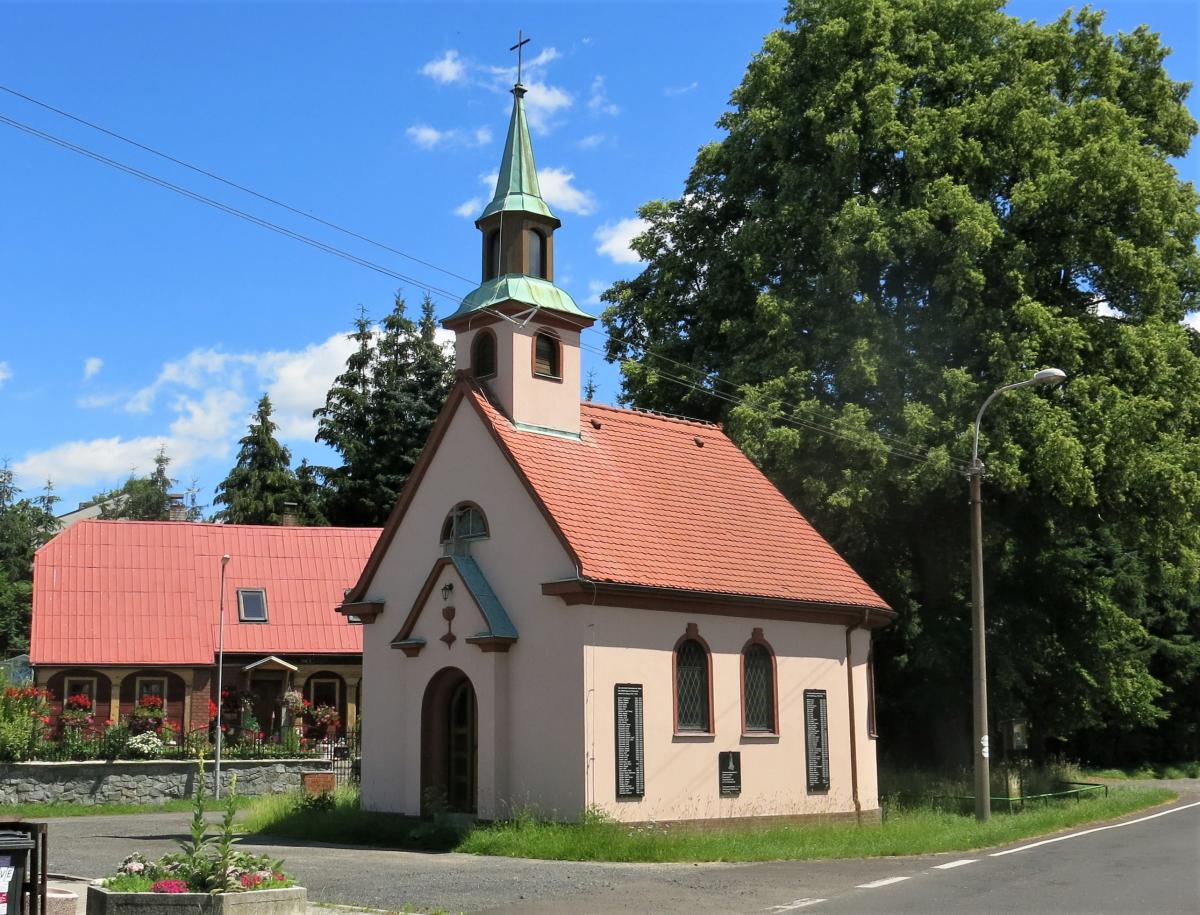
Next to the chapel raised at the site of the apparition, a monumental single-nave Neo-Romanesque church with twin towers on its façade was built between 1873 and 1885. It was designed by the Viennese architect Franz Hutzler (1823–1882). A Redemptorist monastery was established alongside the church, and the Redemptorists still care for the shrine and welcome pilgrims today.
When did the church become a basilica minor?
In 1926, on the 60th anniversary of the apparition, Pope Pius XI granted the church in Filipov the title of basilica minor. The honor confirmed the site's standing as one of the region's most important centers of Marian devotion and cemented its status as a pilgrimage destination reaching well beyond the local area.
What does the basilica's architecture look like?
The basilica is an imposing single-nave Neo-Romanesque building with a distinctive twin-tower façade, visible from a considerable distance and the dominant architectural feature of Filipov. Its monumental form and restrained, historicizing style draw on early Christian and Romanesque models that were popular in Central European church architecture in the second half of the 19th century.
Why does Filipov matter to pilgrims from several countries?
Because of its position right on the border, the basilica has long drawn worshippers not only from Czechia but also from Germany, Poland, and Slovakia. The site combines the role of a Marian shrine with that of a local meeting point for pilgrims from several Central European countries, setting it apart from other churches in the Šluknov Bend.
Why is the basilica in Filipov worth visiting?
For visitors exploring northern Czechia, the basilica is more than an example of monumental Neo-Romanesque architecture — it is a place with a living history of a Marian apparition, recognized by the Catholic Church and honored with the papal title of basilica minor. It is a rare religious site of national significance in the Šluknov Bend, still functioning as an active shrine attached to a Redemptorist monastery.
Frequently asked questions
What happened in Filipov in 1866? A weaver, Magdalena Kade, reportedly experienced an apparition of the Virgin Mary who promised her healing; she recovered the following day. It is the only Marian apparition officially recognized by the Catholic Church on Czech soil in the 19th century.
When was the basilica built? Between 1873 and 1885, to a design by the Viennese architect Franz Hutzler.
When did the building receive the title of basilica minor? In 1926, on the 60th anniversary of the apparition, granted by Pope Pius XI.
Who cares for the basilica? The Redemptorist monastery attached to the church, whose members welcome pilgrims and run the pastoral life of the shrine.
Where do pilgrims to Filipov come from? Mainly from Czechia, but due to the site's proximity to the border, also from Germany, Poland, and Slovakia.
Nearby places

Earn badges for the places you visit
Download NextOnTrip, discover new places and check off your trails.