About this place
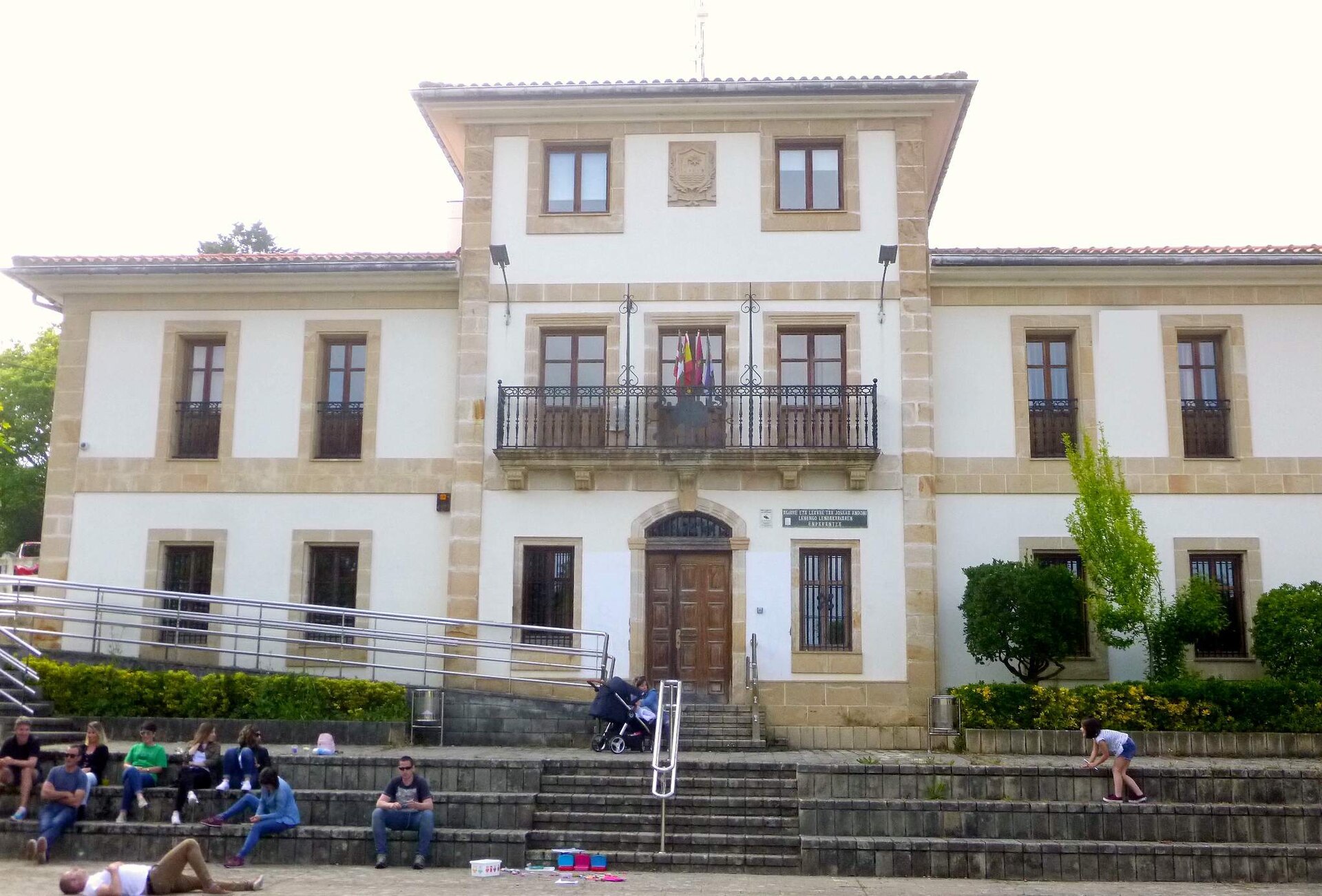
Ayuntamiento de Karrantza is the town hall of Karrantza Harana (also known as Valle de Carranza), the largest municipality in Bizkaia and one of the biggest in the whole Basque Country, sitting in its westernmost corner on the border with Cantabria and the province of Burgos. The administrative building itself stands in the hamlet of Concha, even though the municipality has no single defined town centre — it is made up of dozens of small settlements scattered across a mountain valley.
What kind of place is Karrantza?
Karrantza belongs to the Enkarterri (Las Encartaciones) area, a hilly, inland part of Bizkaia far from the coast and from Bilbao. The landscape is dominated by a valley ringed by limestone hills, meadows and woodland. Rather than one town, the municipality is spread across roughly fifty neighbourhoods known as barrios. Ambasaguas is the largest of them, home to the railway station and the local tourist office, while the town hall building sits a short distance away in Concha.
Why do visitors come here?
Caves are the region's main draw. Within the municipality and the neighbouring Armañón Natural Park, around two hundred caves and sinkholes have been catalogued, making the valley one of Spain's notable spots for underground tourism — it is the host venue for CUEVATUR, a congress dedicated to cave and mining tourism. The best known of these caves is Pozalagua, famous for an unusually rare formation: eccentric stalactites that grow at irregular angles rather than straight down. The cave has been singled out by the Guía Repsol awards as one of Spain's most striking natural corners.
Families travelling with children can also visit Karpin Fauna, a former estate now home to more than fifty animal species alongside a dinosaur-themed section.
How should you plan a visit?
Because the municipality is so spread out, it is worth mapping a route in advance — distances between individual barrios can be considerable, even though they all fall under the same town. The tourist information office operates in Ambasaguas, and a second information point is set up at the entrance to the Pozalagua cave during its opening hours. It is advisable to check the cave's current opening times before travelling, since they can vary by season.
How is Karrantza different from Bizkaia's coastal towns?
Unlike the well-known resorts along the Bizkaia coastline, Karrantza remains far less visited and considerably more rugged in character — a destination built around geology, nature and the culture of a mountain valley rather than beach holidays. Because settlement here means dozens of dispersed hamlets rather than one town centre, exploring Karrantza feels closer to reading a landscape than walking through a single urban core.
Frequently Asked Questions
Where exactly is the Karrantza town hall located? The municipal building (Ayuntamiento) stands in the barrio of Concha, one of almost fifty small settlements that make up the Karrantza Harana municipality.
What is the area's biggest attraction? Most visitors point to the Pozalagua cave, known for its rare eccentric stalactites, along with the surrounding Armañón Natural Park and its many other caves.
Does Karrantza have one central town? No — the municipality is made up of dozens of scattered barrios. Ambasaguas is the largest in terms of population and infrastructure, including the railway station.
Is Karrantza worth visiting with children? Yes — besides the caves, the Karpin Fauna park offers live animals and a dinosaur section, making it a solid option for families.
Nearby places

Earn badges for the places you visit
Download NextOnTrip, discover new places and check off your trails.