About this place
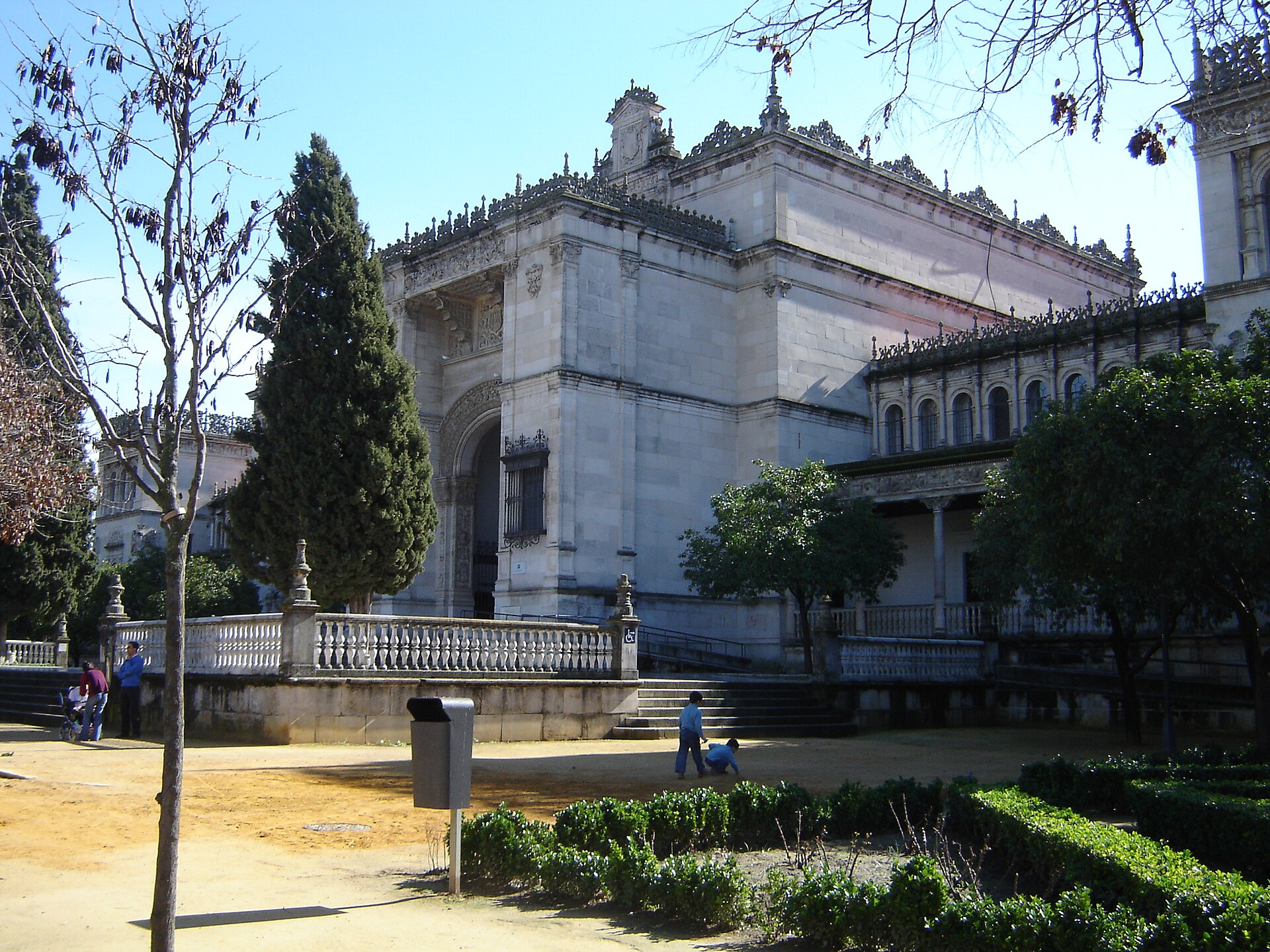
The Archaeological Museum of Seville sits inside María Luisa Park in Seville, housed in one of the grand pavilions built for the 1929 Ibero-American Exposition. Behind its ornate facade, a handful of galleries trace several thousand years of southern Spain's history, from the region's earliest settlers through the Tartessian and Phoenician periods to Roman cities and early medieval life.
Where is the museum and how do you get there?
The building stands on Plaza de América, in the southern part of María Luisa Park — the same green expanse that holds the famous Plaza de España. Known as the Pabellón del Renacimiento (Renaissance Pavilion), it was designed by Aníbal González, the architect behind most of the 1929 exposition's buildings, which explains its flat, brick-and-stone facade echoing Spanish Renaissance style.
Walking from central Seville is the easiest option — it takes roughly fifteen to twenty-five minutes from the cathedral or the Alcázar. Travelers who'd rather not walk the whole way can head to the Prado de San Sebastián stop, served by city buses and the tram line, which leaves only a short stroll to the park entrance.
What will you see inside?
The displays follow a roughly chronological path, starting with tools and pottery from the Stone and Bronze Ages, moving through Tartessian material culture, and building toward an extensive Roman collection. The single most important piece in the whole museum is the Carambolo Treasure — a set of Tartessian gold jewelry found near Seville, widely regarded as one of the most significant pre-Roman finds in Spain.
Separate rooms are dedicated to material from nearby Itálica, the Roman city founded just outside Seville, including floor mosaics, sculpture, and architectural fragments. Coin collections, everyday objects, and material from the Visigothic and early medieval periods round out the exhibition, showing how settlement in the area continued long after Rome's decline.
How much time should you set aside?
The museum is compact, so a relaxed visit that includes reading the display panels usually takes about an hour and a half to two hours. It also makes a good stop during the hottest part of the day in Seville — the galleries are air-conditioned, unlike a walk through the park outside.
When is the best time to visit?
The museum is traditionally closed on Mondays, so it's worth planning around that when mapping out your Seville itinerary. Arriving shortly after opening tends to be the quietest window, before tour groups fill the rooms, giving you more space around the display cases. A visit pairs naturally with a walk through María Luisa Park and a stop at the neighboring Plaza de España.
Frequently Asked Questions
Is the Archaeological Museum right next to Plaza de España? It sits within the same María Luisa Park, but on the adjacent Plaza de América, a few minutes' walk from Plaza de España itself.
What is the museum's most famous exhibit? The Carambolo Treasure, a collection of Tartessian gold jewelry considered the most valuable pre-Roman piece in the collection.
How long does a visit take? At a relaxed pace, plan on about an hour and a half to two hours to see the full exhibition.
Is the museum closed on any particular day? Yes, it's traditionally closed on Mondays, so factor that into your Seville sightseeing schedule.
Nearby places

Earn badges for the places you visit
Download NextOnTrip, discover new places and check off your trails.