Museums in the United Kingdom
A guide to 129 Museums in the United Kingdom — with descriptions, photos and traveler visits from the NextOnTrip community. Locations spread across 105 cities and towns. Most visited by the community: John Bunyan Museum and Library, Ely Museum, Watts Gallery.
-

Dad's Army Museum
Thetford
Dad's Army Museum in Thetford is a small, volunteer-run museum in Norfolk, England, devoted to the BBC comedy series Dad's Army, the much-loved sitcom about a Home Guard platoon in the fictional seaside town of Walmington-on-Sea. It sits in Cage Lane, in the former fire station at the rear of Thetford Guildhall, and for fans of British television it is a natural stop in the town. Why is the museum in Thetford? Thetford and the surrounding countryside served as the backdrop for many of the series' outdoor scenes. The area's streets, lanes and open land stood in for the wartime south coast, and the town's own buildings played their part on screen. The Guildhall, right beside the museum, doubled as Walmington-on-Sea Town Hall in several episodes. The link between place and programme is why the collection feels at home here rather than in a generic exhibition space. What can you see inside? The museum is arranged across several display areas in the old fire station. Highlights include a reconstruction of Captain Mainwaring's office in the church hall, a setting familiar to anyone who has watched the show, along with memorabilia connected to the series such as photographs and props. Visitors often comment on how much detail is packed into a modest building, and on the friendly volunteers who run it. There is also a shop for souvenirs and a tea room, so you can combine the visit with a break. Is there a walking tour of the filming locations? Yes. A walking tour of Dad's Army filming locations starts at the Charles Burrell Museum and finishes at the Dad's Army Museum. Allow roughly two to two-and-a-half hours for the walk and the museum together. It is a good way to see how ordinary Thetford streets were turned into Walmington-on-Sea. Practical tips for visitors Address: The Old Fire Station, Cage Lane, Thetford, IP24 2DS. Opening times: The museum is run by volunteers and opens on a limited seasonal schedule, so check the official website before travelling, as third-party listings do not always agree. Parking: There is no car parking on site, but several car parks are within walking distance. Time needed: Plan on an hour or so for the museum itself, longer if you add the walking tour. Frequently asked questions What is the Dad's Army Museum? A museum dedicated to the BBC comedy Dad's Army, housed in Thetford's old fire station. Where is it? In Cage Lane, behind Thetford Guildhall, in Norfolk, England. Was Dad's Army really filmed in Thetford? Yes, many of the outdoor scenes were filmed in the local area, and the Guildhall appeared as Walmington-on-Sea Town Hall in several episodes. Is it suitable for non-fans? It is compact and easy to visit, and it works well as part of a wider look at Thetford's history and its place in British television. Do I need to book? Check the official website for current opening arrangements before you go, since the museum depends on volunteers.
-

Preston Park Museum
Stockton-on-Tees
Preston Park Museum is a museum set in the Preston Hall estate in Eaglescliffe, part of Stockton-on-Tees in north-east England. It brings together a historic hall, extensive parkland and one of the region's best-loved recreations of a Victorian street. It suits a family outing as well as a relaxed day out for anyone interested in history. What is this place? The museum occupies the former country house of Preston Hall. From 1882 it was home to shipbuilder and businessman Robert Ropner and his family. After the Second World War the local corporation of Stockton bought the estate, and on 3 June 1953 the hall opened to the public as a museum. The conversion followed the collapse of a plan to build housing on the land, and the grounds were kept as a park. What is there to see? The Victorian street The star attraction is a replica street set in 1895. Plans emerged in the late 1960s and work carried on through the following two decades. The street was created from the hall's old service wing and outbuildings. You will find recreated shops and businesses, including an ironmonger, printer, grocer, sweet shop, draper, chemist, police station and blacksmith, plus a working tearoom. Costumed volunteers add to the atmosphere. Galleries and collections The collections are arranged in four themed galleries covering the hall and the people who lived in it, collectors and collecting, the River Tees, and working life in the area. At the heart of the museum is the Clephan Bequest, which includes Georges de La Tour's painting "The Dice Players". It is complemented by the Spence Collection of arms, armour and decorative objects and the Ions Collection of ceramics and glassware. The grounds Parkland surrounds the museum and is good for a stroll even if you are not planning to go inside. How has the museum changed over time? After 2008 the museum secured Heritage Lottery Fund support of nearly £7 million, paying for the first large-scale renovation since it opened. It reopened in 2012 as Preston Park Museum & Grounds. In September 2025 a new entrance building, the Spence Building, opened as part of a project costing around £12 million; it also works as an exhibition space. Frequently asked questions Where is the museum? In Eaglescliffe, within the Stockton-on-Tees area of north-east England. The coordinates are roughly 54.536 N, 1.337 W. Is it suitable for families with children? Yes. The street recreation and the parkland work well for children, and the tearoom offers a place to rest during your visit. How much time should I allow? Allow at least half a day for the galleries, the Victorian street and a walk in the park. Check the museum's website for current opening hours and ticket prices before you travel. Can I see a famous painting here? Yes. The collection includes Georges de La Tour's "The Dice Players", part of the Clephan Bequest. What makes it stand out among regional museums? It combines a historic hall, art and craft collections, a late-19th-century street and a park in one place, so visitors from art lovers to fans of everyday history will find something to enjoy.
-
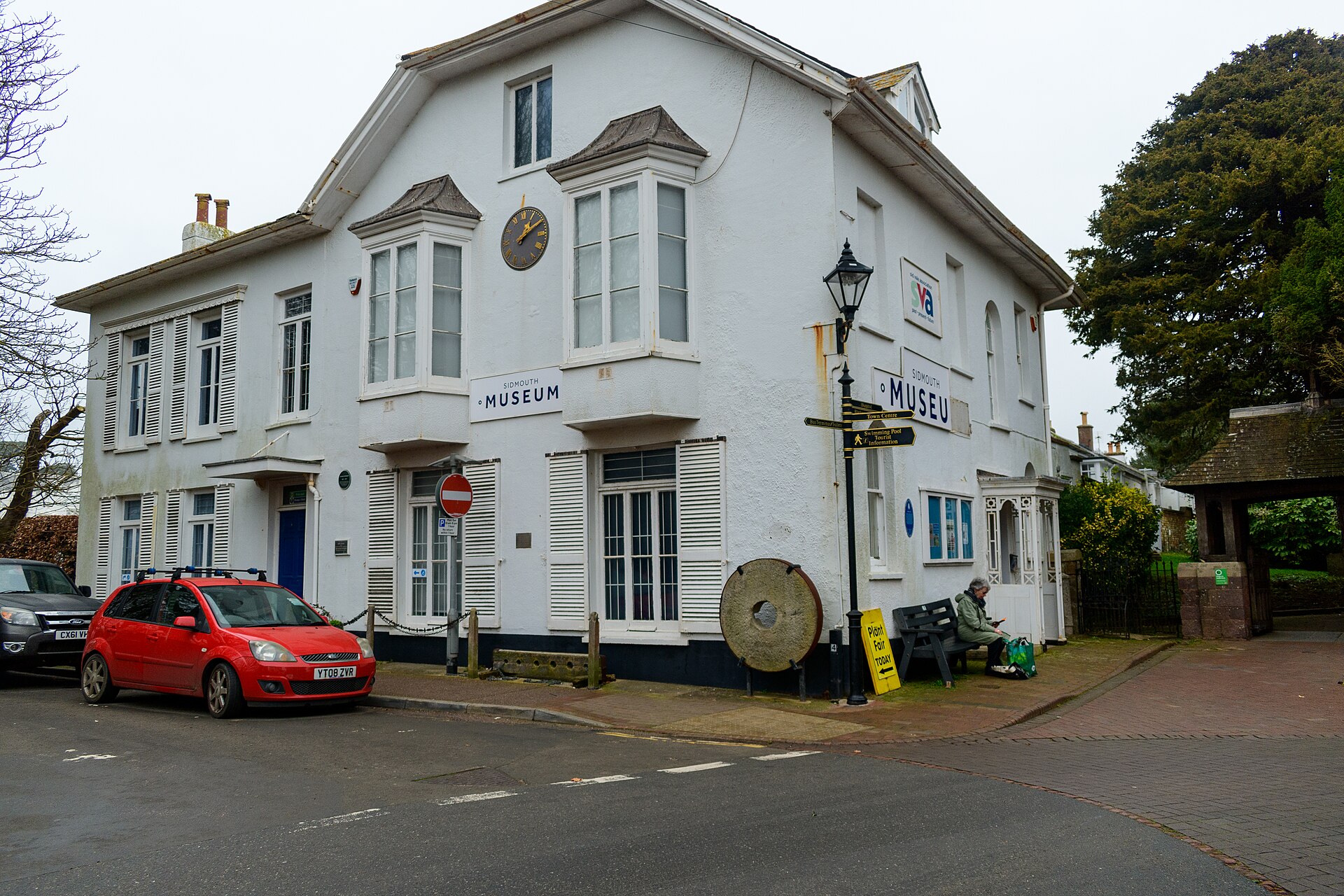
Sidmouth Museum
Sidmouth
Sidmouth Museum is a small local history museum in the Devon seaside town of Sidmouth, housed in Hope Cottage on Church Street. It is a good first stop for anyone who wants to understand how a quiet Regency resort on the English Channel came to be what it is, and what lies beneath its famous red cliffs. What is Sidmouth Museum? The museum tells the story of Sidmouth and the surrounding Sid Valley through objects, pictures and documents. Its collections cover local history, lacemaking, archaeology and geology, along with displays about prominent people connected with the town. Interactive displays take up themes such as the museum's art collection, the lace collection and the history of Sidmouth's hotels, which reflects the town's long life as a holiday destination. Who runs it and how did it start? The museum is owned and funded by the Sid Vale Association, a local society of residents. The story began in 1950, when Mary Kilgour invited the association to take over a collection of exhibits. The collection was first shown at Woolcombe House and moved to its present home in Hope Cottage in 1970. Today the museum is run entirely by volunteers, most of them members of the association, which gives visits a friendly, local character. What can you see? Lace and local history Lacemaking is one of the traditional crafts of East Devon, and the lace collection is one of the museum's distinctive themes. Alongside it you will find material on everyday life in the town, its buildings and its residents over the centuries. Fossils, minerals and rocks Sidmouth sits on the Jurassic Coast, the UNESCO World Heritage coastline of Dorset and East Devon. The museum's collection of fossils, minerals and rocks includes many specimens from the Sidmouth area and from the cliffs of the World Heritage site. It is useful preparation if you plan to walk the shoreline afterwards. Where is it and when is it open? The museum stands at the top of Church Street, next to the Parish Church, and is reached from the Market Place in the town centre. Some sources list a different street for the address, but the museum's own listing gives Hope Cottage, Church Street. It is a seasonal museum, open from March to October, so check current opening times before you travel. Admission is charged, with free entry for children under 16 and for members of the Sid Vale Association. Frequently asked questions Is Sidmouth Museum suitable for a short visit? Yes. It is a compact museum, and a visit fits comfortably into a walk around the town centre. Is it open all year? No. It operates seasonally, from March to October. Who runs the museum? Volunteers, mostly members of the Sid Vale Association, which owns and funds it. What is the museum best known for? Its lace collection, local archaeology and geology, and its fossils and minerals from the Jurassic Coast.
-
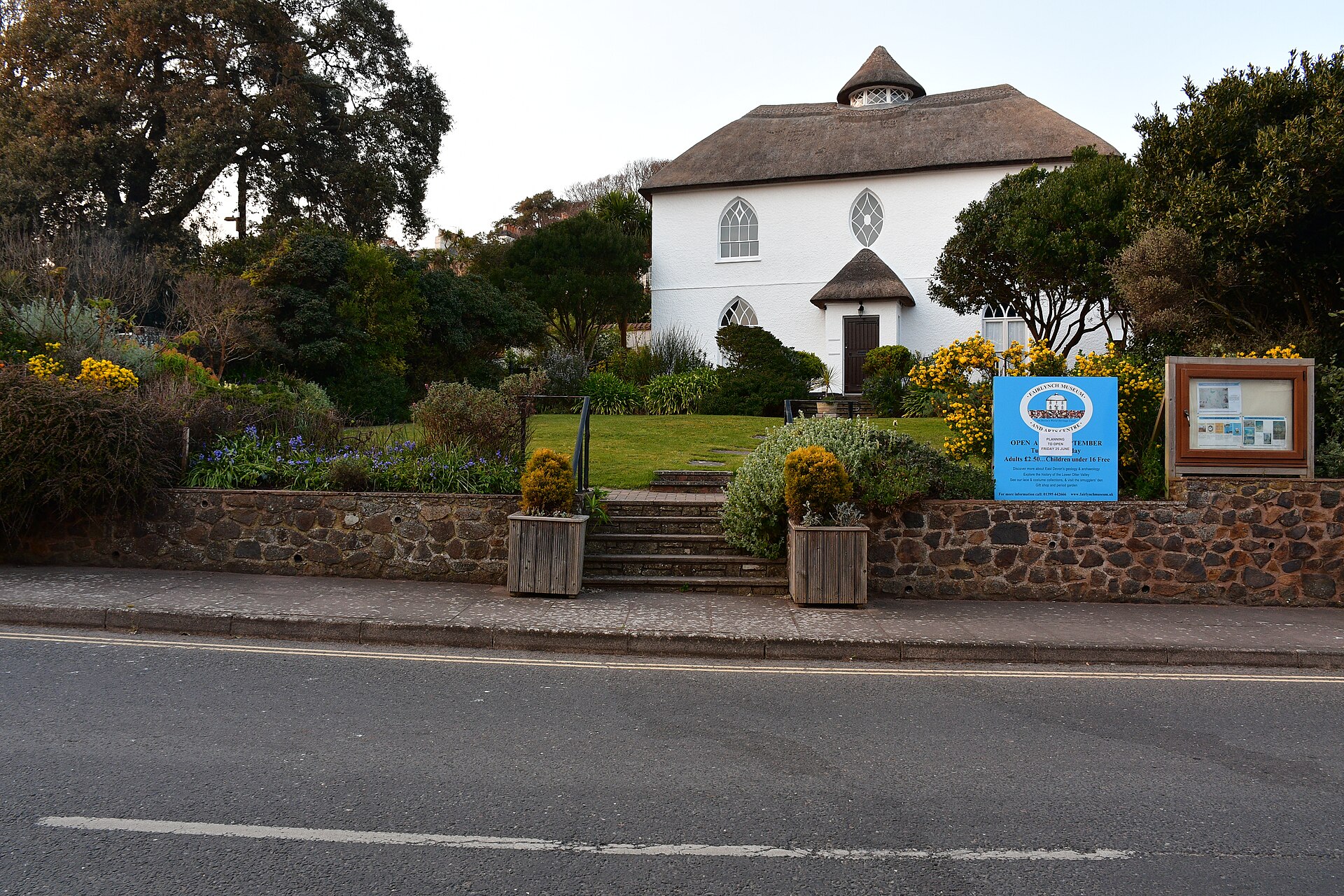
Fairlynch Museum
Budleigh Salterton
Fairlynch Museum is a small museum and arts centre in Budleigh Salterton, a seaside town in Devon on England's south-west coast. It occupies a Georgian thatched cottage close to the sea and is run by volunteers. It is a good stop for visitors who want to learn about local history rather than only walk along the beach. Where is Fairlynch Museum? The museum stands at 27 Fore Street in Budleigh Salterton, Devon. The town sits on the southern English coast, and the building is near the shore. The coordinates are roughly 50.629 N, 3.322 W, which makes it easy to find with a map app. Budleigh Salterton is a quiet place, so the museum is best reached on foot from the town centre or the seafront. What is the building like? The museum is housed in a Georgian-era thatched cottage listed at Grade II. The building is part of the appeal: low, charming and typical of the architecture found in Devon's coastal towns. Even visitors who do not go in may want to pause outside to look at the frontage and the thatch. When did it open and who runs it? Fairlynch opened in 1967. From the start its purpose has been to show the history and development of Budleigh Salterton and the Lower Otter Valley. It is an educational charity run by volunteers and funded entirely by donations rather than public money. This gives it a homely feel compared with larger institutions, and the people on site are usually happy to talk about the exhibits and the area. What can you see inside? The museum's strengths fall into three areas. Costume. The collection of clothing is regarded as nationally important, a notable distinction for a small local museum. Geology. The geological collection is also of national significance, and it pairs well with a day exploring Devon's coastline and its rock formations. Local and family history. The museum offers strong resources for people researching the town's past or their own family roots. There is also an arts centre and gallery side. The collection includes around 400 sketches, drawings, original paintings and prints, either of local significance or made by local artists. Work by Joyce Dennys features among them. Who is it for? Fairlynch suits anyone interested in regional history, historic fashion, geology and local art. It also works as a calm option for a rainy day in Devon or a break from a coastal walk. A visit does not take long, so it fits easily into a day that also includes time on the beach or a coffee in town. Frequently asked questions Is the museum open all year? No, it is a seasonal venue. Opening days and hours change from year to year, so check the official museum website before you travel. Is there an entrance fee? Admission is typically modest, and some groups, such as children, may enter free. Confirm the current details on the museum's website. How is the museum funded? By donations. It is run by volunteers as a charity, so every contribution helps look after the collections. Is it useful for family history research? Yes. The museum highlights good resources for local and family history researchers. What kind of building is it in? A Georgian thatched cottage, listed at Grade II.
-

Herschel Museum of Astronomy
Bath
Herschel Museum of Astronomy in Bath is a small museum in a Georgian town house at 19 New King Street, once the home of William Herschel and his sister Caroline. It opened to the public in 1981 and stands on the spot where one of the most famous discoveries in the history of astronomy was made. What happened in this house? On 13 March 1781, William Herschel was observing the night sky from the garden behind the house with a telescope he had built himself. He spotted an object that turned out not to be a star or a comet but a new planet, later named Uranus. It was the first planet found since antiquity, and it roughly doubled the known size of the Solar System. A stone marker in the garden shows where the telescope stood. The discovery changed Herschel's life. Until then he had been a professional musician, and astronomy was a passion pursued in his spare time. Recognition followed, and with it royal patronage from King George III, which allowed him to devote himself to the study of the sky. Who were the Herschels? William was born in Hanover and settled in Bath as a musician. He was a self-taught astronomer who ground his own mirrors and built his own instruments, often working late into the night. His sister Caroline joined him in England and helped with the observations, calculations and records. She became an astronomer in her own right and discovered several comets, which earned her wide respect among scientists of her time. The museum also tells the story of William's son John Herschel, who continued the family's work in science. What can you see inside? The rooms are furnished in the style of the late 18th century, so the visit feels like walking into a working household rather than a gallery. You will find: instruments and models connected with the Herschels' observations, the rooms where the family lived and worked, including a music room that recalls William's career as a musician, the workshop area, where telescope mirrors were made and polished, the garden with the discovery marker. Occasionally the museum organises astronomy-themed events and sessions in the garden. Practical tips Where is it? In the centre of Bath, a short walk from the main sights of the old town. How long does a visit take? The house is compact, so an hour is usually enough, a little more if you like to read every exhibit. Accessibility: the house has stairs to the first floor and basement, so visitors with limited mobility may want to contact the museum beforehand. Opening hours and prices change, so check the museum's official website before you go. Frequently asked questions Where was Uranus discovered? In the garden of this house at 19 New King Street in Bath, on 13 March 1781. Who lived here? William Herschel and his sister Caroline, both of whom contributed to the astronomy of their era. Is the museum suitable for people who are not astronomy experts? Yes. The story of the house, the family and the discovery is told in an accessible way and works well for curious visitors of any age. When did the museum open? In 1981, in the former Herschel home.
-
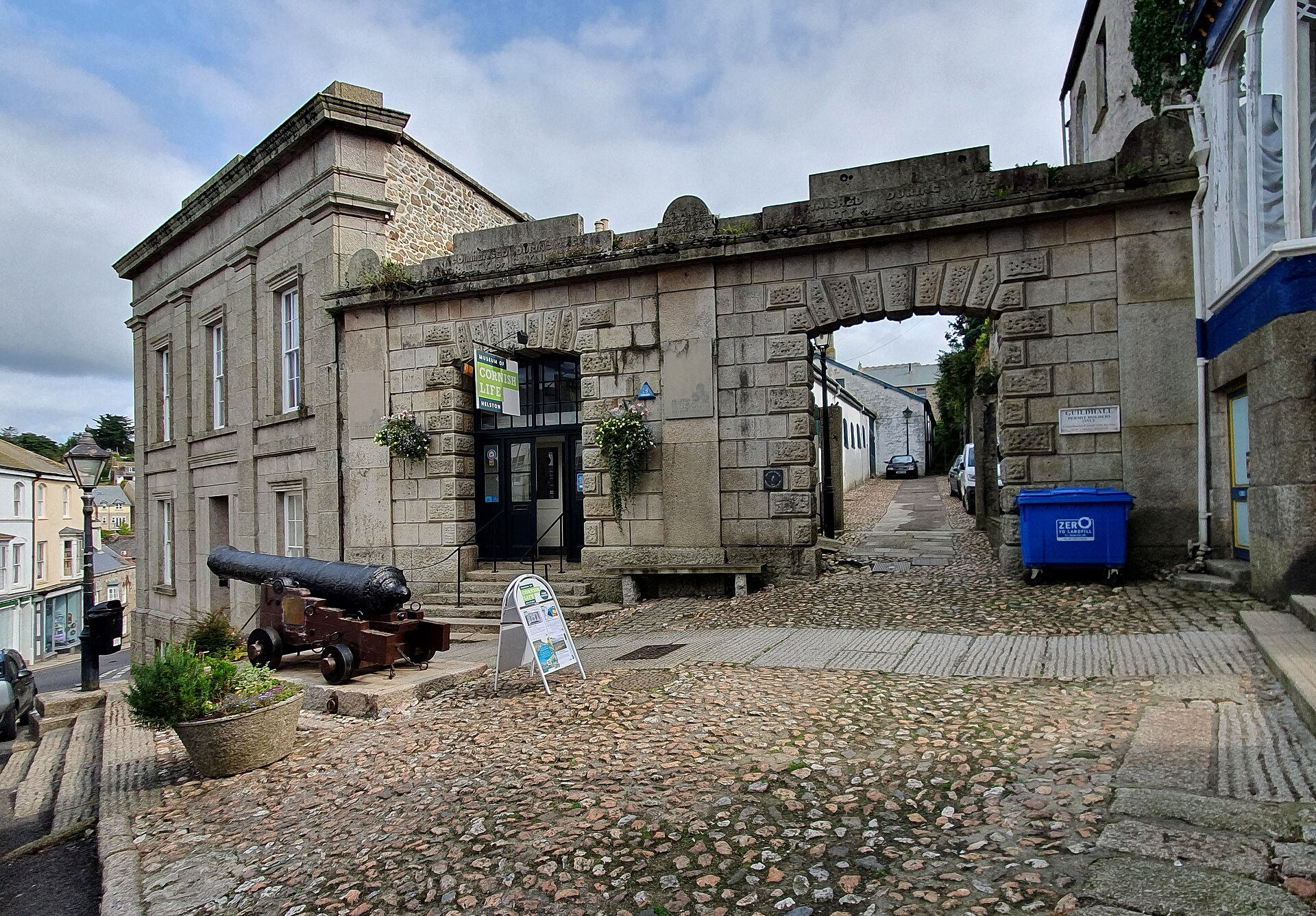
Museum of Cornish Life
Helston
Museum of Cornish Life is a local museum in Helston, a former market town in Cornwall, south-west England. It sits immediately behind Helston Guildhall in the centre of town, which makes it an easy stop on a walk around the area. What kind of museum is it? The museum focuses on everyday life and on the social and industrial history of the Lizard Peninsula and the Helston area. Its displays show how people worked and lived in this corner of Cornwall, from mining and fishing to farming and home life. Estimates put the collection at as many as 40,000 individual items. Where did the collection come from? The collection began in the 1930s, started by the Helston branch of the Old Cornwall Society, a group devoted to preserving Cornish heritage. It was catalogued in 1937 under Helston Borough Council. The Second World War delayed plans, and in 1946 the collection moved into the old market buildings. The museum opened in 1949. What is the building? The museum occupies the former Butter and Egg Market, designed in 1837 as the town's Market House. Over time it expanded into the old meat market, and in 1999 into the adjoining Drill Hall. A visit therefore takes place inside buildings that are themselves part of the town's story. What can you see? Neolithic, Bronze Age and Romano-British archaeology the lifesaving inventions of Henry Trengrouse material connected with Flora Day, the town's famous celebration a recreated 1950s kitchen a five-ton cider press objects from the working life of Cornish mines, farms and the sea In 2005 the museum also took on the collections of Camborne Museum, which had been housed in the Camborne Free Library building since 1913. This broadens the picture of Cornish industry and local community life on show. Who runs it? For many years the museum was run by Cornwall Council. In August 2013 South Kerrier Heritage Trust took over its management. Frequently asked questions Where exactly is the museum? In central Helston, directly behind Helston Guildhall. The coordinates are roughly 50.1014 N, 5.2743 W. Is admission charged? According to ArtUK, entry is free. Check the museum's own website before you go, as some sources mention that a time slot may need to be booked. Who is it for? Anyone interested in Cornish history, mining, fishing and the daily life of earlier residents, as well as families who want to combine a museum visit with time in the town. How long does a visit take? The collection is large and spread across several former market halls, so allow at least an hour or two. What is Flora Day? It is Helston's traditional town celebration, and souvenirs and material from it form part of the museum's displays.
-
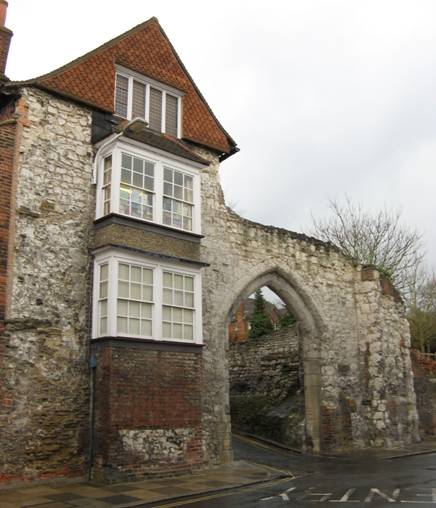
Guildford Museum
Guildford
Guildford Museum is the main museum of Guildford, Surrey, England. It stands on Quarry Street, a narrow lane of cottages built before 1900 that runs just off the pedestrianised High Street. Entry is free, and a visit pairs naturally with a walk around the neighbouring castle. Where is the museum and what sets it apart? The main site occupies the gatehouse and annex of Guildford Castle, so the building itself is part of the story the collections tell. The museum is run by Guildford Borough Council, and its staff help look after the castle too. Since 2010 it has operated as part of the borough's Heritage Service. The location suits visitors well. It is only a few steps from the main shopping street, and the surrounding lanes of Quarry Street and Castle Hill keep the feel of an old English market town. How did the collection come about? The collection grew out of the holdings of the Surrey Archaeological Society. Early objects were kept in several places, including London, before settling in Guildford in 1898. The borough council offered historic cottages built on the site of the old castle gatehouse. By around 1912 the museum was funded jointly by the society and the council. A significant part of the collection remains on loan from the society today. Sources quote different figures, but the total runs to tens of thousands of objects. It is regarded as the principal archaeological collection in Surrey. What can you see? The core of the museum is archaeological finds from Surrey, tracing the history of the county across the centuries. It also presents local history and everyday objects from the town's past. A separate thread is Lewis Carroll, the pen name of Charles Dodgson, author of "Alice's Adventures in Wonderland". In 1868 he leased The Chestnuts on Castle Hill, close to Quarry Street, for his sisters. The museum shows Carroll-related material from the family, including toys and examples of the Looking Glass Box and the Wonderland Stamp Case. When should you visit? The museum is open Monday to Saturday, typically from 11am to 4:45pm. It is closed on Sundays and on Christmas Day. Listings sometimes give differing hours, so check current details before you go. Frequently asked questions Is Guildford Museum free? Yes, entry is free during opening hours. Where exactly is it? On Quarry Street in Guildford, in the gatehouse and annex of the castle, just off the High Street. Who runs it? Guildford Borough Council, working with the local archaeological society that supplied much of the collection. Is there anything about Lewis Carroll? Yes, the museum displays items linked to the Dodgson family, including toys and objects connected with his writing. How long should I allow? About an hour is usually enough for a relaxed visit, and many people combine it with the castle.
-

Topsham Museum
Exeter
Topsham Museum is a small local museum in Topsham, a historic port town on the Exe estuary just outside Exeter in Devon. It occupies a merchant's house at 25 The Strand and tells the story of a town that lived off the sea, trade and shipbuilding. What is the building? The museum is housed in a late 17th-century merchant's house with Grade II listed status. One source dates its construction to around 1688, with a new staircase and raised upper floors added in the 18th century. It is one of several high-status merchants' houses built along the waterfront in that period, and its plasterwork, which sources date to the 18th century, is considered particularly significant. The Strand was once the working quayside. Limestone buildings line both sides of the road, mostly former warehouses from the 18th century, so the walk to the museum already sets the scene for the town's maritime past. What can you see inside? The displays feel domestic rather than gallery-like. Visitors move through furnished rooms from different eras, including a dining room, an 18th-century parlour and a 1930s kitchen. The central theme is Topsham's role as a significant port and shipbuilding centre, reflected in objects linked to seafaring and trade. Film fans will find a separate strand: memorabilia relating to Vivien Leigh, the actress best known for "Gone with the Wind". These were donated by the museum's founder, Dorothy Holman, who was Leigh's former sister-in-law. Who founded it? Topsham Museum opened in 1967 thanks to Dorothy Holman. She gave the building to Exeter for use as a museum, and it is now owned by Exeter City Council. It remains a community-minded institution built around the history of a single town. Is the museum open? Reports from 2025 describe planned repairs to the roof, floors and external masonry and walls. During the early stages the museum was closed to visitors, and the building's appearance from the street is meant to stay unchanged. No confirmed reopening date is available, so check the museum's website for current status before visiting. Frequently asked questions Where is Topsham Museum? At 25 The Strand, Topsham, southeast of Exeter city centre on the Exe estuary. When was it founded? In 1967, by Dorothy Holman. What is it known for? Its historic merchant's house interiors, the story of Topsham's port and shipbuilding trade, and Vivien Leigh memorabilia. Is the building listed? Yes, it is Grade II listed. Can I combine it with a town walk? Yes. Topsham has several walking trails through its historic streets, and The Strand quayside is a natural starting point.
-
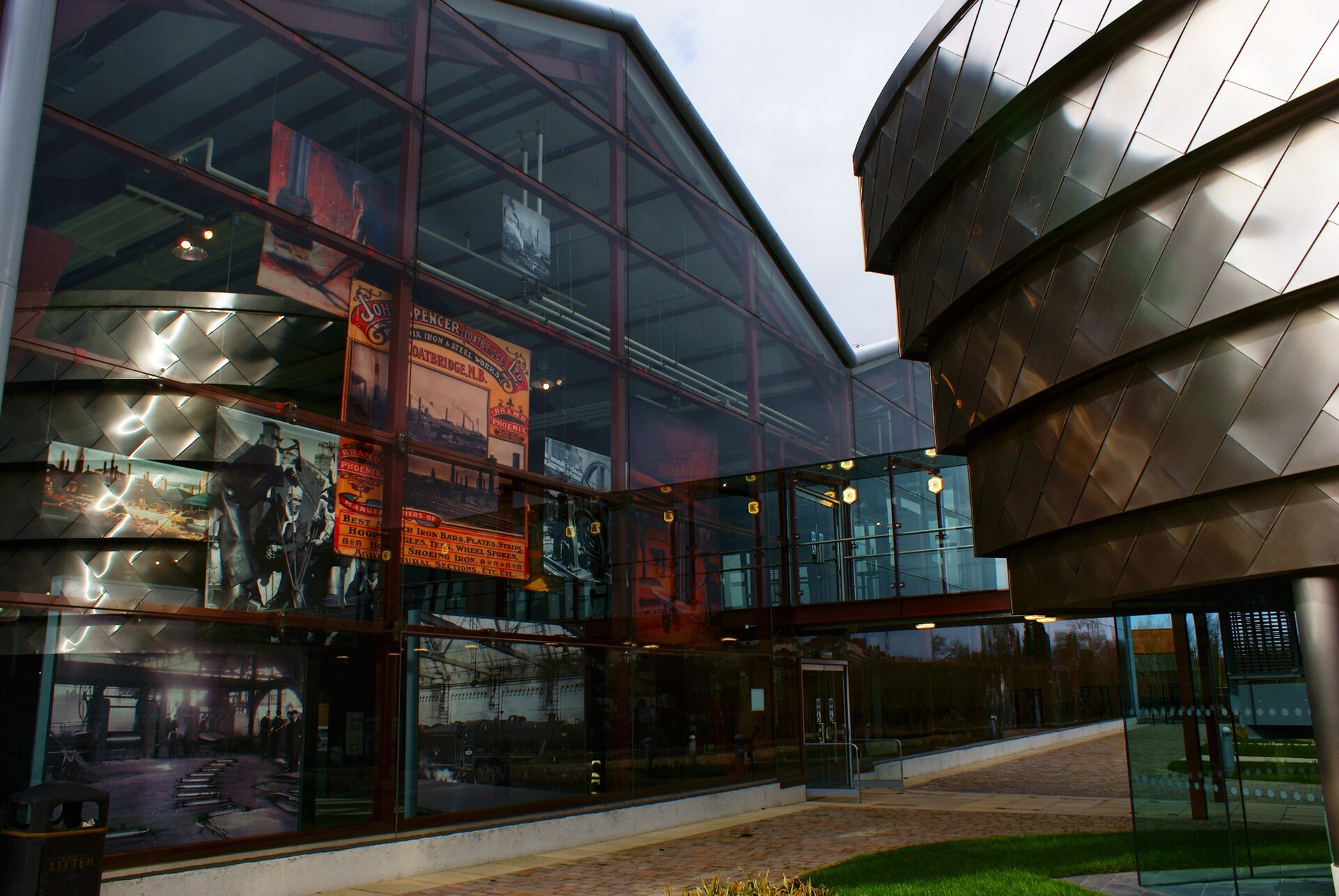
Summerlee Museum of Scottish Industrial Life
Coatbridge
Summerlee Museum of Scottish Industrial Life in Coatbridge, North Lanarkshire, tells the story of how heavy industry shaped Scotland and the people who worked in it. Entry is free, and beyond the exhibition hall you will find a working tramway, a canal and a recreated mine. Where is it, and why here? The museum stands on the grounds of the Victorian Summerlee Iron Works and a former factory that built Hydrocon cranes. Coatbridge was an important ironworking town, so the setting suits the subject. The main Hydrocon factory building now serves as the exhibition hall, although it has been altered and adapted considerably since the museum took it over. What does the museum cover? The displays follow Lanarkshire's contribution to engineering, mining, steelmaking, weaving and farming. Just as much attention goes to everyday life: how local people lived and worked. Inside the hall you will find machinery and interactive exhibits that invite hands-on exploration, plus a temporary exhibition space whose programme changes over time. What is there to see outdoors? Electric tramway – a heritage line runs on site, with both modern-style and Edwardian open-top cars. Rides carry a small fee, and a ticket covers a day of travel. Monkland Canal – the museum sits beside a restored section of a branch of the Monkland Canal. The Vulcan steam boat lies on the water and can be boarded. Recreated mine – an adit shows what underground work was like for miners. Miners' cottages – the rooms illustrate domestic life from the 1840s to the 1980s. Steam-driven sawmill – a demonstration of traditional working methods. Children's play area – handy for families. Who will enjoy it? Anyone interested in industrial and railway heritage, families with children, and visitors curious about how industry shaped ordinary lives. With free admission you can set your own pace: an hour covers the main hall, while half a day allows time for the outdoor sites and a tram ride. Frequently asked questions Is Summerlee free to enter? Yes, museum entry is free. Tram rides cost extra. Where is the museum? In Coatbridge, North Lanarkshire, Scotland, on the site of the former Summerlee Iron Works. Is it suitable for children? Yes. There are interactive exhibits, tram rides, a boat on the canal and a play area. Should I check opening hours before visiting? Yes. Hours vary by season, so confirm them on the museum's official website. What do the exhibitions show? The engineering, mining, steelmaking, weaving and farming of Lanarkshire, and the lives of the people who worked in them.
-
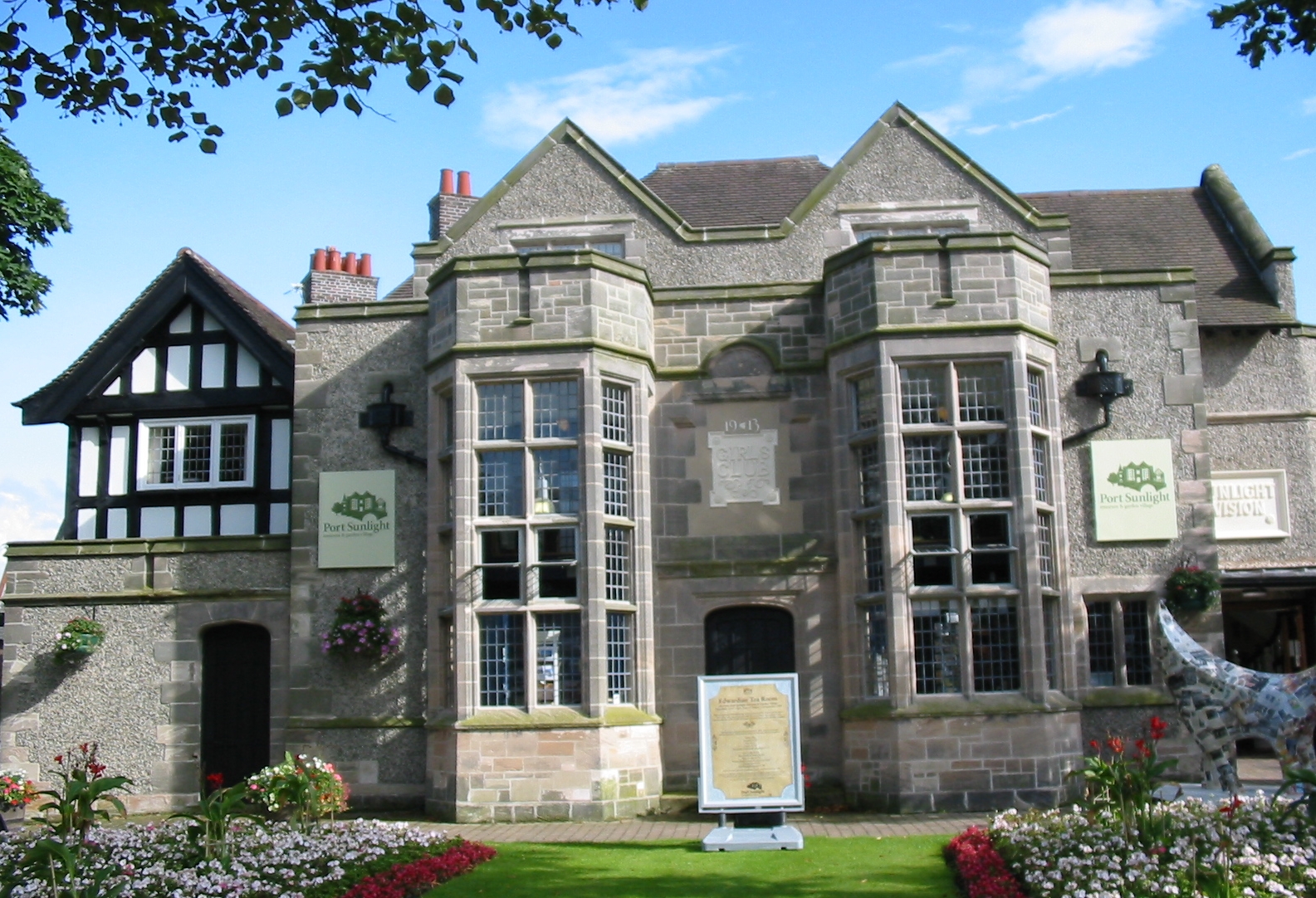
Port Sunlight Museum
Wirral
Port Sunlight Museum is the place to begin a visit to Port Sunlight, the model village on the Wirral peninsula in north-west England. It tells the story of how a soap factory and a planned community grew up together, and it sits inside the village it describes. What is Port Sunlight Museum? The museum is a small local-history and heritage museum run by the Port Sunlight Village Trust, an independent charitable trust set up in 1999 by Unilever. It opened in 2006 after a capital project costing about £1.1 million, supported by the European Regional Development Fund, the Heritage Lottery Fund and the trust itself. The museum later gained full Accreditation, in 2009–10. Where is it, and what building does it occupy? The museum is in Port Sunlight, on the Wirral. It occupies one of the village's original buildings, which first served as a girls' club. Reusing a structure from the early community means the museum is itself part of the story it presents, and the building is a good example of the village's architecture. Why was Port Sunlight built? The village was founded in the late 1880s by William Hesketh Lever, later Viscount Leverhulme, to house workers and expand his soap-making business. Building began in 1888. Instead of cramped industrial terraces, Lever planned a village with varied housing, shared facilities and green space. The museum uses this background to explain daily life for residents and workers, and how the settlement was designed and managed. What can you learn there? Expect displays about the history of the village, the Lever family business and the people who lived and worked here. The company that began with Lever Brothers merged with the Dutch Margarine Union in 1930 to form Unilever, a link that explains why the trust has corporate roots. The museum works as an introduction, helping you read the streets, buildings and landmarks you will see outside. What else is nearby? Port Sunlight is a place to explore on foot, and the museum is a sensible first stop before walking the village. Close by is the Lady Lever Art Gallery, which Lever built in memory of his wife Elizabeth after her death in 1913. Princess Beatrice formally opened it in 1922, and it is now part of National Museums Liverpool. Seeing the museum first gives useful context for the gallery and the surrounding streets. Frequently asked questions When did Port Sunlight Museum open? It opened in 2006 in a former girls' club building in the village. Who runs the museum? The Port Sunlight Village Trust, an independent charitable trust established by Unilever in 1999. Who founded Port Sunlight village? William Hesketh Lever, later Viscount Leverhulme, began building it in 1888 for the workers of his soap business. Is the museum the same as the Lady Lever Art Gallery? No. They are separate institutions in the same village. The gallery dates from 1922 and belongs to National Museums Liverpool, while the museum focuses on the history of the village and its community. Is it worth visiting? If you are interested in industrial heritage, planned communities or the history of the Wirral, it is a compact and informative starting point. Check current opening hours and ticket details before travelling, as these can change. Practical tip Plan your day around the village as a whole: begin at the museum to understand the layout and history, then walk the streets and visit the art gallery. The museum's setting among the original buildings is part of its appeal, so allow time to look around the surrounding area rather than treating it as a stand-alone stop. Port Sunlight is easy to combine with other places on the Wirral, making it a fitting half-day or full-day outing for visitors interested in British social and architectural history.
-
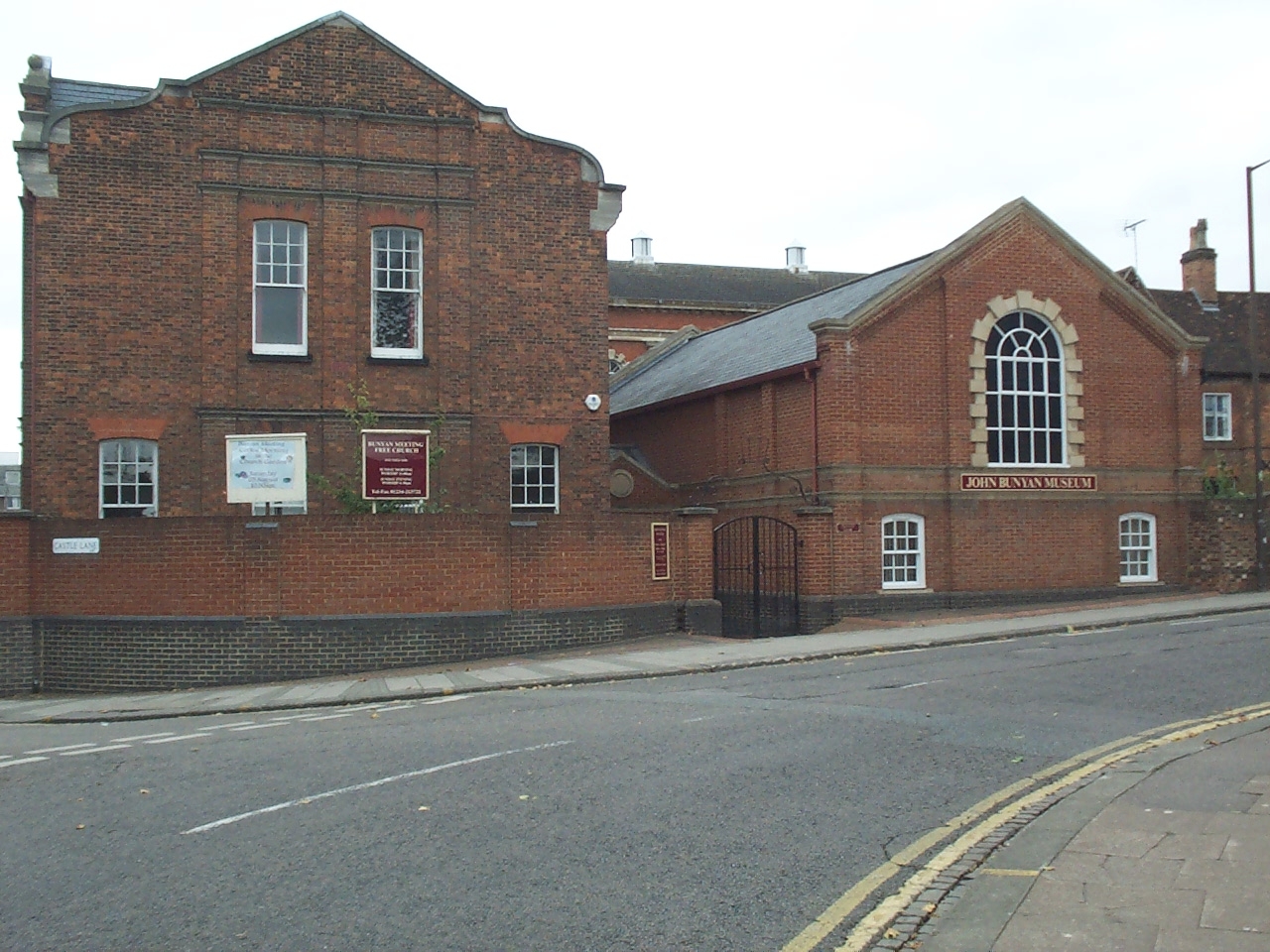
John Bunyan Museum and Library
Bedford
John Bunyan Museum and Library is a biographical museum in Bedford, England, devoted to the life and work of John Bunyan, author of The Pilgrim's Progress. It stands on Mill Street, right beside Bunyan Meeting, the congregation linked to the writer. Who was John Bunyan? John Bunyan (1628-1688) was an English preacher and author from Bedfordshire. Born into a poor family, he eventually became a pastor in Bedford. He was imprisoned for preaching without the approval of the Church of England and spent many years behind bars. Part of his writing dates from that period. His best-known work, The Pilgrim's Progress, is an allegory of a Christian's journey to the "Celestial City". It has been translated into dozens of languages and is still regarded as a classic of English literature. What can you see at the museum? The museum tells the story of Bunyan and his times: life in seventeenth-century England, his trade, his imprisonment and his work as a minister. The displays show where his major works came from and why they influenced so many readers. The museum also has a library with a substantial collection of books, pamphlets and biographies, both by Bunyan and about him. It suits anyone interested in literary, religious or local history. History of the museum The collection was first put on display in 1946, in a room now known as the Harrowden Room. During the Second World War that room was used by the BBC for broadcasting. In the late 1980s a project began to refurbish the meeting rooms and build a purpose-designed museum. After roughly ten years of fundraising, the new building opened in 1998. Funding came mainly from church members and private donors, supported by charitable trusts and Bedford councils. A Friends group, founded by Lady Margaret Glasse, also helped raise money. Planning your visit The museum runs seasonally and reopens each year after a winter closure. In 2023 two floods damaged the entrance and shop, but the collections were not harmed. Before you travel, check current opening hours on the Bunyan Meeting website. A visit usually takes about an hour, and it combines easily with a walk around central Bedford. Frequently asked questions Where is the museum? In Bedford, on Mill Street, next to Bunyan Meeting. Is it open all year? It operates seasonally and reopens after a winter break, so check dates in advance. When did the current building open? In 1998, after about ten years of fundraising. Is there a library? Yes, with books, pamphlets and biographies connected to Bunyan. Who is it for? Readers of English literature, those interested in religious history, and visitors to Bedford.
-

Castle Cary and District Museum
Castle Cary
Castle Cary and District Museum is a small local museum in the Somerset town of Castle Cary, in south-west England. It occupies the first floor of the historic Market House and tells the story of the town and surrounding villages, from fossils millions of years old to everyday life over the past few centuries. What kind of museum is it? It is a community-scale museum with a friendly, local feel. The collections show how people in this part of Somerset lived, what work they did and which objects filled their homes and farms. This is not a sprawling institution with a long route to follow. It suits a short, rewarding visit during a stroll around town. How did it start, and where is it? The museum has been running since 1974. At first it occupied a room at the back of a baker's shop. A few years later it moved to the first floor of the Market House, the former market hall where it remains today. The site lies at roughly 51.09 N, 2.51 W. About the Market House The building is a mid-nineteenth-century structure listed at Grade II*, designed by the architect F. C. Penrose. It was built in expectation of increased trade once a planned railway arrived. It replaced an earlier house that had stood on the spot since 1616, and some features of the older building were reused in the new one. The architecture is a good reason to visit in its own right. What can you see inside? Local fossils, including ammonites and material linked to the Alford ichthyosaur discovery. A large collection of domestic items, tools, agricultural implements and relics of rural life. A display on the rope and hemp industry, part of the area's working past. Parson James Woodforde, the clergyman known for his diary. Douglas Macmillan, founder of Macmillan Cancer Support. Is there an archive? Yes. The museum holds documents about Castle Cary and the district dating from the mid-eighteenth century to the present. They can be consulted by arrangement with the archivist, which is useful for family-history and local-history research. Frequently asked questions Is there an admission charge? Entry is free and donations are welcome. Check current opening times before you go, as the museum opens seasonally. How long does a visit take? It is a small museum, so about an hour is usually enough. Allow longer if you want to study the collections closely or use the archive. Who is it for? Anyone interested in local history, geology and traditional trades, and families looking for a relaxed attraction in Somerset. What else is nearby? Castle Cary itself is an attractive town of stone buildings that is easy to explore on foot. The museum makes a natural starting point for that walk.
-
Harwich Maritime Museum
Harwich
Harwich Maritime Museum is a small, volunteer-run museum in Harwich, Essex, housed in the Low Lighthouse, a whitewashed tower from 1818 that once guided ships into the harbour. It is run by the Harwich Society and gives you the town's seafaring story and a protected piece of navigation history under one roof. What is the building? The museum occupies the former Low Lighthouse, one half of a matched pair. Harwich had two lights that worked together: the High Light stood behind, while the Low Light had its lamp set lower, so a ship lining up the two lamps one above the other could stay in the safe channel. The Low Lighthouse stands roughly 200 metres south-east of the High Lighthouse. Historic England records the tower as a Grade II listed building, first listed in 1964, and it also has separate protection as a scheduled monument. The listing dates it to 1818, credits the engineer John Rennie the Elder with the design, and says it was built for General Rebow. The walls are yellow stock brick with stone dressings, now painted white. What will you see inside? The museum tells the story of Harwich as a port: a naval and packet-ship town at the mouth of the Stour and Orwell, with centuries of shipping, defence and trade behind it. The exhibition sits inside a lighthouse, so the setting is part of the visit. Allow around 30 to 45 minutes; it is a compact museum rather than a full-day attraction. Is it worth combining with other sights? Yes. The Harwich Society also looks after a Maritime Heritage Trail through the old town, and the High Lighthouse is only a short walk away. The Low Lighthouse is a good first stop before following the trail. When is it open? Opening is seasonal and depends on volunteers, so hours change from year to year. For Easter 2026 the Harwich Society listed daily opening from Friday to Monday, 10:00 to 16:00, with admission of £2. Earlier notices mention weekend opening, and the society has also described daily summer opening from May to mid-September. Check the Harwich Society website before you travel. Frequently asked questions Is Harwich Maritime Museum free? No. For Easter 2026 the Harwich Society listed a £2 admission charge. Is the building really a lighthouse? Yes. It is the former Low Lighthouse of 1818, now converted into the museum. Is the Low Lighthouse listed? Yes. It is Grade II listed and is also a scheduled monument. How long does a visit take? Plan on about 30 to 45 minutes, longer if you walk the nearby heritage trail.
-
John Paul Jones Cottage Museum
Kirkbean
John Paul Jones Cottage Museum in Kirkbean preserves the small house where John Paul Jones, a hero of the American Revolutionary War and a founding figure of the US Navy, was born in 1747. It stands on the Arbigland Estate in Dumfries and Galloway, on the Solway coast of south-west Scotland. Who was John Paul Jones, and why does his story start here? He was born plain John Paul and added the surname Jones later in life. His father was the gardener at Arbigland, so the family lived in a modest cottage on the estate grounds. From this quiet coastal parish he went to sea, and in 1779 his ship Bonhomme Richard defeated HMS Serapis off Flamborough Head, a battle that remains the best known moment of his career and a central theme of the displays. What is there to see? Your visit begins in the cottage itself, where two rooms have been restored as a living room and a bedroom of the kind Jones knew as a child. Period objects fill the space, and a small theatre shows a film about his life. Most of the exhibition is in the visitor centre, enlarged in 2003. It follows his path from a Scottish gardener's son to a naval commander and covers the clash with Serapis in detail. The highlight for many visitors is a reconstructed cabin from Bonhomme Richard. How did the museum come about? After the Second World War, US Navy Admiral Jerauld Wright championed the idea of marking the birthplace, and a bronze plaque was unveiled at the site in 1953. A charitable trust was set up in 1990 to restore the cottage, and the museum opened in 1993. It is run on a not-for-profit basis, so tickets and donations go towards its upkeep. When should you visit, and what does it cost? The museum is seasonal and opens from April to September. The official website lists Tuesday to Thursday and weekends, 11:00 to 16:00, while VisitScotland mentions wider opening in July and August. Sources disagree, so phone +44 (0)1387 880613 or email [email protected] before you travel. Adult tickets were most recently listed at around £6, with children admitted free. Outside the season, the site is closed to visitors. How do you get there? The address is Arbigland Estate, Kirkbean, Dumfries DG2 8BQ. The museum lies on the Solway shore south of Dumfries, close to the A710 coastal road, and a car is the easiest way to reach it. Arbigland's gardens are nearby and make a natural pairing, since this is the estate where Jones's father worked. Frequently asked questions Is the museum open all year? No. It runs from April to September, so winter visits are not possible. How long should I allow? Plan on one to one and a half hours for the cottage, the exhibition and the film. Do I need to know American history to enjoy it? No. The displays tell the story from the beginning, and the cabin reconstruction and cottage rooms appeal to all ages. Do I need to book? Usually not, but because opening days vary between sources, call ahead and confirm the museum is open on the day you plan to come.
-
Shibden Hall
Calderdale
Shibden Hall is a late medieval timber-framed house on the edge of Halifax in West Yorkshire, now run as a museum by Calderdale Council. It is listed Grade II* and is best known as the home of Anne Lister, the diarist behind the BBC drama Gentleman Jack. What is Shibden Hall? The house sits in the Shibden valley, inside a public park about a mile from Halifax town centre. Historic England's listing text dates it to around 1420, when it was built for William Otes, a cloth merchant. It has a timber frame, a central hall and two-storey cross-wings. In the later 1500s parts were encased in stone and a central rear wing was added, and a further round of alterations followed in the second quarter of the 19th century. Its exposed black-and-white timber frontage is the view most visitors remember. Who was Anne Lister? Anne Lister (1791–1840) was a landowner, businesswoman and prolific diarist who lived at Shibden for most of her life. She ran the estate, its coal and land income, and reshaped the house. Parts of her diaries were written in a private code, and they inspired Gentleman Jack (BBC, 2019 and 2022). The series has made the hall a pilgrimage site for fans from many countries. What can you see? The house interiors – rooms furnished to reflect different periods, from the medieval hall to the Lister-era changes. Outbuildings – a 17th-century barn (also Grade II*) and workshops that hold a carriage collection, including the Lister family carriage. Park and gardens – the grounds are separately registered at Grade II and are good for a walk after your visit. How do you get there, and when should you go? From Halifax it is roughly a 20-minute uphill walk from the bus station and about 25 minutes from the railway station. The main car park is Mereside, then allow around 10 minutes on foot to the hall, so leave margin for your time slot. The house is open in season, roughly March to early November, with timed entry. Check the Calderdale Museums website for current hours and prices, which vary by weekday and year. Last admission is one hour before closing. Frequently asked questions Is Shibden Hall open all year? No. The house opens seasonally, from March to November. The park is open to all, but the interiors need a ticket for a set time. Do I need to book? Entry runs in timed slots, so booking ahead is advisable. Tickets are sometimes available on arrival, but a specific slot is not guaranteed. Can I walk from Halifax? Yes. The route climbs steadily and takes 20–25 minutes from the stations. Driving to the Mereside car park is the alternative. Why is the hall famous? Because of Anne Lister and Gentleman Jack, and because it is a rare timber-framed house from around 1420 that later generations reshaped.
-
Selly Manor Museum
Birmingham
Selly Manor Museum in Birmingham is a small open-air heritage site made up of two medieval timber-framed houses in the Bournville suburb, close to the Cadbury chocolate story. Neither house began life here. Both were saved, moved and rebuilt in grounds laid out by the Cadbury family. What is Selly Manor? The museum brings together two historic buildings. Selly Manor is a timber-framed house whose earliest records go back to 1476; it was originally known as Smyths Tenement. In 1916 the chocolate maker and philanthropist George Cadbury had it moved to Bournville. The second building, Minworth Greaves, is a medieval cruck-framed hall that had decayed until only its skeleton remained. Laurence Cadbury rebuilt it in 1932 beside Selly Manor, with architect William Alexander Harvey overseeing the work. Both houses have been Grade II listed since 1952. What will you see inside? The rooms are furnished from the Laurence Cadbury collection, which covers the years 1500 to 1900. A visit therefore traces how English domestic life changed from Tudor times through to the Victorian era. Exposed beams, uneven floors and low doorways give a good sense of how ordinary medieval households lived. A garden surrounds the houses, and the museum runs events and family activities through the year. Who runs the museum? Bournville Village Trust operates the site as a heritage attraction, community museum and function venue. The buildings are licensed for weddings, so parts of the site may be reserved for private events on some days. Check opening times and ticket prices on the museum's website before you travel. How should you plan a visit? Selly Manor sits in south Birmingham, inside the Bournville model village built for Cadbury workers. It pairs well with a walk through the surrounding streets, which have a distinctive layout of houses and green space. Allow about an hour for the houses themselves, and longer if a themed event is on. Frequently asked questions Is Selly Manor on its original site? No. Selly Manor was moved to Bournville in 1916, and Minworth Greaves was rebuilt here in 1932 from its surviving frame. Are the buildings listed? Yes. Selly Manor and Minworth Greaves have both held Grade II status since 1952. What is displayed in the houses? Furniture from the Laurence Cadbury collection, dated 1500 to 1900, showing how homes looked from the late Middle Ages to the 19th century. Can you get married here? Yes. The museum is licensed for ceremonies, so confirm that your chosen day is not booked for a private event.
-
Haden Hill House Museum
Sandwell
Haden Hill House Museum is a Victorian historic house museum in Sandwell, West Midlands, where Cradley Heath meets Old Hill. It sits inside Haden Hill Park and is one of the museums run by Sandwell Council. Its rooms are furnished to show how a well-off gentleman's home looked in the late 1800s. What is Haden Hill House? The Haden family lived in this corner of the Black Country from the 1600s, earning their money from rented land and local mills. George Alfred Haden-Best inherited the estate in 1877. He had no wish to live in the old hall, so he had a new house built, finished around 1878. According to accounts, he meant to pull the old building down and enlarge the new one, but that never happened, which is why Haden Old Hall still stands next door. What will you see? Period rooms. Furniture and fittings give a picture of everyday upper-class life under Queen Victoria. Haden Old Hall. The older house is usually dated to the late 1600s, though some sources place it in the 16th and 17th centuries. It opens only on limited days. Exhibitions and events. The museum runs changing displays and themed weekends, such as 1940s wartime days. Haden Hill Park. About 55 acres (roughly 22 hectares) of award-winning parkland. Rowley Regis Urban District Council bought it in 1922 after a public fundraising drive, and a restoration between 2000 and 2007 was largely paid for by National Lottery money. How do you get there? The address is Halesowen Road, Cradley Heath, B64 7JU. By car, the park is reached from Lee Road or Barrs Road depending on the entrance. The house lies in the western part of the Black Country conurbation, close to Birmingham. When should you visit? Opening is seasonal, mostly Thursday to Sunday, and hours differ between summer and autumn. Check the current calendar on Visit Sandwell or call 01384 569 444 before you set off. The park itself is open at all times. Frequently asked questions Is entry free? Entry to the house is free. Some special events may charge. Is it open every day? No. Days and hours are seasonal, and the Old Hall has an even shorter schedule. How long should I allow? About an hour for the house and exhibitions, longer if you walk through the park. Is it a listed building? It is a historic 19th-century residence beside an older hall. We do not state a listing grade because we could not confirm one in our sources.
-
Soho House
Birmingham
Soho House in Birmingham is the former home of the manufacturer Matthew Boulton, set in the suburb of Handsworth. For over four decades it housed the man who, together with James Watt, helped launch the age of the steam engine. Today it is a museum run by Birmingham Museums Trust, telling the story of Boulton's life and of the Midlands Enlightenment. What is Soho House and why visit? It is an 18th-century house with Grade II* listed status, a rating reserved for particularly important buildings in England. Boulton lived here from 1766 until he died in 1809. Back then Handsworth belonged to Staffordshire; it only became part of Birmingham in 1911. The museum covers Boulton himself, his partnership with Watt, and the region's role in the Industrial Revolution. Who were the Lunar Society members? The house was a regular meeting place of the Lunar Society of Birmingham, an informal circle of industrialists, scientists and thinkers. They swapped ideas about science, technology and philosophy here. Standing in the rooms where those conversations took place makes it easier to see how ideas turned into factories and inventions, which is what draws many visitors interested in the history of technology. What will you see inside? The visit moves through rooms arranged to show how a wealthy late-18th-century manufacturer lived and worked. The story weaves family life together with business: the link with Watt, the growth of production at nearby Soho, and the social life of the household. For anyone curious about where England's industrial age began, this is one of the best places in Birmingham to meet it through people rather than machines alone. How do you get to Soho House? The museum stands in Handsworth, north-west of Birmingham city centre, on Soho Avenue. You can reach it by public transport or car. Before travelling, check the Birmingham Museums website for current opening hours and ticket prices, as they vary by season. The site lies at roughly 52.4996 N, 1.9229 W. How much time should you allow? Plan on an hour to an hour and a half for an unhurried visit. It pairs well with other industrial heritage sites in Birmingham, such as the Museum of Science and Industry in the city centre. Frequently asked questions Is Soho House the same as the Soho House members' clubs? No. This is Matthew Boulton's historic home in Handsworth, run as a museum, not the chain of private members' clubs. Who runs the museum? Birmingham Museums Trust. Why is the house historically important? It was the home of Matthew Boulton, James Watt's partner, and a gathering place for the Lunar Society. The building is also Grade II* listed. Has Handsworth always been part of Birmingham? No. It historically lay in Staffordshire and became part of Birmingham in 1911.
-
York Army Museum
York
York Army Museum is a military museum in the heart of York, northern England, housed in a former drill hall on Tower Street. It tells the story of two regiments tied to Yorkshire and shows what soldiers' lives looked like across many eras. What is York Army Museum? The museum occupies the building known as the Tower Street drill hall, constructed in 1885 for the War Office. The hall still serves as the regimental headquarters of the Royal Yorkshire Regiment, with part of the building given over to the museum. A military museum has operated here since 1984, and it now carries the name York Army Museum. What collections can you see? The holdings come from two main sources: The Royal Dragoon Guards and The Yorkshire Regiment. The museum also inherited the collection of the Prince of Wales's Own Regiment of Yorkshire and continues to build its displays on behalf of the Yorkshire Regiment. Cases hold uniforms, regimental badges, silver, firearms, swords and sabres, trophies, paintings and photographs. Decorations take pride of place: the collection includes five Victoria Crosses, Britain's highest award for gallantry, plus upwards of 3,500 other medals. Alongside them sit soldiers' personal belongings, which let you see conflict through the eyes of ordinary people rather than commanders alone. A common thread runs through it all: the regiments' close connection to Yorkshire. Why visit? It is a compact display that you can see in under an hour, easy to fit into an unhurried day in York. It presents British military history through local communities and specific regiments. The medal collection, including the Victoria Crosses, is among the highlights. The museum has wheelchair access and a gift shop. Getting there and what is nearby The museum stands at 3 Tower Street, directly opposite Clifford's Tower, the medieval keep on its mound and one of York's best-known landmarks. That makes it simple to combine a visit with other sights of the old city: the city walls, the castle area and the narrow streets around the Minster. Frequently asked questions Where is York Army Museum? On Tower Street in central York, right by Clifford's Tower. Which regiments does it cover? The Royal Dragoon Guards and The Yorkshire Regiment, along with the heritage of the Prince of Wales's Own Regiment of Yorkshire. Can I see gallantry awards? Yes. The collection includes five Victoria Crosses and more than 3,500 other medals. Is the building accessible? Yes, the museum offers wheelchair access. Should I check opening hours first? Yes. Opening days and ticket prices change with the season, so confirm current details on the museum's official website or the Art Fund listing before you go. In short York Army Museum suits anyone interested in military history, medals and uniforms, and anyone who wants to see Yorkshire from a less obvious angle. Set in a Victorian drill hall in the middle of the city, it slots neatly into a full day of walking around York.
-
Leeds Art Gallery
Leeds
Leeds Art Gallery is the municipal art gallery in the centre of Leeds, West Yorkshire, England. Part of the Leeds Museums & Galleries group, it holds a collection of 20th-century British art that the British government designated in 1997 as being "of national importance". The building is Grade II listed and is owned and run by Leeds City Council. What can I see at Leeds Art Gallery? The core of the collection is 20th-century British art, but it also includes 19th-century works and earlier pieces. The lower galleries show work from the early years of the collection, along with sculpture and temporary exhibitions. In front of the entrance stands Henry Moore's sculpture Reclining Woman: Elbow (1981), and inside the entrance hall you will find the oldest civic sculpture in Leeds, a marble statue of Queen Anne from 1712. How does the gallery connect to its neighbours? On the west side the gallery is linked to Leeds Central Library, and on the east a bridge leads to the Henry Moore Institute. The Institute occupies three converted Victorian houses on Cookridge Street, shares some sculptures with the gallery and holds the main sculpture collections. That makes it easy to pair a morning of paintings with a look at sculpture in the same neighbourhood. A 1982 extension changed the entrance and added room for sculpture; Queen Elizabeth II opened the new building on 26 November 1982. What is the Tiled Hall? One of the most striking spaces in the complex is the Tiled Hall. It began as the main reading room of the neighbouring library, and from 1888 to 1941 served as a sculpture court. When the library moved into the hall in 1955, its richly decorated ceiling and walls were hidden for almost fifty years behind a false ceiling, bookcases and panelling. A restoration costing about £1.5 million, finished in 2007 with English Heritage support, brought the original fabric back to light. Today the Tiled Hall houses a café serving hot and cold drinks, sandwiches, daily specials, toasties, paninis and cakes. Entrances and toilets are accessible, so it makes a comfortable break during a day in the city. Supporting the collection In 1912 the Leeds Art Collections Fund was formed, and it is now known as the Leeds Art Fund. It supports acquisitions for the gallery, which is one reason the collection continues to grow. Frequently asked questions What kind of art is the gallery best for? Its strongest area is 20th-century British art, recognised by the government in 1997, complemented by earlier works and sculpture. Can I get food or a drink in the gallery? Yes. The café in the Tiled Hall serves sandwiches, toasties, daily specials and cakes. Can I see more sculpture nearby? Yes. Cross the bridge on the east side to the Henry Moore Institute, which holds the main sculpture collections. Is the gallery accessible? The café has accessible entrances and toilets. What should I look for at the entrance? Henry Moore's sculpture outside the building and the 1712 statue of Queen Anne in the hall.
-
Brighton Fishing Museum
Brighton
Brighton Fishing Museum is a small, free-to-enter museum on Brighton's seafront that tells the story of the town's sea-fishing community. It sits in two brick arches along Kings Road, a short walk west of Brighton Pier, in the area known as the Fishing Quarter. What is the Brighton Fishing Museum? It is a registered independent museum devoted to the fishing and seaside history of Brighton. It was set up in 1994 together with local fishermen, which is why it feels less like a polished institution and more like a working-community memory box. The displays follow the town's sea fishing from the 1800s into the 1990s. Where exactly is it? The museum occupies two arches beneath the Kings Road promenade, on the pebble beach side of the road, just west of the pier. These arches date from the 1860s and have been used by fishing people ever since, so the building itself is part of the story. The stretch of beach in front of them is still where boats are hauled up, repaired and restored. What can you see inside? Historic fishing boats, including the 27-foot lugger Sussex Maid, which represents the type of beach boat that worked from Brighton in the 1920s. Traditional fishing gear and navigational instruments, showing how crews found their way and made their catch. Model boats and a large collection of old photographs of the beach and its fishermen. Film and slide shows, both archive and contemporary, plus an audio presentation in which fishing folk talk and sing. Oral history recordings, which give a first-hand voice to a trade that has changed a great deal. Is it a working place or just a display? Both. Restoration work is carried out on the hard in front of the workshop, and restored fishing and pleasure boats are often drawn up on the hard and the beach. Visitors can sometimes see the craft that is being kept alive. Each May the museum helps the fishing community organise the Brighton Mackerel Fair, an annual event celebrating the local catch. Practical information for visitors Admission: free; donations are appreciated and help keep the museum going. Time needed: it is compact, so 30 to 60 minutes is plenty, longer if you like to read every caption or chat with volunteers. Archives: the collection includes archive material, including family history, which can be viewed by appointment. Nearby: the neighbouring Fishing Quarter Gallery shares the same arches and shows work by local artists. Frequently asked questions Do I need to pay or book? No. Entry is free, and you can simply walk in when it is open. Booking is only needed if you want to consult the archives. Is it suitable for children? Yes. The boats, models and the beach location make it an easy, short stop for families walking along the seafront. How do I get there? Walk along the seafront promenade from Brighton Pier in the direction of Hove. The arches are only a few minutes away on foot. Why visit? Brighton is best known for its pier and nightlife, but the fishing heritage is what the town grew from. This museum is a quick, free, and genuine look at that earlier Brighton.
-
National Waterways Museum, Ellesmere Port
Ellesmere Port
The National Waterways Museum at Ellesmere Port is a transport museum in Cheshire, in north-west England, devoted to the story of Britain's inland waterways. It occupies the old dock complex where the Shropshire Union Canal meets the Mersey estuary. What is the National Waterways Museum? The museum explains how canals and rivers shaped British industry, trade and everyday life. Until 2010 the Waterways Trust ran three sites under the shared name National Waterways Museum. That year the Gloucester site became the Gloucester Waterways Museum and the one at Stoke Bruerne became The Canal Museum. Ellesmere Port kept the original name and is now run by the Canal & River Trust. Why is it located here? The docks were designed by the celebrated engineer Thomas Telford. The port linked the canal network with the Mersey and kept working into the 1950s. After it declined, the buildings stood derelict until a determined group of volunteers began rescuing them in the 1970s and turning them into a museum. Today the site contains 19 Grade II listed buildings, so the setting is part of the exhibit. What can you see? The collection holds Designated status as a collection of national importance and includes more than 5,000 objects, from large boats to small items such as canal company buttons. The museum describes itself as home to the world's largest collection of traditional canal craft. That is its own claim, but the fleet is certainly impressive. You can step aboard most of the boats, which gives a real sense of the cramped cabins where whole families lived and worked. Can you take a boat trip? Yes. The trip boat Diana Margaret leaves from the historic docks and heads along the northern stretch of the Shropshire Union Canal, nicknamed the "Shroppie", towards Chester. The cruise lasts around 30 minutes and comes with live commentary from volunteers who know the waterway's history. Getting there The museum is on South Pier Road (postcode CH65 4FW). It is roughly a 15-minute walk from Ellesmere Port railway station. You can also follow the towpath beside the canal directly to the museum. Frequently asked questions Is it linked to other canal museums? It used to be: until 2010 three sites shared the National Waterways Museum name. Gloucester and Stoke Bruerne now trade under their own names. How long should I allow? A few hours is sensible, since there are exhibition halls, the historic dock, boats open to visitors and the short cruise. Should I check opening times first? Yes. Hours and the availability of attractions vary by season, so check the Canal & River Trust website before you go. Is it suitable for families? Yes. Boarding the boats and taking a short cruise make it engaging for children too. A current exhibition marks 50 years of the museum, from 1976 to 2026. Who is it for? It suits anyone interested in industrial heritage, engineering and inland navigation, and anyone curious about life on Britain's canals. Ellesmere Port combines well with a trip to nearby Chester and the Wirral, and the waterside setting makes for an easy full day out.
-
Mushroom Green Chainshop
Dudley
Mushroom Green Chainshop is a small, volunteer-run museum in the Black Country, on the edge of Dudley in the West Midlands. It preserves a working chain shop on its original site, a reminder of the trade that once defined the neighbourhoods of Netherton, Quarry Bank, Cradley Heath and Dudley Wood. What is Mushroom Green Chainshop? It is a surviving workshop where chains were forged by hand. The building dates from the mid-1860s, and the cobbled floor is original. Inside you will find six hearths, a bellows and the hand tools that chain makers used. It is widely described as the last chain shop standing on its original grounds in Europe, which makes it a rare piece of industrial heritage rather than a reconstruction. Why does chain making matter here? The Black Country was one of Britain's great centres of metalworking, and chain making was among its best-known crafts. Chains for ships, anchors and heavy industry came from small workshops scattered through the district, many of them attached to family homes. Much of the work was done by whole families, and conditions were hard. Mushroom Green gives a sense of that scale: a modest brick shop, not a factory, where skill with fire and iron put food on the table. What can you see and do? The attraction is the workshop itself. You can look at the hearths, see how the bellows fed air to the fire, and picture the layout of a working day. Volunteers are on hand when it opens and can explain how the shop worked and how the surrounding hamlet developed. The place is curated by sculptor Luke Perry, and entry is free. It is a short visit. Many people combine it with other heritage stops in the area, such as the nearby Black Country Living Museum, which tells a wider story of local industry. Mushroom Green is quieter and more intimate, and has been compared to a tiny version of that larger museum. When is it open? Opening is limited. Demonstrations have been reported on the second Sunday of the month from April to October, in the afternoon, but hours can change because the museum depends on volunteers. Check before travelling so you do not arrive at a locked door. How do you get there? Mushroom Green sits in the hamlet of the same name, in the Dudley Wood and Netherton area. It is reached by a winding road off Quarry Bank Road, between Quarry Bank, Cradley Heath and Netherton. The nearest postcode is DY2 0ED. Parking is informal, so allow a little extra time to find your way. Frequently asked questions Is Mushroom Green Chainshop free to enter? Yes, entry is free. Donations help the volunteers who look after the building. Is it a real working chain shop? Yes. It is an original workshop in its original setting, not a replica, with period hearths, bellows and tools. How long should I allow? Around 30 to 60 minutes is enough, longer if you join a demonstration and talk with the volunteers. Is it suitable for children? Generally yes, though the floor is cobbled and the space is small, so take care with pushchairs. What else is nearby? The Black Country Living Museum in Dudley, the Netherton area and the canal landscape of the wider Black Country are all within easy reach.
-
Bloxham Village Museum
Bloxham
Bloxham Village Museum is a small local museum in Bloxham, a village in Oxfordshire, England. It is the kind of place that rewards a slow visit: a modest building, a collection gathered by the community, and objects that explain how an ordinary English village worked, farmed, built and defended itself over the centuries. Where is the museum and what is the building? The museum stands in a corner of the churchyard of St Mary's, in the heart of Bloxham. It occupies the old Court House, a building that was rebuilt in the 1680s but still keeps some details dating back to the 14th century. At one stage it also served as the village fire station, which explains why one of the most characteristic exhibits is firefighting equipment. Visiting the museum therefore means seeing the collection and the historic building that shelters it, right beside the parish church. How did the museum begin? The museum was founded around 1980-81 by local people, and one account credits retired schoolmistress and self-taught historian Yvonne Huntriss as its founder. It has grown as a community project, run by volunteers who care about the village's past. The collection reflects that origin: it is made up of things that belonged to Bloxham families, farms and workshops rather than of grand national treasures. What can you see inside? The best-known object is an old fire engine, purchased in 1749. Before motorised brigades, a village fire engine was a shared and precious piece of equipment, and seeing one up close shows how fires were fought with hand pumps and a lot of neighbourly effort. Beyond the fire engine, the museum has a broad collection of farming implements, a reminder that Bloxham grew up as an agricultural community. You will also find tools connected with the building trades, which help tell the story of how the stone houses and cottages of this part of Oxfordshire were put up and maintained. Another strand is wartime memorabilia, covering both the military side and life on the home front, which brings the two world wars down to the scale of one village. Is it good for families and school groups? Yes. The museum is run by a volunteer group that welcomes both school visits and members of the public. Hands-on tools and everyday objects tend to work well for children, because they invite the question "what was this used for?" and the volunteers are usually happy to answer. Opening times and planning your visit Opening times are the main thing to check in advance. Published information points to afternoon opening at weekends and on bank holidays during the summer season, roughly from April to October, but listings do not fully agree and arrangements can change from year to year. Before travelling, look at the museum's own website, bloxhammuseum.com, for current hours and admission details. The visit is short, so it combines naturally with a stroll around the village. What else is nearby? Because the museum sits beside St Mary's churchyard, it is easy to pair with a look at the parish church and a walk through Bloxham's streets, where the local stone buildings give the village its character. Banbury is a short distance to the north, and the northern edge of the Cotswolds is within easy reach, so the museum fits well into a day of exploring this corner of Oxfordshire. Frequently asked questions Where is Bloxham Village Museum? In Bloxham, Oxfordshire, in the old Court House at the edge of St Mary's churchyard. What is the most famous exhibit? An old fire engine bought in 1749. What else is in the collection? Farming implements, building-trade tools and wartime memorabilia from the military and home fronts. How long does a visit take? It is a small museum, so a short visit is usually enough, though enthusiasts of local history may linger. Is it open all year? Not necessarily. Seasonal weekend opening is typical, so confirm on the museum's website before you go.
Earn badges for the places you visit
Download NextOnTrip, discover new places and check off your trails.